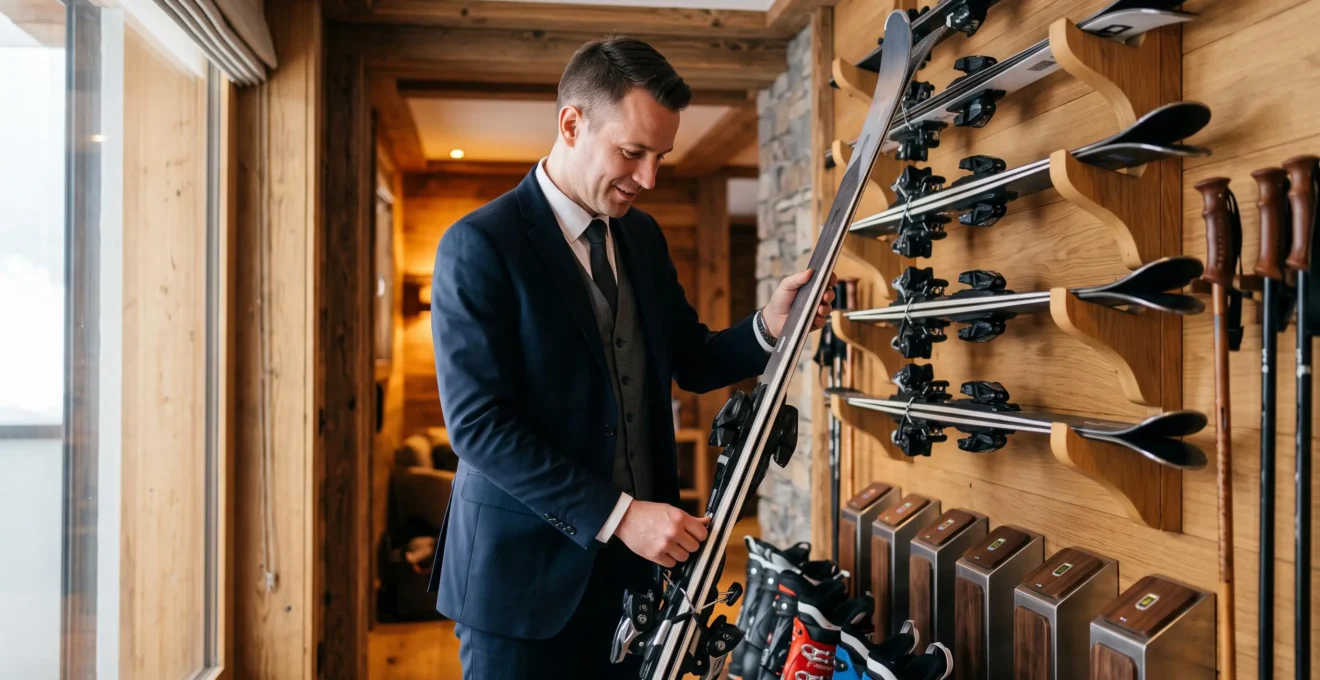
Family ski holidays systematically devour the hours they promise to restore. Morning chaos coordinating breakfast preferences, wrestling damp ski gear, herding children through preparation routines. Evening calculations balancing restaurant reservations against tired young skiers. The administrative overhead transforms what should be restorative into another coordination exercise, particularly for families juggling different ages and needs.
Serviced chalets offering butler service, private chefs and bespoke ski rooms promise to eliminate these friction points. Yet in a market saturated with luxury terminology where “butler” and “hotel-style amenities” have been diluted through marketing overuse, separating authentic value delivery from rebranded standard services commanding unjustified premiums requires concrete criteria.
This analysis deconstructs what these services actually deliver in daily operational terms, quantifies the time reclaimed and stress eliminated, and provides verification questions enabling informed provider selection rather than relying on promotional promises.
Direct answer: A butler provides proactive daily coordination and anticipates family needs throughout your stay, whilst a concierge responds reactively to specific booking requests. Butler service encompasses morning preparation orchestration, equipment management, dietary preference application and adaptive problem-solving. Concierge service handles restaurant reservations, activity bookings and transport arrangements when requested. The distinction determines whether the premium delivers genuine coordination relief or simply repackages services available in standard luxury rentals.
What transforms a chalet rental into a hotel-calibre experience?
The terminology requires immediate clarification because marketing language obscures functional distinctions. Three service components differentiate serviced chalets from both standard luxury rentals and five-star hotels, each addressing specific daily coordination burdens rather than simply adding premium positioning.
Butler service centres on proactive daily orchestration. According to a recent hospitality butler position advertised in London, the core function involves “ensuring needs are fully anticipated and met, with service of an exceptional standard.” This anticipation distinguishes butlers from reactive service models. The butler coordinates family schedules, prepares equipment, manages household logistics and adapts plans when circumstances change, operating as the invisible orchestrator of daily routines.
Private chef service eliminates restaurant coordination logistics entirely. Rather than simply providing excellent food, the chef manages all meal planning, grocery procurement, dietary accommodation and timing flexibility. Families dine according to their actual ski day rhythm rather than reservation constraints, with menus adapting to stated preferences and discovered requirements.
Bespoke ski rooms deliver professional equipment care through dedicated facilities. Individual heated boot warmers, organized storage systems, overnight drying for gloves and helmets, and morning preparation transform the equipment management burden that typically consumes significant family time before and after slope hours.
Service terminology clarified: Butler service delivers proactive coordination anticipating needs throughout the day. Concierge service responds to specific requests for bookings and arrangements. Permanent dedicated staff includes kitchen and housekeeping personnel assigned exclusively to your chalet. Standard luxury rentals may include housekeeping and concierge access; serviced chalets add the anticipatory coordination layer addressing family logistics friction points.
This combination addresses the hotel-versus-rental tension many families experience. Luxury hotels provide effortless service but lack privacy and family-specific adaptation. Standard chalet rentals offer intimate space but require constant coordination. Serviced chalets position themselves as the hybrid solution, combining chalet privacy with hotel-calibre service delivery structured around family needs rather than institutional schedules.
Courchevel’s premium market dominates ultra-luxury offerings where distinguishing genuine value from marketing positioning becomes essential. Properties offering Courchevel 1650 accommodation with full service suites illustrate how ski-in/ski-out positioning combined with integrated butler, chef and ski room facilities creates the operational framework, though the quality of actual service delivery varies significantly between providers.
The question becomes whether these services deliver measurable daily relief justifying their premium, or simply rebrand housekeeping and catering as luxury terminology. The answer lies in examining exactly what happens during a typical ski day.
Butler services: the invisible orchestrator of your ski week
Understanding butler value requires moving beyond service descriptions to operational reality. The distinction between proactive coordination and reactive assistance materializes most clearly in morning preparation, the daily friction point where family ski holidays typically begin.
Without butler coordination, a family of four faces a predictable cascade. Parents wake early to prepare breakfast accommodating different preferences. Children require shepherding through routines whilst locating scattered ski gear. Equipment status needs verification: are boots dry from yesterday, gloves located, helmets accounted for? Transport timing must be calculated and coordinated. The process routinely consumes ninety minutes of coordination effort before reaching the slopes, with stress levels inversely proportional to children’s cooperation.
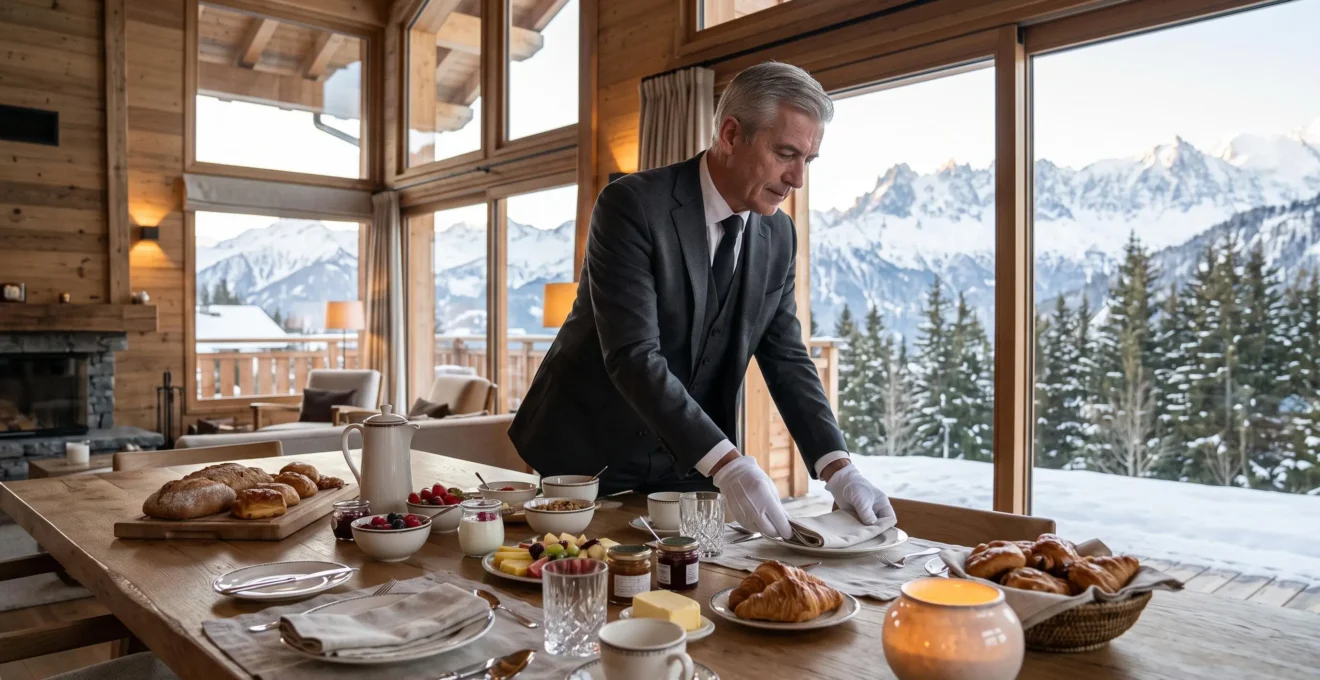
Butler orchestration restructures this entirely. The previous evening, the butler confirms next morning’s plans, noting breakfast timing preferences and any dietary adjustments. Overnight, ski equipment has been collected, dried and prepared. Morning begins with breakfast appearing at the requested time, children’s preferences already accommodated. Ski gear stands organized and ready. The butler coordinates timing, manages last-minute adjustments, ensures nothing is forgotten. The family departs slope-ready within thirty minutes of waking, the coordination burden invisible.
| Time | Standard chalet family routine | Butler-coordinated service |
|---|---|---|
| 06:30 | Parents wake to begin breakfast preparation | Butler completes equipment preparation |
| 07:00 | Coordinate children waking, preferences, routines | Family wakes to preferred schedule |
| 07:30 | Manage breakfast whilst locating ski equipment | Breakfast served, preferences accommodated |
| 08:00 | Verify equipment status, check boot dryness | Family completes breakfast unhurried |
| 08:15 | Coordinate final preparation, locate missing items | Butler confirms timing, equipment ready |
| 08:30 | Depart after resolving last-minute issues | Family departs slope-ready |
Evening coordination completes the daily cycle. Families return with varying energy levels and timing preferences. The butler manages equipment handover for overnight care, coordinates après-ski refreshments, applies dinner timing flexibility around actual return rather than fixed reservations, and accommodates children’s fatigue whilst preserving adult relaxation opportunity. The adaptation happens without requiring constant parental decision-making and coordination.
Problem-solving demonstrates whether butler service delivers genuine value. A child develops a cold on day three. The butler adjusts schedules for rest, arranges alternative activities for the sibling, maintains adult ski plans through coordination rather than requiring parents to orchestrate three separate schedules. A dietary sensitivity emerges mid-week. The butler coordinates with the chef for immediate menu adjustment and sources appropriate provisions without the family managing supplier research and procurement.
Verification questions distinguish authentic butler service from rebranded housekeeping. What are your butler’s specific hours of availability? What guest-to-butler ratio do you maintain? Can you provide three concrete examples of requests your butler handled last season beyond housekeeping and meal service? What falls explicitly outside butler scope? Answers reveal whether the service delivers adaptive coordination or simply performs scheduled tasks with a premium title.
Private chef advantage: beyond restaurant-quality dining
Food quality represents the obvious private chef benefit, but families with young children discover value primarily through eliminated logistics rather than culinary excellence. Restaurant dining with an eight-year-old and eleven-year-old who finish skiing at different energy levels, want food immediately, and have divergent preferences creates friction that private chef service addresses through three dimensions.

Personalisation accommodates the family coordination challenge that defeats both hotels and restaurants. The chef constructs menus satisfying simultaneously an eight-year-old with limited palate, an eleven-year-old adventurous eater, adults seeking gourmet experience, and any dietary restrictions. This isn’t compromise cooking where everyone settles for acceptable rather than preferred. Each family member receives appropriate dishes, the chef managing complexity invisible to diners. When requirements change or preferences emerge, adaptation happens immediately rather than requiring new restaurant research.
Timing flexibility eliminates the restaurant logistics burden entirely. No reservation coordination across limited availability. No calculating return timing to meet booking slots. No managing tired, hungry children in public whilst waiting for tables or service. The family returns when skiing naturally concludes, the chef adapts dinner timing accordingly, and meals happen in private space where children’s fatigue doesn’t create public management stress. The time saved extends beyond the meal itself: no travel, no waiting, no coordination with restaurant schedules that rarely align with actual ski day rhythms.
Intimate culinary experience offers engagement impossible in restaurant settings. Families can interact with the chef, children curious about cooking gain educational access, menu collaboration becomes conversation rather than transaction. The service preserves family intimacy whilst delivering professional culinary standards, addressing the disconnect many families feel in hotel dining rooms where excellent service comes with institutional atmosphere.
Service scope requires clarification because inclusions vary significantly between providers. Typical arrangements include breakfast, afternoon tea and dinner, with lunch either provided as packed provisions or left to families’ slope-side discretion. Grocery shopping for ingredients generally sits within chef responsibility. Alcohol provisions vary: some operators include wine with dinner, others treat beverages as supplements. Special occasion capabilities—birthday cakes, celebration menus—often carry additional charges. Establishing these boundaries before booking prevents expensive surprises.
- Eliminates restaurant coordination and reservation constraints
- Accommodates multiple dietary requirements simultaneously without compromise
- Adapts timing to actual ski day rather than fixed schedules
- Removes public dining stress with tired young children
- Provides educational culinary interaction opportunity
- Preserves family intimacy whilst maintaining professional service
- Reduced restaurant variety and local dining experience
- Less social interaction beyond family group
- Potential menu repetition with single chef across full week
- Requires clear communication about preferences and dietary needs
- May not suit families seeking nightly dining venue variety
The value calculation depends partly on restaurant alternatives. Courchevel dining for a family of four across a week of dinners represents substantial expenditure when mid-range to premium restaurants charge accordingly for mountain resort positioning. Private chef service premium narrows considerably when comparing total costs rather than headline chalet rates alone, particularly when factoring the time and stress savings alongside the financial equation.
Bespoke ski rooms: equipment care that maximises slope time
Ski rooms receive minimal attention in service descriptions yet deliver measurable daily time savings that accumulate significantly across a week. The distinction between basic equipment storage and professional ski room service determines whether families spend substantial time managing gear or simply arrive to find everything prepared.
A bespoke ski room provides dedicated space equipped with individual heated boot warmers rather than shared space heaters, organized storage systems assigning specific areas per guest, professional drying facilities for gloves, helmets and outer layers, and often basic maintenance equipment for minor adjustments. The facility itself matters less than the daily service cycle it enables.
Each evening, staff collect ski equipment from families returning from slopes. Boots go into heated warmers overnight, not left damp and cold. Gloves, helmets and any wet clothing enter proper drying facilities. Skis and poles receive organized storage rather than haphazard leaning. Basic maintenance checks identify any edge or binding issues requiring attention. The work happens invisibly whilst families focus on après-ski and evening activities.
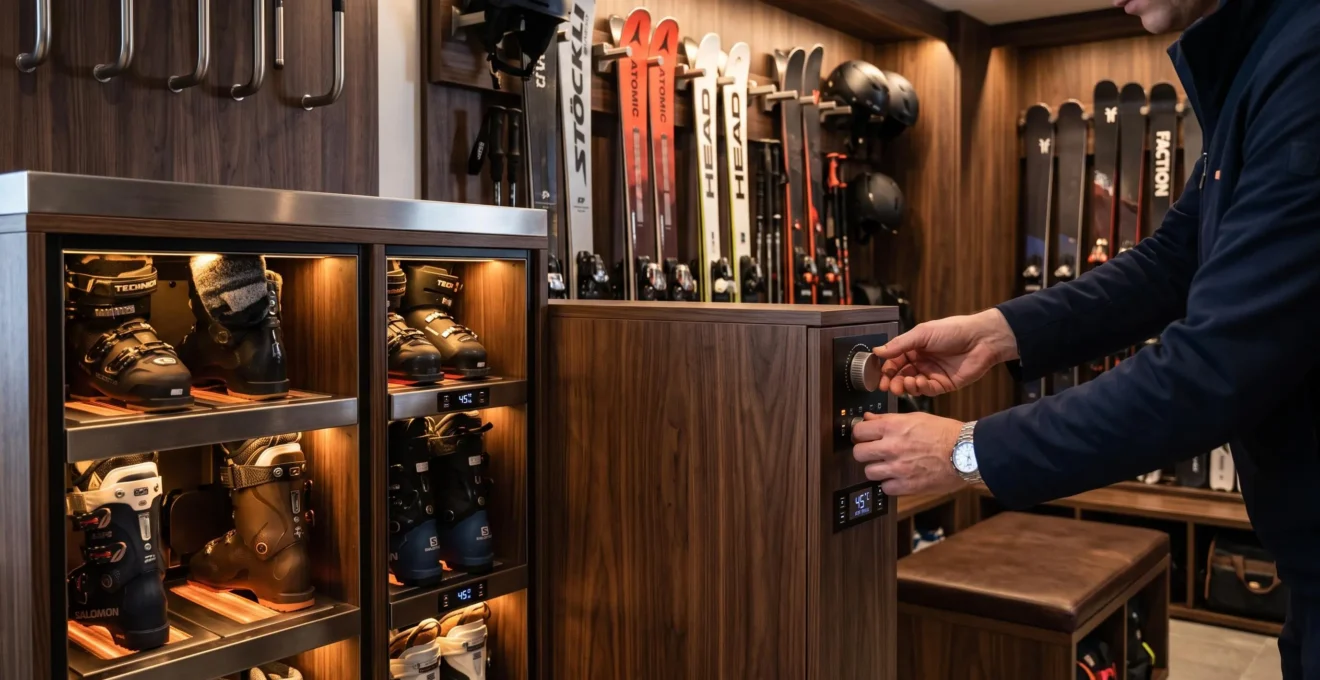
Morning preparation reverses the cycle. Families find boots warm and dry rather than struggling with cold, damp equipment. Gear stands organized and immediately accessible. Items aren’t scattered across hallways or bathroom radiators. The preparation time families typically spend locating equipment, checking status and organizing logistics simply disappears.
Time quantification reveals accumulated value. Equipment management without professional service requires roughly fifteen to twenty minutes per person twice daily: morning preparation and evening organization. For a family of four across a seven-day ski week, this totals between fourteen and eighteen hours spent on equipment logistics rather than family time, slope hours or genuine rest. The ski room service reclaims this time whilst improving daily comfort through properly maintained, dried and warmed gear.
14-18
hours saved
Weekly time reclaimed for family of four through professional ski room equipment management, eliminating the fifteen to twenty minutes per person twice daily typically spent on gear preparation and organization.
Comfort and performance impacts extend beyond time savings. Properly dried and warmed boots improve slope comfort substantially, particularly for children less tolerant of discomfort. Cold, damp equipment affects enjoyment and potentially performance. Professional care extends equipment longevity through appropriate drying and storage rather than the makeshift solutions families typically employ.
Provider verification requires specific questions. How many individual boot warmers do you provide relative to guest capacity? Is storage truly organized per guest or simply communal space? Who actually manages equipment collection and preparation: dedicated staff or guest self-service with facilities available? The answers distinguish operations delivering genuine service from those offering amenities requiring guest coordination.
How do these services justify their premium over standard chalet rentals?
Price objection requires direct engagement rather than avoidance. Serviced chalets command premiums over equivalent standard luxury rentals, with the gap varying by property, location and season. Evaluating whether this premium delivers proportional value demands transparent cost comparison and time valorisation rather than emotional appeal.
The headline premium serviced chalets charge over comparable standard properties often appears substantial—frequently thirty to fifty per cent more for equivalent size and location. This comparison misleads, however, because it ignores costs standard rental families inevitably incur separately.
Total cost analysis reveals hidden expenditure. Standard chalet families require restaurant meals unless undertaking full self-catering. A week of dinners for four in Courchevel or comparable premium resorts accumulates rapidly when meals average substantial amounts per person at mid-range to premium establishments. External housekeeping services, ad-hoc catering for some meals, and activity coordination assistance add further costs. Transport between chalet and restaurants, particularly with tired children, introduces both expense and time burden.
| Cost component | Standard luxury chalet approach | Serviced chalet approach |
|---|---|---|
| Base rental | Baseline rate | Premium rate (30-50% higher) |
| Meals | Restaurant dinners, some breakfast, packed lunches | Included: breakfast, afternoon tea, dinner |
| Daily service | External housekeeping if arranged | Included: butler coordination, housekeeping |
| Equipment management | Self-managed or basic storage only | Included: professional ski room service |
| Coordination time | Family manages all logistics | Butler handles coordination |
| Flexibility | Restaurant reservations constrain timing | Service adapts to actual schedules |
When accounting for these factors, the effective premium narrows considerably. Serviced chalets may cost only fifteen to twenty-five per cent more than the true total expenditure standard rentals require, rather than the thirty to fifty per cent headline comparison suggests. The calculation depends on family dining habits and service usage, but transparency about this methodology enables rational assessment rather than assuming headline rates tell the complete story.
Time valorisation reframes cost in the currency most meaningful to time-poor professionals: hours reclaimed. The cumulative time savings across butler coordination, private chef logistics and ski room management reach fifteen to twenty hours weekly for a typical family. Valuing this against professional hourly rates produces substantial notional value, though the more meaningful framing recognizes these represent precious holiday hours otherwise consumed by coordination rather than family experience, slope time or genuine rest.
Group size threshold analysis identifies optimal fit. Serviced chalet economics improve as group size increases because staff ratios dilute across more guests whilst restaurant costs multiply. Couples may find luxury hotels deliver better value through breadth of facilities and services. Families of six to eight or larger groups hit the sweet spot where serviced chalet benefits maximize whilst per-person premiums minimize. This calculation should inform fit-for-purpose assessment rather than assuming serviced chalets suit all situations equally.
- Couple or two adults:
Luxury hotels likely deliver better value through facilities breadth, social atmosphere and service variety. Serviced chalet premium harder to justify without family coordination complexity.
- Family with young children (under 12):
Serviced chalets address core friction points: meal logistics, equipment management, schedule coordination. Value proposition strengthens significantly with children’s needs complexity.
- Group of 6-8+ adults or multi-family:
Optimal serviced chalet scenario. Staff ratio dilutes across larger group, coordination complexity increases, per-person premium decreases whilst benefits maximize.
- Teenagers or older children only:
Moderate fit. Equipment and meal services valuable but coordination burden lighter than with young children. Consider whether group values privacy over hotel facilities access.
Quality criteria distinguish genuine value from marketing inflation. Verifiable staff ratios, transparent service scope documentation, contactable recent references and clear inclusion specifications separate established operators from expensive marketing operations. The premium becomes justifiable when service delivery matches promises through demonstrable standards rather than aspirational language.
Selecting your serviced chalet: verification checklist before committing
Service quality verification before booking prevents expensive disappointment and identifies operators delivering authentic value rather than premium-priced standard offerings. Specific questions distinguish genuine butler coordination from rebranded housekeeping, clarify chef service scope, and establish ski room standards.
Butler service verification begins with availability and ratio questions. What are your butler’s specific hours of availability each day? Some operations provide morning and evening presence only; others offer extended or on-call availability. What guest-to-butler ratio do you maintain? Ratios exceeding one butler per eight to ten guests typically indicate stretched service unable to deliver genuine anticipatory coordination. Request three concrete examples of tasks your butler handled last season beyond basic housekeeping and meal coordination. Answers reveal whether service extends to adaptive problem-solving or remains limited to scheduled duties. Clarify scope boundaries: what falls explicitly outside butler responsibility? Understanding limitations prevents false expectations.
The professional standards framework established by the Institute of Hospitality through national qualifications demonstrates that both butler and concierge roles represent recognized professional specializations with defined competencies, though providers vary in whether staff hold formal qualifications versus experiential training.
Chef service clarification addresses inclusion ambiguity. Which meals are included daily as standard: breakfast, lunch, afternoon tea, dinner? Are alcoholic beverages included with meals or charged as supplements? How do you handle dietary requirements or preferences discovered during the stay rather than disclosed at booking? Is the chef resident throughout your stay or visiting for meal preparation periods? Is grocery shopping for ingredients included or separately charged? These specifics determine true service scope and prevent mid-stay billing surprises.
Ski room standards require equipment-specific questions. How many individual heated boot warmers do you provide relative to maximum guest capacity? Shared space heaters don’t deliver the same drying effectiveness. Who manages equipment collection, preparation and morning organization: dedicated staff or guest self-service using available facilities? What maintenance capabilities do you offer beyond storage and drying? The answers separate professional equipment management from basic storage facilities marketed with premium terminology.
Reference and credential verification validates marketing claims through independent evidence. Request contact details for recent clients willing to share experiences. Established operators maintain reference lists; reluctance suggests concern about testimonials. Ask about staff qualifications, experience levels and tenure. Seasonal casual staff deliver different service consistency than experienced permanent teams. Check verifiable reviews across multiple platforms, noting specific service delivery comments rather than general satisfaction ratings.
Marketing red flags indicating possible service inflation: Interchangeable use of “concierge” and “butler” without functional distinction suggests terminological confusion or deliberate obfuscation. Absence of specific staff ratios when questioned directly indicates potential service stretching. Unwillingness to provide contactable references raises concerns about service delivery reality. Vague “bespoke” or “tailored” language without concrete service descriptions often masks standard offerings with premium pricing. Service scope discussions that avoid inclusion specifics or deflect supplement questions suggest hidden costs. These warning signs don’t necessarily indicate poor providers, but they warrant additional scrutiny before commitment.
Operators demonstrating services in luxury hotels typically understand professional hospitality standards and apply similar frameworks to chalet contexts. Properties offering transparent service specifications, clear inclusion documentation and verifiable quality credentials provide the confidence foundation necessary for informed booking decisions.
- Butler availability and scopeWhat are daily hours of butler presence? What is your guest-to-butler maximum ratio? Provide three examples of non-routine tasks handled last season. What falls outside butler scope?
- Chef service inclusionsWhich meals are included daily? Are beverages including alcohol provided or supplementary? How are dietary changes during stay accommodated? Is chef resident or visiting?
- Ski room facilitiesHow many individual heated boot warmers for maximum capacity? Who performs equipment collection and morning preparation? What maintenance capabilities beyond storage?
- Pricing transparencyWhat is included in base rate versus charged as supplements? Are there mandatory additional charges? What payment schedule and cancellation terms apply?
- Reference verificationProvide contact details for two recent clients. What qualifications and tenure do key staff hold? Where can I find independently verified recent reviews?
- Service guaranteesWhat happens if staff illness or absence occurs? Are named staff guaranteed or subject to substitution? What recourse exists if service doesn’t match descriptions?
Making the decision with clarity rather than aspiration
Serviced ski chalets delivering authentic butler coordination, professional chef service and comprehensive ski room management address measurable daily frictions. Morning preparation time reduces from ninety-plus minutes to thirty minutes. Restaurant coordination stress disappears entirely. Equipment management reclaims fourteen to eighteen hours weekly. These aren’t aspirational benefits but operational realities when service delivery matches specification.
The value proposition holds for families experiencing genuine coordination burden: young children with different needs, dietary requirements complicating meal planning, limited holiday time where every hour matters, professional backgrounds valuing time above incremental cost savings. The same services deliver marginal value for couples seeking social hotel atmosphere, small groups managing logistics easily, or families prioritizing restaurant variety over convenience.
Cost justification emerges through transparent analysis rather than emotional appeal. The effective premium narrows to fifteen to twenty-five per cent when accounting for restaurant expenses and external services standard rentals require. Whether this represents good value depends on time valorisation, group size economics, and honest assessment of coordination burden relief against absolute expenditure increase.
Provider selection determines whether premium pricing delivers proportional value or simply purchases marketing language. Verification questions, reference checks, service scope documentation and ratio confirmations separate quality operators from expensive positioning. The market contains both genuine service delivery and rebranded standard offerings; distinguishing between them requires analytical scrutiny rather than brochure promises.
Understanding impact of Courchevel rentals and similar premium resort contexts helps frame realistic expectations about service standards, pricing levels and market positioning within luxury ski accommodation sectors.
The decision ultimately rests on matching service model to actual needs rather than aspirational lifestyle imagery. Families drowning in coordination logistics find serviced chalets transform ski weeks from exhausting exercises into restorative experiences. Those managing easily without support pay substantial premiums for marginal convenience. Honest self-assessment combined with rigorous provider verification enables the former outcome whilst avoiding the latter trap.