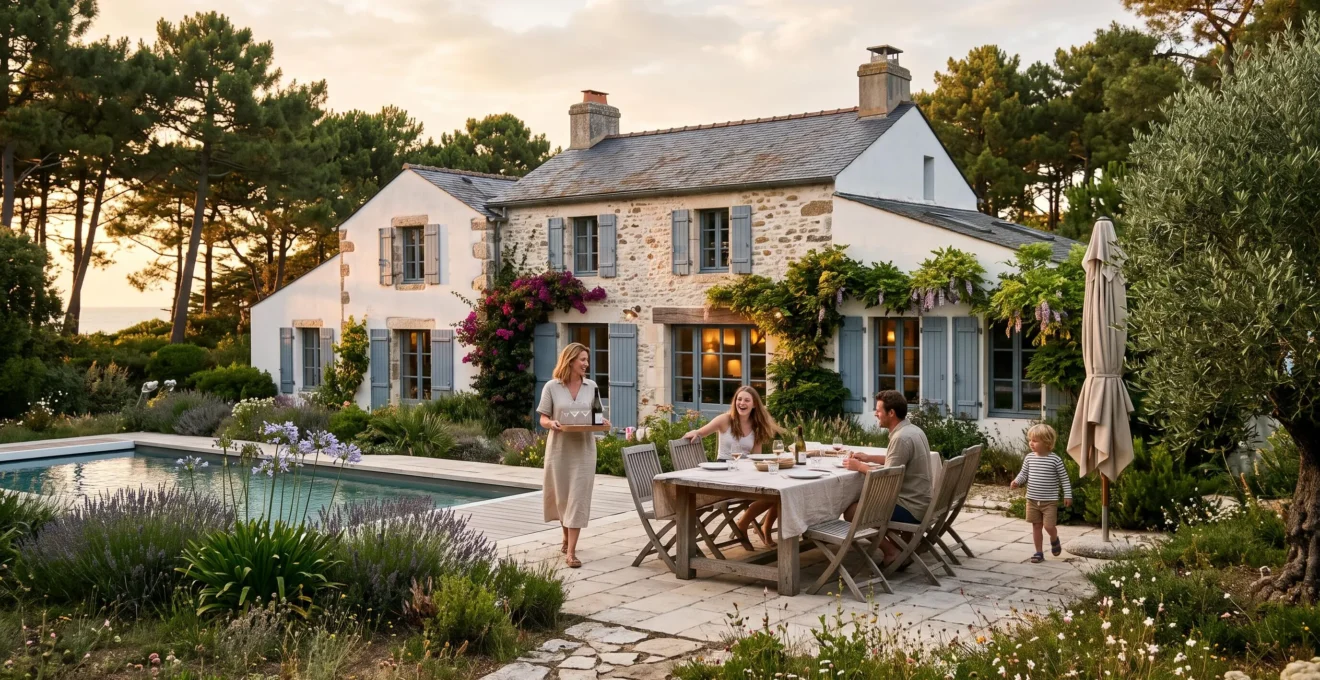
Direct answer: Renting a luxury villa on Île de Ré makes sense when you want more space, privacy, and day-to-day flexibility than a hotel or standard holiday rental can realistically provide—especially for families or groups sharing the same trip and budget.
The island itself is well-suited to this style of stay: days naturally revolve around cycling, beaches, markets, and long meals—activities that are easier to enjoy when your accommodation works like a real home base rather than a set of rooms with fixed routines.
What to check before you decide on a luxury villa on Île de Ré
- Space math: compare the villa’s capacity and living areas to how many hotel rooms you would need.
- Privacy level: garden, terraces, and whether outdoor space is shared or fully private.
- Flexibility: meal setup, outdoor living, and your own schedule (no breakfast times, no lobby life).
- Location fit: village vibe vs quieter beach areas, plus how you plan to get around.
- Booking realism: in peak periods, the best options tend to be taken early—start shortlisting sooner than later.
What Defines a Luxury Villa Stay on Île de Ré?
A “luxury villa” is not just a bigger holiday rental. On Île de Ré, it usually means a property where space, comfort, and design noticeably change the way you live during the stay—inside and outside—while keeping day-to-day life simple for a group.
What makes it different from a standard holiday rental?
The most practical difference is consistency: a luxury-level property is expected to meet a higher standard across several areas at once (layout, outdoor space, finishes, and ease of living), rather than being “nice in one way” but limiting in others.
In France, some holiday rentals are officially classified as “meublés de tourisme” from 1 to 5 stars. This classification is based on a public criteria grid (surface, equipment, services). For example, Atout France notes that a 5-star furnished tourist accommodation of 5 rooms for 8 people must have a minimum living area of 74 m² (with a tolerance mentioned in the grid). You can see the reference framework in the grille de classement Atout France.
What this does and does not prove: a 5-star classification can be a useful signal, but it does not automatically guarantee your personal “luxury” priorities (total privacy, style, quietness, pool configuration). Always verify the listing details and photos.
On the island, luxury villas are often described as renovated traditional houses (including Charentais-style homes), with outdoor living designed for summer: terraces, enclosed gardens, and a layout that lets everyone share common areas without stepping on each other’s toes.
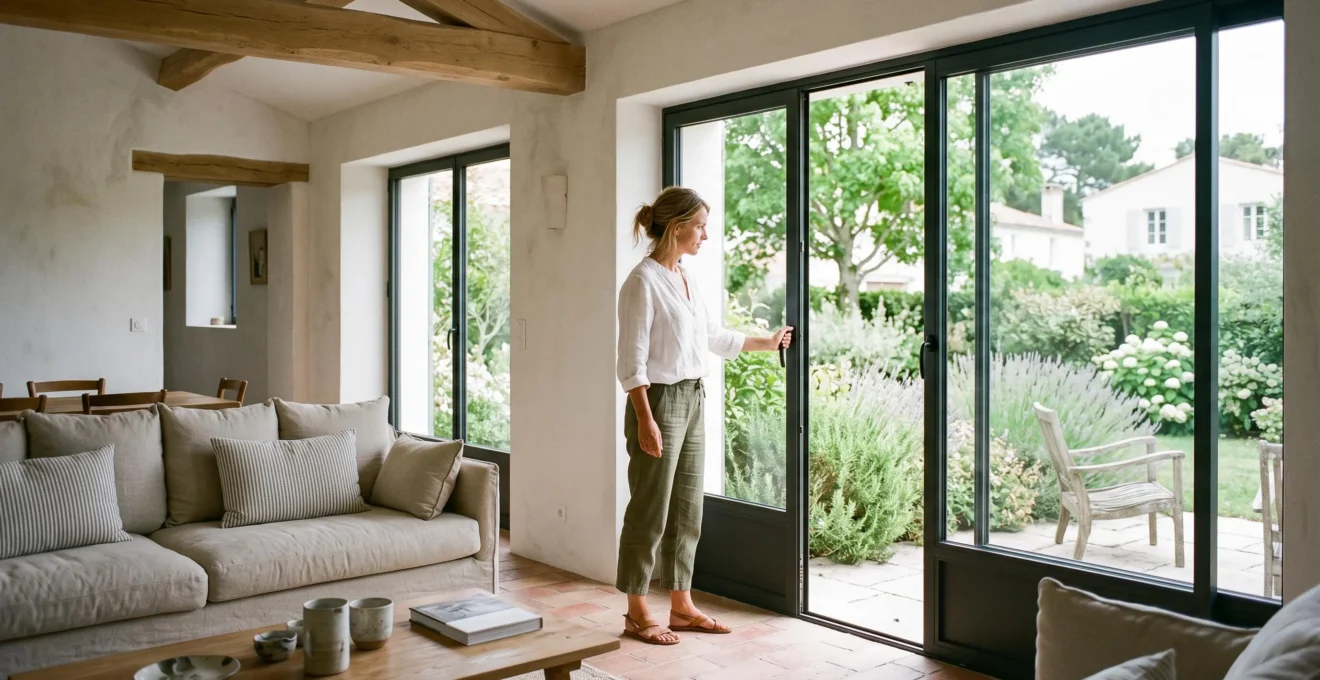
A useful way to test the “luxury” label is to imagine daily life in both places. A renovated house with a garden and terrace can absorb the rhythm of breakfasts, post-beach showers, kids’ naps, remote work, and long dinners. A standard apartment rental may still be comfortable, but outdoor space can be limited, shared, or less functional for a group.
The Concrete Benefits of a Villa for Your Holidays
The premium is easiest to justify when you translate it into practical benefits: fewer compromises, less friction, and a setup that fits your group rather than forcing your group to fit the accommodation.
Space and privacy: what you actually get day to day
A villa typically gives you shared spaces (living room, kitchen, outdoor dining) plus enough separation (bedrooms, bathrooms, corners to read or work) so the holiday stays relaxed for everyone. In a hotel, the equivalent often means multiple rooms—and even then, you may still lack a true “home base” where everyone can gather comfortably.
Privacy is also more than “no neighbours.” It’s being able to swim, eat outside, and let kids play without constantly managing noise, dress codes, or shared facilities.
Flexibility: meals, schedules, and the freedom to do nothing
With a villa, the schedule is yours. Breakfast can happen whenever people wake up; beach gear can stay by the door; dinner can be early for kids or late after a market run. This is one of the most tangible differences versus a hotel routine.
If you want a broader comparison beyond Île de Ré, this internal overview on villa benefits can help you sanity-check what matters most to your group.
Cas pratique
A hypothetical family of six compares two options for a July week: (1) booking several hotel rooms to sleep everyone comfortably, with meals often taken out and limited shared space, versus (2) a villa where the group shares one kitchen, one outdoor dining area, and a garden. The villa may cost more upfront, but it can reduce friction (coordinating rooms, meal timing, where to meet) and create “together time” without feeling crowded—making the extra spend easier to evaluate in concrete terms.
A quick, concrete comparison (villa vs hotel vs standard rental)
The point is not that one option is always better—only that each option solves a different problem. Use this grid to match the accommodation to the kind of holiday you want.
| Criteria | Luxury villa | Hotel | Standard holiday rental |
|---|---|---|---|
| Space for groups | Shared living areas + separate bedrooms; built for togetherness | Often split across rooms; common areas shared with other guests | Varies widely; can feel tight for larger groups |
| Privacy | High (especially outdoors) if garden/terrace is private | Lower in common areas; you share facilities | Mixed; outdoor space can be limited or shared |
| Daily flexibility | High: cook, eat, nap, swim on your schedule | Moderate: comfort services, but routines and shared rules | Moderate to high; depends on layout and equipment |
| Best for | Families/groups prioritising comfort, time together, and calm | Short stays, couples, travellers wanting on-site services | Smaller groups, budget-driven stays, simple base |
When people ask “is a luxury villa worth the price?”, this is the most honest answer: it’s worth it when space and privacy change your experience every day, not only when you look at photos.
Why the Île de Ré Is Ideal for a Villa Holiday?
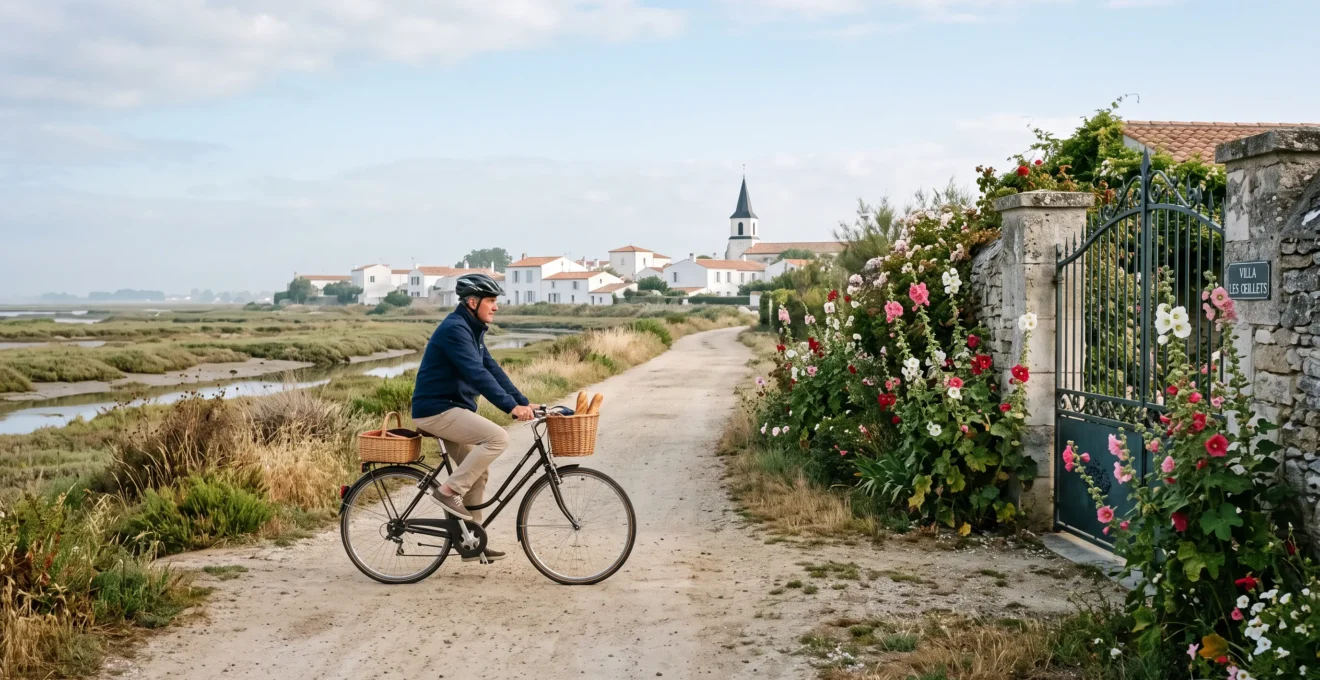
Île de Ré works well for villa stays because the island’s best moments are often simple: beaches, salt marshes, cycling between villages, and buying great ingredients at the market. A villa supports that rhythm by giving you a comfortable base for slow mornings and long evenings.
Tourism demand is also strong in the wider area. In 2024, Charente-Maritime recorded nearly 3.9 million nights booked via rental platforms, and an intensity of 5.8 nights per inhabitant, according to données Insee sur les meublés touristiques. This does not measure Île de Ré alone, but it helps explain why planning early can matter in popular coastal zones.
What makes days on Île de Ré easier with a villa?
Because the island is compact and many outings are short, your accommodation becomes the centre of the day: back from the beach for lunch, out again for a ride, back for an apéritif and a long dinner. That back-and-forth is simply more pleasant when you have outdoor space, storage, and room for everyone to reset.
A realistic “villa day” might look like: breakfast on the terrace, cycling to a market, a beach stop in the afternoon, then a quiet evening at home. In that pattern, the accommodation is not just where you sleep—it’s where half the holiday happens.

If you are considering travelling outside peak summer, local reporting based on Destination Île de Ré highlights that months outside July–August can attract more visitors, with a shift in stay patterns in 2025. That context (without turning it into a promise of availability) supports a practical idea: shoulder seasons can be a good moment to look for a calmer island rhythm if your dates are flexible.
How to Choose the Right Luxury Villa for Your Stay?
Choosing well is less about chasing “the most luxurious” option and more about matching the villa to your holiday priorities: village atmosphere, beach time, quiet, or easy logistics with kids.
Location: village life or a quieter base?
Start with how you want to spend your days. A location near lively villages can make evenings easy (strolling, shops, restaurants). A quieter area can make outdoor living more peaceful—especially if the garden is central to your trip.
To decide, write down your non-negotiables (walkable to a village centre, close to a beach, quiet nights, cycling access) and use them as filters. If a listing can’t answer those points clearly, treat it as a risk—not as a detail.
Capacity and layout: focus on “sleeping” and “living”
Capacity is not only the number of beds. For a family or group, comfort often depends on bathrooms, the separation between bedrooms, and whether common areas can handle everyone at the same time.
- Sleeping comfort: bedrooms that allow real privacy (not just sofa beds in a passage area).
- Everyday flow: enough bathrooms for your morning rhythm.
- Outdoor living: dining area in shade, safe spaces for children, practical access to showers after the beach.
When should you book for summer on Île de Ré?
If you are targeting school-holiday weeks, treat it like a limited-inventory market: start early, shortlist quickly, and be ready to commit when you find a villa that matches your non-negotiables. This is even more relevant for larger properties, because there are fewer of them compared to small rentals.
Practical verification tip: before you pay, re-check what is included (linen, cleaning, deposits, arrival/departure rules) and ensure it is written in the contract or booking conditions—not only mentioned in marketing copy.
Planning Your Luxury Villa Holiday on Île de Ré
Once you have decided that a villa is the right format, planning becomes mostly about reducing uncertainty: dates, access, and what you need on arrival so the first day feels effortless.
- Lock your dates and your real group size
Confirm who is travelling and whether you need flexible beds, separate rooms for teens, or quiet space for working.
- Define the “holiday shape”
Beach-heavy, village-focused, cycling every day, or a mix. This will guide location and layout choices.
- Compare listings using your non-negotiables
Check privacy, outdoor setup, kitchen practicality, number of bathrooms, and parking if you will have a car.
- Read conditions as carefully as photos
Review cancellation rules, deposits, check-in/out times, and what is included so the budget is clear.
- Plan island logistics early
Decide whether you need a car, where you will park, and whether you will rent bikes—then align the villa location with that plan.
It also helps to keep expectations realistic: a luxury villa improves comfort and freedom, but the outcome still depends on choosing a layout and location that match your group’s habits.
Is a luxury villa on Île de Ré worth it for a family holiday?
It tends to be worth it when the villa’s space, privacy, and outdoor living improve your daily experience (meals, naps, playtime, regrouping after the beach). If you will spend most of the day out and only need a place to sleep, a simpler rental or hotel can be more rational.
What criteria matter most when choosing a luxury villa on Île de Ré?
Prioritise (1) location fit (village vs quiet), (2) layout (bedrooms/bathrooms and flow for your group), and (3) privacy outdoors. Then validate booking conditions in writing (what is included, deposits, check-in/out rules).
When should you book a luxury villa on Île de Ré for the summer?
If you are aiming for peak school-holiday weeks, start your search early and be ready to move when a villa matches your non-negotiables—especially for larger properties. Exact timing varies by year and inventory, so treat “early” as a risk-reduction strategy rather than a guarantee of price or availability.
If your goal is a holiday that feels both high-comfort and genuinely uncomplicated, renting a luxury villa on Île de Ré is often the most direct way to get there—provided you choose based on layout, privacy, and location rather than labels.
The final check is simple: if the villa’s setup will make everyday moments easier (meals, rest, together time), the extra budget is tied to concrete benefits you will feel every day—so you can decide with confidence.