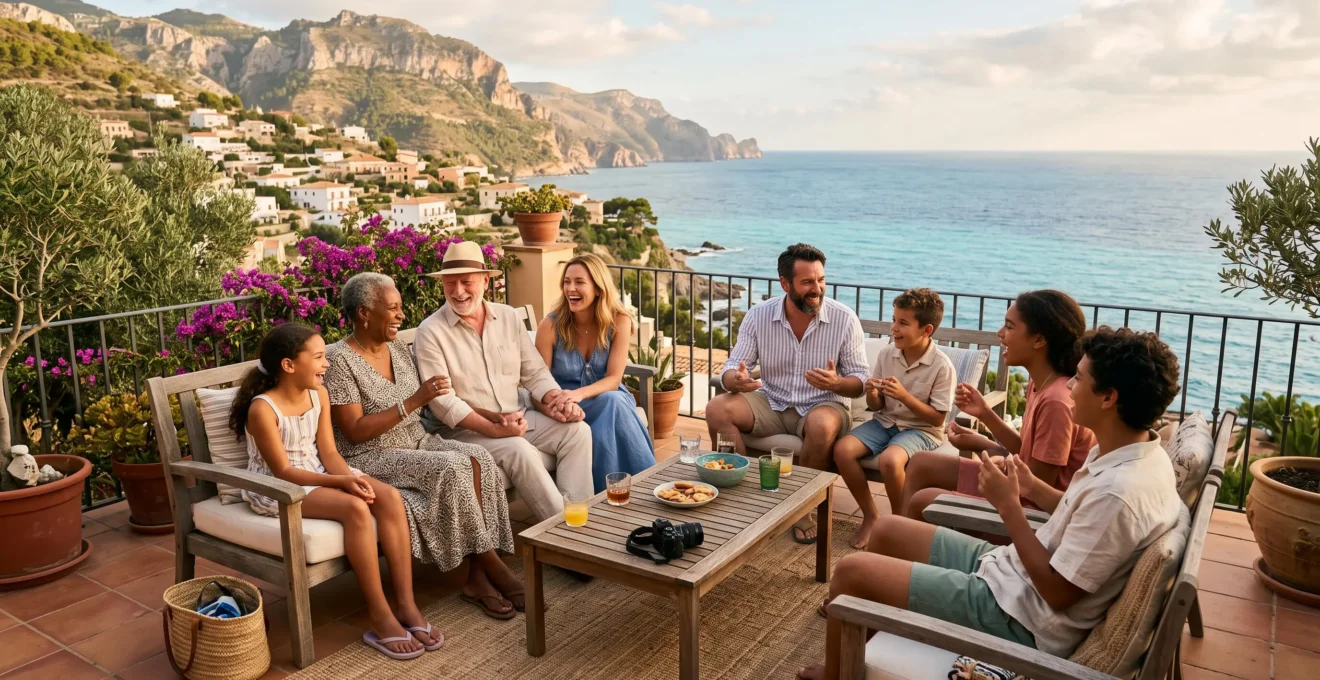
Planning entertainment for children, parents and grandparents becomes difficult when everyone is expected to follow the same itinerary. A five-year-old wants something exciting, a teenager wants independence, parents want to make the most of their holiday, and grandparents may prefer more opportunities to rest. None of these preferences is unreasonable, but combining them without flexibility can turn an enjoyable family trip into a daily negotiation.
The solution is not to find activities that everyone loves equally. It is to create shared experiences that matter, alongside different ways to spend the hours between them. A successful multi-generational holiday gives each person meaningful choices without making anyone feel excluded, responsible for everyone else’s happiness, or guilty about needing a break.
That starts with understanding the group’s energy levels, choosing accommodation that supports different routines, and deciding which moments genuinely deserve everyone’s participation. With a few practical scheduling rules, a family travelling with ages five to 75 can spend quality time together without spending every minute together.
Multi-generational holiday planning at a glance
- Build each day around a few shared moments, then offer two optional activity tracks based on energy and interests rather than age.
- Choose accommodation that makes independent activities and convenient rest possible, especially for non-skiers, young children and anyone with mobility needs.
- Protect the family’s biggest experiences by scheduling recovery time, sharing planning responsibilities and keeping demanding outings apart.
- Why Do Multi-Generational Holidays Create Tension Even When Everyone Likes Each Other?
- How to Build a Daily Multi-Gen Plan Using 2 Parallel Tracks Without Splitting the Family All Day?
- Cruise or Resort: Which Works Better if Grandparents Need Rest Breaks Every 2 Hours?
- The One-Pace-Fits-All Mistake That Makes Grandparents Withdraw by Day 3
- When Should You Schedule the Big Family Activities So Everyone Still Has Energy to Enjoy Them?
- Ski-In/Ski-Out or Village Centre: Which Works Better for a Group With 2 Non-Skiers?
- How to Evaluate a Family Resort in 12 Minutes Using Room Layout and Daily Rhythm Clues?
- What Makes a Vacation Truly Family-Friendly if You’re Travelling With a 4-Year-Old and a Teen?
Why Do Multi-Generational Holidays Create Tension Even When Everyone Likes Each Other?
Multi-generational holidays often create tension because family members have different energy levels, expectations and recovery needs. Children may seek constant stimulation, adults may prioritise efficient sightseeing, and grandparents may want more flexibility. The disagreement usually concerns how the day should unfold, not whether family members enjoy one another’s company.
Consider a hypothetical family planning a day at a coastal destination. The children want to visit a water park, the adults want to explore the historic centre, and the grandparents would enjoy a relaxed lunch overlooking the sea. Each suggestion sounds reasonable individually. The conflict begins when the group assumes that everyone must participate in all three activities.
Three types of fatigue can make this problem worse:
- Physical fatigue: Walking, standing, heat and long transfers can become tiring, even when the activity itself is enjoyable.
- Decision fatigue: Repeated discussions about restaurants, transport and departure times can drain patience before the main activity begins.
- Social obligation fatigue: Someone may continue participating because they feel responsible for keeping the family together, even when they would rather rest.
These pressures can affect any generation. A tired parent or overstimulated teenager may need quiet time just as much as a grandparent.
The person coordinating everything also deserves attention. The default planner often becomes responsible for researching activities, making reservations, managing disagreements and ensuring that nobody feels left out. Other family members may have less influence over decisions, even though the planner is doing their best.
45%
Of grandparents surveyed in the 2025 U.S. Family Travel Survey reported organising multigenerational trips jointly with their adult children. Another 40% reported organising trips themselves. These figures describe the surveyed U.S. respondents, not all families internationally.
Research: 2025 U.S. Family Travel Survey by the Family Travel Association and NYU.
Before departure, assign responsibility for specific decisions. One adult might handle transport, another restaurant reservations, while children and grandparents contribute preferences for activities. Planning becomes more collaborative when the responsibilities are visible.
Misunderstandings also need to be addressed early. A grandparent who declines an excursion may simply need recovery time, while younger relatives may mistakenly interpret that choice as disinterest. Saying, “Enjoy the afternoon; I’ll meet you for dinner,” should be treated as a positive decision rather than a rejection.
The most useful starting point is to separate shared family time from compulsory group participation. Once everyone understands that distinction, daily activities can be organised around genuine choices instead of constant compromise.
How to Build a Daily Multi-Gen Plan Using 2 Parallel Tracks Without Splitting the Family All Day?
A two-track daily plan keeps the family connected through a small number of shared anchor points while allowing different activities between them. Schedule one manageable morning experience, one shared meal and one optional evening gathering. Between these moments, offer an active track and a relaxed track, with freedom to switch according to energy and interest.
The approach works because it preserves the parts of the day that create lasting family memories without requiring everyone to match the same pace throughout.
For example, a hypothetical family visiting a historic coastal town could organise its day as follows:
| Time | Active track | Relaxed track | Family connection |
|---|---|---|---|
| 10:30 am | Short guided town visit | Same guided town visit | Shared morning experience |
| 12:30 pm | Family lunch | Family lunch | Shared meal |
| 2:00 pm | Beach games or kayaking | Heritage walk, café or rest | Separate activities by preference |
| 5:00 pm | Pool or free time | Quiet time or independent outing | Optional participation |
| 7:00 pm | Sunset gathering | Sunset gathering | Shared evening moment |
These times are illustrative, not universal. Families with young children, early bedtimes or limited stamina may prefer their main shared experience earlier.
Assign tracks by energy, never by generation. A fit grandparent might enjoy kayaking with the teenagers, while a parent recovering from a poor night’s sleep joins the relaxed option. Let people choose each morning without requiring an explanation.
The relaxed track should also sound genuinely appealing. “Art gallery, garden walk and coffee” is a legitimate holiday experience. Calling it the “slow group” or “grandparents’ option” creates an unnecessary hierarchy.
Not every activity needs to be shared. Use the following decision rule when deciding where the group should reunite:
- Usually share: Important celebrations, a memorable family dinner, a special performance, or an experience everyone actively wants to remember together.
- Usually split: Shopping, pool time, optional sports, routine transport and independent sightseeing.
- Decide together: Excursions with limited availability, expensive tickets or emotional significance to particular family members.
Agree on meeting times, locations and a way to contact one another. For children, establish which adult is responsible for supervision on each track. If an activity has accessibility requirements, confirm that its route and facilities work for the people choosing it.
The two tracks do not need equal numbers of participants or identical schedules. Their purpose is to make independent enjoyment compatible with meaningful family togetherness. Accommodation choice determines how easily this flexibility works in practice.
Cruise or Resort: Which Works Better if Grandparents Need Rest Breaks Every 2 Hours?
A cruise may work better when grandparents want regular cabin breaks during mostly onboard days, while a resort may offer greater flexibility when excursions and independent schedules dominate. Neither option automatically guarantees convenient rest. The deciding factors are actual walking distances, room location, access routes and how easily someone can return to their accommodation without disrupting everyone else.
If a family member prefers a break approximately every 2 hours, examine the physical route between entertainment, meals and their room. A cruise cabin may be relatively accessible from onboard activities, but a large ship can still require long corridors, lifts and substantial walking. A sprawling resort can create similar problems when rooms are far from restaurants or pools.
Compare realistic daily routines rather than relying on accommodation labels.
| Planning factor | Cruise | Resort |
|---|---|---|
| Returning to rest | Potentially convenient on onboard days, depending on cabin placement and ship layout | Depends heavily on distance between rooms, facilities and transport points |
| Daily logistics | Unpack once and travel between destinations without changing hotels | Stay in one base, with additional transport planning for off-site excursions |
| Schedule flexibility | Onboard choices, but fixed port times and required safety procedures | Greater control over meals, rest periods and excursion departure times |
| Accessibility | Ship facilities, gangways and tender arrangements must be checked | Room features, pathways, lifts and accessible transport must be checked |
| Independent activities | Depends on the ship’s entertainment facilities and opening hours | Depends on resort facilities and nearby places accessible without group transport |
For a holiday centred on onboard entertainment, a well-located cabin can make a cruise particularly convenient. However, if the itinerary includes frequent port excursions, returning to the ship for rest may be impractical.
A resort with accessible rooms close to the main facilities can be a better choice when family members want to alternate independent outings with afternoon breaks.
Accessibility needs require specific verification. Royal Caribbean‘s onboard and offshore accessibility assistance information explains that gangway conditions, port facilities, weather and tender boats can restrict access for some passengers using mobility equipment. These conditions concern that operator and must not be assumed to apply identically across cruise lines.
Before booking, ask about the relevant ship or property, including wheelchair assistance, lift access, step-free routes, bathroom configuration and the distance from the room to key facilities. Also check the availability and limitations of onboard medical support or nearby healthcare, especially where a traveller has particular health requirements.
The practical rule is to assess the trip’s centre of gravity. If most entertainment happens where the family is staying, convenient room access matters most. If the itinerary involves repeated journeys away from the accommodation, transport flexibility and realistic rest opportunities become equally important.
Even the right accommodation cannot compensate for an overloaded schedule. Whichever format the family chooses, recovery time needs to be built into the itinerary rather than left to chance.
The One-Pace-Fits-All Mistake That Makes Grandparents Withdraw by Day 3
The one-pace-fits-all mistake is expecting every family member to complete the same demanding schedule on consecutive days. Fatigue can accumulate when outings, meals, transfers and evening entertainment leave insufficient recovery time. By the third day, some grandparents may begin withdrawing from activities, not because they lack enthusiasm, but because the schedule is no longer comfortable.
Day three is a useful planning illustration, not a medically established threshold. Tolerance for consecutive full days varies considerably with mobility, sleep, health, weather and individual preferences.
Consider a hypothetical seven-day holiday. The first day includes travel and an evening restaurant booking. The second combines sightseeing with a late show. The third adds a long excursion and another group dinner. Each activity may be enjoyable, yet the absence of recovery time can make participation progressively harder.
Politeness can conceal the problem. Some grandparents may avoid saying they are tired because they do not want others to cancel plans. Instead, they might quietly reduce their involvement.
Potential warning signs include:
- Giving shorter answers or appearing unusually quiet during meals.
- Skipping photographs or activities they previously enjoyed.
- Offering to stay behind to look after bags rather than join an outing.
- Declining evening entertainment after otherwise busy days.
- Expressing concern about walking distances or departure times more often than usual.
These behaviours are not proof of exhaustion. Someone may simply prefer solitude or dislike a particular activity. Ask privately whether the current pace feels comfortable rather than making assumptions.
A useful planning safeguard is one deliberately light day in every three-day stretch. This is a flexible itinerary heuristic, not a research-validated recovery prescription. It might mean sleeping in, enjoying breakfast without a deadline, spending time near the accommodation and keeping dinner optional.
Shorter recovery periods should remain available on all other days. Families can also reduce demands by choosing seated activities, arranging transport for longer distances and allowing individuals to leave an outing early.
The wording matters. “Tomorrow is our flexible day” feels more inclusive than “Tomorrow is a rest day because Grandma is tired.” A shared low-pressure schedule avoids turning one person’s needs into a source of embarrassment.
A sustainable holiday should leave family members with enough energy to enjoy the experiences they value most. The next step is to schedule those experiences when the group is most likely to be ready for them.
When Should You Schedule the Big Family Activities So Everyone Still Has Energy to Enjoy Them?
Schedule major family activities during a realistic overlap in everyone’s energy and availability, often late morning or early evening for groups with different routines. Avoid placing demanding outings immediately after travel, late nights or other strenuous experiences. The strongest approach is to select the family’s most important activities first, then protect them with lighter periods before and afterwards.
Different generations do not follow identical energy patterns. Young children may be ready for an adventure early but need rest after lunch. Some grandparents prefer a gentle morning before becoming active. Teenagers may be reluctant to start early, particularly after a late evening.
These are possible patterns, not universal age-based rules. Ask people when they usually feel most comfortable and use those answers to identify the group’s common windows.
Sequencing matters as much as the clock. A full-day sightseeing excursion following an exhausting travel day may be less enjoyable than the same outing after a quiet day. Avoid putting two demanding experiences back-to-back unless the group has explicitly agreed and can comfortably manage them.
For a hypothetical week-long holiday, a workable pattern might place a significant excursion on day two, a quieter day on day three, and another major shared experience on day four. The remaining days can feature optional entertainment and shorter outings.
Meal breaks and climate also affect scheduling. Plan food and water access around excursions so that children and adults are not unexpectedly left hungry or uncomfortable. For travellers with diabetes or other dietary or medical requirements, follow their individual care arrangements rather than relying on a general family meal schedule.
In hot destinations, move demanding outdoor activities into cooler hours whenever practical. The CDC guidance on heat and health recommends cooler activity times, hydration and opportunities to rest. The guidance also identifies older adults and young children among groups that may need additional precautions during hot weather.
Before departure, create a simple family energy budget:
- Ask each person which holiday experiences matter most to them.
- Identify two or three major activities with broad family appeal.
- Place these experiences on suitable days before filling the rest of the itinerary.
- Add manageable meal, transport and recovery arrangements.
- Keep alternative activities available for anyone who does not want to participate.
This method prevents the most anticipated experiences from becoming additions to an already crowded programme. It also makes the cost and time commitment of major outings easier to discuss beforehand.
Once the core schedule is balanced, consider whether the destination makes independent enjoyment practical. That question becomes especially important on specialist holidays, such as ski trips, where family members may have very different reasons for travelling.
Ski-In/Ski-Out or Village Centre: Which Works Better for a Group With 2 Non-Skiers?
Village-centre accommodation often works better when two family members do not ski and want shops, cafés, spas or independent activities within walking distance. Ski-in/ski-out accommodation is more attractive when skiing dominates the holiday and non-skiers enjoy the mountain setting or on-site facilities. The right choice depends on how non-skiers will actually spend their days, not simply how quickly skiers can reach the slopes.
Start by separating convenience for skiers from quality of experience for non-skiers. Direct slope access can simplify mornings for families carrying ski equipment, but it may provide little value to someone who does not use the lifts.
At a village-centre property, non-skiers may be able to walk to restaurants, pedestrian shopping areas, wellness facilities or cultural attractions. These options support independence, provided the routes are safe and accessible in winter conditions.
A ski-in/ski-out chalet may offer beautiful mountain views and immediate access to slopes, yet leave non-skiers dependent on shuttle services or drivers for everyday outings. This is not always the case: some slope-side properties have pedestrian links, restaurants and comprehensive wellness facilities.
Check the exact location rather than assuming the accommodation category determines access.
Price is another consideration. Genuine ski-in/ski-out properties may command a premium for slope access. Compare the total accommodation cost with centrally located alternatives offering a pool, spa, accessible transport or activities that non-skiers will genuinely use. Paying for convenient skiing has less value if a substantial part of the group spends the day feeling isolated.
As a practical rule of thumb, a family skiing fewer than four days during a week-long holiday may find village-centre accommodation more versatile. That threshold is a planning heuristic, not a universal cost or satisfaction benchmark. The individual destination, snow conditions and transport network can change the result.
For a group with two non-skiers, ask them to describe their ideal day before choosing. If they want independent village activities, prioritise pedestrian access. If they prefer reading by a mountain-facing window, enjoying a spa and meeting skiers for lunch, a well-equipped ski-in/ski-out property may suit them better.
The same principle applies beyond winter holidays: accommodation should support the daily routines of everyone travelling. A family resort therefore needs to be evaluated through its actual layout and activity schedule, not just its marketing description.
How to Evaluate a Family Resort in 12 Minutes Using Room Layout and Daily Rhythm Clues?
A quick family resort assessment should focus on room configuration, distances, noise exposure and activity timing. In approximately 12 minutes, review the floor plan, scan the daily entertainment schedule, inspect recurring review complaints and locate the rooms on a property map. This screening can identify obvious mismatches, although important accessibility and booking details still require direct confirmation.
The first clue is the sleeping arrangement. Connecting rooms may offer privacy and convenient access between family members, while a large shared family room may reduce separation but create bedtime conflicts. Check the number of bathrooms, bed types, sleeping areas and whether grandparents can maintain their own evening routine without disturbing children.
A room layout that looks spacious in promotional photographs may function poorly when several generations are sharing it. Prioritise a labelled floor plan or an accurate written description.
The second clue is the resort’s daily rhythm. A useful property offers overlapping but distinct opportunities: supervised children’s activities, quiet areas, accessible dining, teenager-friendly entertainment and ways for adults to spend time independently.
Check whether noisy entertainment continues near bedrooms after younger children need to sleep. Also consider whether quiet activities remain available when children’s programmes are running. A resort can offer many facilities yet still create conflicts if everything happens at inconvenient times.
Guest reviews provide additional clues when treated as diagnostic evidence rather than a simple star rating. Search for repeated references to “noise”, “too far”, “couldn’t sleep”, “kids club” or “shuttle”. A single complaint may reflect personal expectations; several consistent descriptions of the same problem deserve closer examination.
Finally, locate the proposed rooms in relation to the swimming pool, buffet and evening performance stage. These can be busy or noisy areas, making room orientation and pedestrian access particularly important.
The 12-minute family resort screening checklist
- Minutes 0–2: Check sleeping arrangements and bathroom count. Deliverable: a written room configuration showing where each generation would sleep.
- Minutes 2–4: Locate the proposed rooms relative to the pool, buffet and evening stage. Deliverable: an annotated map identifying likely noise sources and walking routes.
- Minutes 4–7: Review the published activity schedule for children’s programmes, quiet periods and evening entertainment. Deliverable: a short list of suitable activities and any timing conflicts.
- Minutes 7–10: Search recent guest reviews for repeated complaints about distance, sleep quality and childcare. Deliverable: three evidence-based concerns or reassuring patterns to investigate.
- Minutes 10–12: Identify missing information and prepare questions for the property. Deliverable: a concise verification list covering room location, accessibility, activity availability and relevant age restrictions.
This is a preliminary selection exercise, not a guarantee of suitability. In the United States, the U.S. Access Board‘s accessibility standards address relevant lodging-room and route requirements, but compliance alone does not establish the convenience of a room’s location or suitability for a particular family. Outside the United States, applicable accessibility requirements differ.
For travellers with mobility needs, request confirmation of the exact booked room, accessible route, bathroom arrangement and distance to key facilities. Do not assume that a general “accessible resort” label answers these questions.
Once the practical layout has passed the initial screening, the final question is whether the property offers worthwhile daily experiences for everyone, particularly when children are at very different developmental stages.
Key takeaways before choosing your accommodation
- Assess whether each traveller can enjoy a normal day without constantly depending on the entire group.
- Prioritise age-appropriate activities, manageable distances and privacy over a long list of advertised amenities.
- Verify how the property’s programmes and room arrangements work in practice before treating it as genuinely family-friendly.
What Makes a Vacation Truly Family-Friendly if You’re Travelling With a 4-Year-Old and a Teen?
A truly family-friendly holiday accommodates the very different needs of young children and teenagers without forcing either group to compromise throughout the trip. A four-year-old needs safety, supervision and predictable routines, while a teenager may value independence, social opportunities and personal space. The best accommodation offers a credible daily activity for each age group alongside enjoyable moments the whole family can share.
A resort can be excellent for preschoolers yet disappointing for teenagers. Children’s pools, character entertainment and early evening activities may work perfectly for a four-year-old, but offer little independence or interest to an older sibling.
The reverse is equally possible. A property with adventure sports and late-night entertainment might appeal to a teenager but create difficult routines for parents supervising a younger child.
The four-year-old’s practical requirements often shape the family’s schedule. Naps, early meals, sun protection, pool safety and appropriate supervision need to be built into the day. A genuinely suitable resort makes these arrangements straightforward rather than forcing parents to solve them repeatedly.
For teenagers, look beyond vague promises of entertainment. Useful features may include dependable Wi-Fi, appealing communal spaces, later dining options, age-appropriate activities and areas where they can spend time apart from younger children.
Independence should match the teenager’s maturity, the property’s supervision rules and the family’s agreed boundaries. A teen-friendly facility does not remove the need for clear meeting arrangements and appropriate safeguards.
The practical test is whether each age group has something worthwhile to anticipate. A preschooler might enjoy a supervised activity session while a teenager joins a sports programme or relaxes independently in an appropriate area. The family can then reunite for swimming, a shared meal or an evening experience that genuinely interests everyone.
Before booking, ask the property three specific questions:
- What are the children’s club minimum ages, operating hours, supervision arrangements and booking conditions?
- Which activities or quiet spaces are genuinely suitable for teenagers, and are there any age or access restrictions?
- What crib, bedding, connecting-room and bathroom configurations are available for the exact rooms being offered?
Specific answers are more useful than the label “family resort”. If the property cannot confirm essential arrangements, treat them as unresolved rather than assuming they will be available on arrival.
Also consider the grandparents’ experience. Seating, access to quiet areas, enjoyable independent activities and convenient return routes can make participation more comfortable without limiting everyone else’s options.
Before finalising the trip, ask each family member to choose one experience they would particularly enjoy, agree on the most important shared activities and confirm that everyone has a comfortable alternative when they prefer not to join. That simple conversation is the next practical step towards a holiday where nobody feels dragged along.
How much free time should a multi-generational family leave in its holiday schedule?
Leave enough unscheduled time for people to rest, change plans or pursue independent interests without missing the day’s essential shared experience. There is no universally appropriate percentage of free time. A practical starting point is to avoid booking every morning, afternoon and evening, then adjust the schedule according to the family’s energy levels and preferences.
Should grandparents be expected to look after grandchildren during family holidays?
No. Childcare should be discussed and agreed upon rather than assumed. Grandparents may enjoy spending time with grandchildren, but that does not automatically mean they want responsibility for supervision during the holiday. Parents and other responsible adults should agree on childcare arrangements, duration and expectations before departure, while respecting any grandparent’s preference to participate as a holidaymaker rather than a caregiver.
What should the family do when someone changes their mind about an activity?
Build flexibility into the plan before changes occur. Agree which bookings are essential, which activities are optional and how the group will communicate changes. If someone needs a break, they should be able to withdraw without guilt, provided supervision and safety arrangements remain appropriate. Check cancellation conditions for prepaid activities so that a change of plans does not create avoidable disagreements about money.
How can families avoid arguments about paying for different entertainment choices?
Separate shared expenses from optional personal activities before booking. Agree on how accommodation, transport, family meals and major group experiences will be paid for, then let individuals decide whether to purchase extra activities. Discuss any non-refundable reservations in advance. Clear arrangements reduce the risk that someone feels pressured to attend an activity simply because another family member has paid for it.
What if one family member wants everyone to stay together for the entire trip?
Ask which shared experiences matter most to that person rather than debating whether everyone should stay together all day. Schedule those moments deliberately and explain that separate activities can help family members return with more energy and enthusiasm. Start with short periods apart, retain agreed meeting points and review the arrangement after the first day. The aim is to protect meaningful togetherness without making constant participation compulsory.