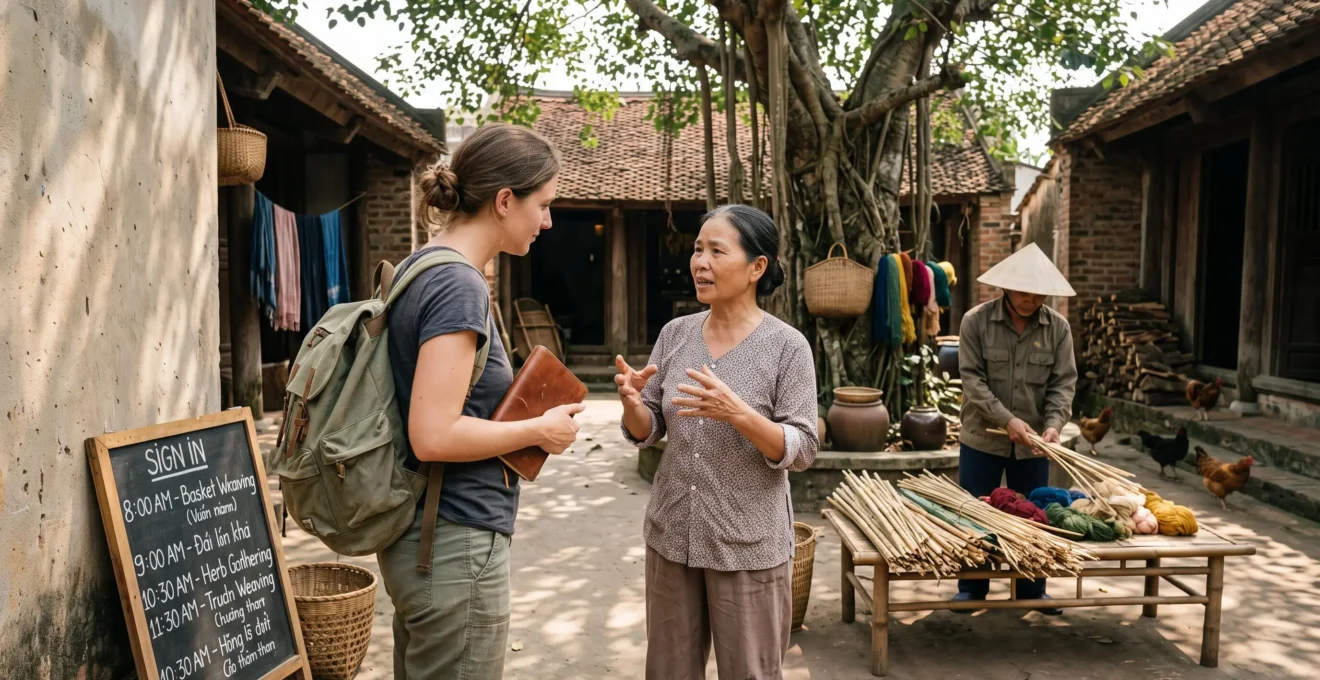
A wildlife sanctuary promises unforgettable animal encounters. A village tour offers an authentic glimpse into local traditions. A volunteering programme invites visitors to make a difference in a single afternoon. Each sounds worthwhile, but an experience that feels meaningful to a traveller does not necessarily benefit the people, animals or places involved.
Choosing responsible travel experiences requires looking beyond good intentions and sustainability labels. The important questions concern who controls the activity, how local participants are paid, whether consent is meaningful, and what happens when visitors leave.
Ethical travel does not require specialist knowledge or a perfect itinerary. It requires enough evidence to distinguish responsible operators from those selling access to vulnerable people, staged cultural encounters or inappropriate wildlife interactions.
Whether booking a cultural workshop, a guided tour or a conservation activity, a few well-directed questions can reveal important differences. The aim is not to eliminate every uncertainty, but to make informed choices that respect local priorities rather than placing visitors’ expectations first.
Responsible travel: the essential decisions
- Follow the benefits and decision-making. Ask who designed the experience, who gets paid and whether local participants can refuse involvement.
- Recognise non-negotiable warning signs. Avoid orphanage visits involving vulnerable children, coercive cultural encounters and wildlife attractions that deny animals the ability to withdraw.
- Match the activity to your preparation and available time. Verify operators before booking, respect community capacity and choose conservation tasks suited to your skills.
- Why Can “Good Intentions” Create Harm in Travel Experiences More Often Than You Think?
- How to Vet an Experience for Fair Pay and Consent Using 7 Questions Before Booking
- Community-Led Tour or Mainstream Operator: Which Fits If You’re New to Responsible Travel?
- The Responsible Travel Red Flags That Should Make You Walk Away Immediately
- When Should You Book Community-Led Experiences to Avoid Sold-Out Dates and Rushed Choices?
- How to Vet an Immersive Cultural Program Using 7 Authenticity Signals Before Booking
- How to Check if a Conservation Project Is Credible Using 6 Proof Signals Before You Join
- Which Conservation Activity Is Legit If You Only Have One Free Morning on Holiday?
Why Can “Good Intentions” Create Harm in Travel Experiences More Often Than You Think?
Good intentions can cause harm when tourism businesses turn vulnerable people, cultural traditions or wildlife into attractions designed primarily for visitors. Paying for an experience may support local livelihoods, but it can also reward practices that undermine consent, divert community resources or create dependence on tourist demand. The ethical outcome depends on how the experience operates, not how rewarding it feels.
The underlying problem is incentives. When travellers demand intimate encounters with local communities or opportunities to help disadvantaged people, businesses may develop activities around those expectations, regardless of whether residents actually want them.
A cultural performance, for example, might be an established community activity willingly shared with visitors. Alternatively, an operator might repeatedly arrange performances for tourists while controlling scheduling, payments and participation. The visible activity can look similar, even though the underlying relationships are very different.
What travellers pay for is not always what their money enables. A booking might directly compensate a local family for a workshop. Another might send most revenue through intermediaries while leaving the people delivering the experience with limited bargaining power. Without transparent information, visitors cannot reliably identify how much of their fee reaches participants.
Orphanage volunteering illustrates an especially serious unintended consequence. An experience marketed as helping children can expose them to repeated relationships with temporary visitors who lack appropriate training.
The UK government guidance on volunteering abroad warns about risks to children’s development and emotional wellbeing, and advises travellers to examine organisations’ track records, safeguarding arrangements and local partnerships.
“A regular turnover of volunteers without relevant training and experience can be harmful to children’s development and emotional wellbeing.”
A moving encounter is therefore not proof of a positive impact. Nor does recognising these risks mean abandoning meaningful travel. The constructive response is to replace emotional promises with questions about accountability, consent and lasting benefits.
The next step is to turn that understanding into a practical booking decision using questions an operator should be able to answer.
How to Vet an Experience for Fair Pay and Consent Using 7 Questions Before Booking
To assess fair pay and consent before booking, ask seven questions covering programme design, delivery, payment distribution, consent, photography, the right to withdraw and accountability. Look for specific answers that can be checked rather than broad assurances about helping communities. Small operators may lack formal reports, but they should still be able to explain how participants are treated.
These questions provide a practical screening framework, not a formally validated certification test. They help expose differences between genuine community participation and experiences controlled primarily by outside businesses.
- Who designed the experience? Ask whether local participants helped decide the activities, visitor numbers and conditions. Their involvement suggests influence beyond simply providing labour.
- Who actually delivers it? Identify the guides, hosts, facilitators and intermediaries. Ask whether they work independently, belong to a cooperative or are employed by another organisation.
- How is the booking fee distributed? Request an explanation of guide payments, community contributions, operating costs and commissions. A credible breakdown matters more than an unsupported percentage.
- How is consent obtained and renewed? Ask whether participants understand the activity, agree without pressure and can change their minds.
- What are the photography rules? Find out who can approve photographs, whether permission is requested before taking or publishing images, and whether refusal affects participation or payment.
- What happens if someone opts out? Ask whether hosts can decline an interaction or cancel an activity without punishment, and how visitors are informed.
- How does the operator respond to criticism? Look for a complaints process, examples of changes following community feedback, and an explanation of who handles disputes.
Photography is a particularly revealing test. Operators with established consent practices should be able to explain when visitors may photograph participants, who grants permission and what happens if someone objects. A general statement that everyone is comfortable being photographed is not sufficient.
Assess each response using three evidence levels: verifiable, meaning supported by identifiable people, records or independent confirmation; plausible but unverified, meaning reasonably specific yet difficult to corroborate; and evasive, meaning the operator avoids answering the actual question.
A small cooperative might describe its payment system clearly without publishing financial accounts. That deserves a different assessment from a company repeatedly claiming to empower locals while refusing to explain who receives the money.
Cross-check important claims through local tourism authorities, community cooperative directories and reviews discussing working conditions. Ask former guests about guide treatment rather than relying solely on ratings for entertainment or convenience.
Your five-step responsible booking checklist
- Identify the decision-makers. Record the names or roles of the people who control the experience and its conditions.
- Request payment information. Save a written explanation of how guides, hosts and intermediaries are compensated.
- Confirm consent rules. Obtain the operator’s written explanation of photography, participation and withdrawal policies.
- Check an independent reference. Save at least one relevant third-party confirmation or document which claims remain unverified.
- Record your booking decision. Write a brief go, investigate further or decline conclusion, with the evidence supporting it.
Once the answers are reasonably clear, the remaining decision is which type of operator best suits your experience, preparation and need for support.
Community-Led Tour or Mainstream Operator: Which Fits If You’re New to Responsible Travel?
A community-led tour may offer stronger local control and direct involvement, while a responsible mainstream operator may provide easier booking, clearer logistics and additional support for first-time travellers. Neither model is automatically more ethical. Choose according to verifiable working practices, cultural expectations, safety arrangements and your ability to participate respectfully.
The distinction concerns governance rather than business size. A genuinely community-led initiative gives local people meaningful authority over scheduling, visitor behaviour, compensation and the purpose of the experience. A mainstream operator may organise the journey externally while still maintaining fair employment and responsible community partnerships.
The following comparison highlights common trade-offs rather than guaranteed characteristics.
| Decision factor | Community-led tour | Mainstream operator |
|---|---|---|
| Price transparency | May explain payments directly, without formal reporting | May offer structured pricing, but commissions can be difficult to trace |
| Booking logistics | May require direct contact and flexible arrangements | Often offers established booking and support systems |
| Language accessibility | Depends on available local guides and interpreters | May offer a wider range of languages |
| Local decision-making | Can place decisions directly with residents | May retain decisions at company level |
| Beginner support | Expectations may require more advance preparation | May provide structured guidance and safety procedures |
| Key verification | Governance, payments, consent, safety and insurance | Partner contracts, labour practices and actual certification scope |
Small and local does not automatically mean fair. An informal operator could underpay guides, overlook participant consent or lack appropriate safety arrangements. Equally, a larger business may have established labour policies and independently reviewed sustainability practices.
The GSTC Tour Operator Standard provides an international reference covering sustainability management, community benefits, cultural heritage and environmental impacts. It can inform questions about operator practices, but the existence of a standard does not establish that a particular business complies.
For beginners, a useful entry route is to choose a mainstream operator with independently verifiable sustainability credentials and clear local partnership practices. Observe how guides request permission, discuss cultural expectations and respond to visitor questions.
That experience can build confidence for booking directly with community organisations later. However, certification alone should never override evidence of poor treatment, and community-led operators do not need polished branding to demonstrate responsible practice.
The strongest booking choice is the operator whose practices you can understand and verify, not necessarily the smallest company or the one displaying the most sustainability badges.
The Responsible Travel Red Flags That Should Make You Walk Away Immediately
Walk away from experiences involving direct tourist access to vulnerable children in residential institutions, coercive cultural encounters or wildlife interactions that prevent animals from withdrawing. Other serious warnings include refusing to identify essential local partners and prices that cannot plausibly cover fair operating costs. Distinguish these substantive risks from imperfect websites, language barriers or missing marketing certifications.
The most important distinction is between a red flag that makes the experience unsuitable and a yellow flag that calls for more investigation.
- Institutionalised children offered as tourist encounters: orphanage visits or short-term caregiving opportunities that expose vulnerable children to untrained visitors should be avoided.
- Wildlife handled for entertainment: avoid photo encounters where wild animals are restrained, unable to retreat or subjected to inappropriate contact.
- Guaranteed access to cultural groups: promises that tourists can always meet particular Indigenous or traditional communities deserve serious concern when individuals’ consent and right to decline are unclear.
- Concealed local partnerships: an operator unable or unwilling to explain who hosts the experience or authorises access should not receive payment until the concern is resolved.
- Implausibly cheap experiences: a price that appears insufficient to cover transport, food, staffing, equipment and fair payment requires an explanation.
Animal welfare offers especially concrete criteria. ABTA‘s animal welfare guidelines classify tourist photo opportunities involving wild animals as unacceptable when the animal cannot terminate the interaction or move away. They also identify several other unacceptable tourist interactions and practices involving captive and free-roaming wildlife.
Pricing deserves a practical reality check. Consider a hypothetical full-day tour advertised at an unusually low rate. Estimate the transport, guide time, meals, equipment, permits where applicable and operator costs. Compare the remaining amount with the number of people who must be paid.
This exercise cannot establish exploitation by itself. Group bookings, subsidies and different business models can change costs. But when the operator cannot explain how the service is financially sustainable while paying participants fairly, the uncertainty is material.
Conversely, a basic website, imperfect English or absence of certification is not proof of unethical conduct. Treat these as reasons to seek suitable verification, not automatic grounds for rejection.
If a serious issue appears only after arrival, prioritise immediate safety and avoid escalating a confrontation that could expose workers, children or animals to additional risk. Leave when safe and appropriate, record observations without violating privacy, and report credible concerns to relevant local authorities, safeguarding bodies or animal welfare organisations.
Pre-booking checks reduce the likelihood of these dilemmas, but they are harder to perform under last-minute pressure. Planning enough time for verification is therefore part of responsible travel.
When Should You Book Community-Led Experiences to Avoid Sold-Out Dates and Rushed Choices?
Contact community-led operators as soon as your travel dates become reasonably clear, rather than waiting until the itinerary is finalised. Some experiences have limited availability because hosts restrict group sizes, balance tourism with other responsibilities or operate only during certain seasons. Early contact allows enough time to verify practices without pressuring communities to accommodate unexpected visitors.
There is no universal booking window. Availability depends on the destination, season, community priorities and type of activity. A fixed recommendation to book several months ahead would be unreliable without information about the specific operator.
Instead, use a flexible planning sequence:
- Identify possible community experiences while choosing your travel dates.
- Contact hosts or organisers before committing to inflexible daily plans.
- Ask about available sessions, group-size limits, advance notice and seasonal closures.
- Complete fair-pay, consent and safety checks before paying.
- Build transport and surrounding activities around confirmed availability, allowing for changes where possible.
Limited capacity can be a sign of thoughtful management, but it is not proof of ethical quality. Some operators cap visits to reduce disruption; others may have limited availability for purely logistical reasons. Ask who decides those limits and why.
Peak-season pressure creates another challenge. When desirable dates are nearly full, travellers may feel compelled to book before checking working conditions or understanding consent policies. Urgency can lead to accepting claims that would otherwise deserve further scrutiny.
Off-peak travel may provide more flexibility, less pressure on busy locations and opportunities for smaller-group exchanges. However, it does not automatically produce more authentic interactions. Communities may use quieter periods for farming, ceremonies, maintenance, rest or other responsibilities.
Never assume local hosts are available simply because tourists have fewer competing bookings. Ask whether the programme operates in that season and whether visits are welcome.
If the experience is unavailable, choosing another verified activity is more respectful than requesting an exception to community limits.
Early planning makes it easier to respect boundaries, but the content of an experience still needs examination. Cultural immersion programmes require an additional assessment of how authenticity and reciprocity are defined.
How to Vet an Immersive Cultural Program Using 7 Authenticity Signals Before Booking
A credible cultural immersion programme gives host communities meaningful control, creates opportunities for respectful exchange and explains what participants contribute as well as what they receive. Seven authenticity signals help distinguish community-shaped experiences from staged encounters marketed as cultural transformation. The central question is whether visitors are welcomed under locally established conditions or whether local life is reorganised around tourist expectations.
These signals complement the payment and consent checks used for other tours. They focus specifically on programme structure, relationships and continuity.
- Community-defined purpose: the programme reflects priorities identified by hosts rather than experiences selected solely for tourist appeal.
- Meaningful exchange: the schedule allows appropriate conversation, learning or shared activity instead of presenting residents as exhibits.
- Local authority: community representatives have real influence over access, scheduling, visitor conduct and the option to discontinue participation.
- Understandable revenue arrangements: hosts can explain how the programme benefits those involved and which costs or intermediaries are covered.
- Visitor preparation: participants receive guidance on cultural etiquette, photography, appropriate questions, privacy and expected behaviour.
- Community feedback: organisers have a way to gather concerns and adjust the programme in response.
- Continuity beyond tourist demand: activities have a meaningful relationship with community life or priorities outside their commercial presentation.
Authenticity does not mean an absence of planning or payment. A workshop created specifically for visitors can be ethical if the people delivering it choose the format, receive fair compensation and maintain control. Likewise, an activity that already exists in community life is not automatically suitable for tourist observation.
A useful test is to ask who adapts to whom. Can hosts change the session when community responsibilities require it? May they decline sensitive questions? Can they restrict access to private spaces or ceremonies?
Consider two hypothetical programmes. One promises unrestricted access to village life and an unforgettable personal transformation. The other describes a locally organised workshop, sets visitor expectations, limits photography and explains what hosts receive.
The second offers more concrete evidence of responsible participation, although its claims still require verification.
Reviews can provide clues when read critically. Look for accounts of participants learning to respect boundaries, adjusting expectations or recognising differences in perspective. Enthusiastic descriptions of flawless entertainment reveal less about community agency.
However, visitor reviews cannot replace the host-community perspective. Where possible, seek publicly available statements from participating cooperatives or community organisations rather than assuming tourists can speak on their behalf.
Be cautious when a programme primarily sells the promise that visitors will become better people. Personal transformation is not an ethical outcome measure. Credible descriptions clarify host benefits, visitor responsibilities and limits before promising emotional rewards.
The same principle applies to conservation volunteering: the value of the experience must be assessed through its actual contribution, not the strength of the visitor’s emotional response.
How to Check if a Conservation Project Is Credible Using 6 Proof Signals Before You Join
A credible conservation project should be able to explain its ecological objectives, scientific oversight, use of funds, local partnerships, long-term work and limitations. Six proof signals help travellers evaluate those claims before volunteering or paying participation fees. The strongest evidence concerns measurable conservation work and appropriate volunteer roles, not opportunities for close contact with wildlife.
Conservation projects vary considerably, from habitat restoration to long-term scientific monitoring. A project does not need to publish an academic paper for every activity, but it should describe what it is trying to achieve and how progress is assessed.
- Scientific evidence or monitoring: request research publications, monitoring summaries, documented methods or identifiable scientific partnerships appropriate to the project.
- Named local collaborators: check whether local scientists, community organisations, land managers or relevant government bodies have genuine roles in the work.
- Clear use of volunteer fees: ask which costs fund equipment, local staff, research, accommodation, transport and programme administration.
- Long-term continuity: look for evidence of ongoing work between volunteer visits and a plan for maintaining activities when tourists are absent.
- Measurable objectives: seek specific outcomes such as monitored habitat condition, recorded observations or restoration progress, with an explanation of how these are evaluated.
- Openness about limitations: credible teams should be willing to discuss uncertain results, setbacks, operational challenges and work that volunteers cannot safely perform.
These are practical indicators, not a universally validated six-point certification scheme. Different projects will have different documentation depending on their size, purpose and resources.
The role of volunteers deserves particular scrutiny. Short-term visitors should receive appropriate instruction and should not be assigned specialist responsibilities that require training they do not possess.
Direct animal handling is not evidence of conservation value. Programmes that offer unrestricted contact with wildlife to participants regardless of experience warrant serious concern.
A useful organisational example is Earthwatch’s research funding and project requirements. Earthwatch describes evaluating proposals for scientific merit, participant suitability, expected outcomes, safety and logistics. Its requirements also address participant preparation, local collaboration and the justification of animal handling.
Those are Earthwatch’s own programme standards, not universal thresholds for conservation credibility.
Volunteer fees also need careful interpretation. Research equipment, field technicians, local staff, transport, accommodation and participant safety can represent legitimate costs. Consequently, a large programme fee does not establish that a corresponding amount reaches conservation activities directly.
Ask how the project’s budget supports its stated objectives, what participants finance and whether local people are paid appropriately. Do not assume that a low fee indicates greater efficiency or that an expensive programme produces better outcomes.
Independent verification can include published research associated with named project scientists, relevant conservation regulators, credible wildlife welfare organisations and informed scientific commentary. Operator testimonials alone are insufficient to establish ecological results.
When evidence is incomplete, distinguish between understandable administrative limitations and contradictions about objectives, safety or the treatment of animals.
For travellers with only a few hours available, an additional question becomes essential: can a short visit provide genuine assistance without creating more work for the project?
Key takeaways before choosing a short conservation activity
- Useful participation has a defined task. Choose work with an identifiable local organiser, clear instructions and an outcome that can be recorded.
- Wildlife access is not a conservation benefit. Prefer non-invasive activities rather than experiences selling close encounters with animals.
- Limited time calls for an appropriate role. When an organisation cannot use short-term help effectively, funding an existing programme may contribute more than volunteering.
Which Conservation Activity Is Legit If You Only Have One Free Morning on Holiday?
If you have only one free morning, choose a supervised activity that provides useful labour or reliable data without requiring specialist training. Suitable possibilities include organised habitat clean-ups, accessible citizen-science surveys, approved restoration work or educational visits supporting credible conservation organisations. Confirm that the project actually needs short-term participants rather than assuming any volunteering opportunity creates environmental value.
A limited timeframe can make choosing easier. Instead of looking for a dramatic wildlife encounter, focus on whether a clearly defined task can be completed responsibly within the available hours.
Four options are worth investigating:
- Habitat and litter clean-ups: organised riverbank, beach or trail activities can be appropriate when local coordinators identify priorities, provide equipment and arrange safe waste handling.
- Citizen-science observations: some projects accept short observations of species, habitats or environmental conditions using established protocols.
- Community restoration days: planting or habitat maintenance may be suitable when organisers confirm the timing, ecological appropriateness and long-term care arrangements.
- Non-contact conservation visits: a responsibly managed rescue or rehabilitation centre may offer educational visits that support its work financially without involving visitors in animal handling.
Not every activity on this list will be available or appropriate in every destination. Even apparently simple tasks can require permits, safety instruction, suitable equipment or continuing maintenance.
Tree planting, for example, is not automatically beneficial. Species selection, planting season, land management and subsequent care all affect whether the work is appropriate. Follow a locally established restoration plan rather than organising an independent planting activity.
A useful selection rule is to favour activities where your presence contributes labour or data rather than becoming the product itself. This helps separate conservation work from wildlife encounters sold primarily for their entertainment value.
To find an appropriate activity, contact local conservation NGOs, recognised citizen-science programmes or community habitat-restoration groups. Ask whether they accept occasional volunteers, what preparation is required and whether the work genuinely benefits from an additional participant.
Confirm the meeting point, supervising organisation, accessibility requirements, safety arrangements, equipment and any relevant participation conditions before travelling.
Some conservation tasks cannot accommodate visitors for a single morning. Monitoring sensitive species, conducting scientific fieldwork or rehabilitating injured animals may require specialist competence, authorisation and consistent involvement.
In such cases, volunteering can create more supervisory work than it contributes. A paid educational visit, a direct contribution to an established project or simply observing wildlife responsibly from an appropriate distance may be better choices.
The value of conservation participation comes from its fit with the project’s needs, not the number of hours spent or the intimacy of the wildlife encounter.
For your next trip, shortlist one local conservation organisation, ask what it genuinely needs, and choose the activity only when its purpose, supervision and impact are clear. If meaningful participation is not possible, supporting the work without volunteering is still a responsible travel decision.
Does paying more for a travel experience mean local people are treated better?
No. A higher price may reflect fair wages, small groups or additional operating costs, but it can also reflect commissions, marketing expenses or premium positioning. Ask how payments are distributed and whether local participants influence their working conditions. Price is a useful question, not reliable proof of ethical practice.
Can a responsible travel experience be ethical without sustainability certification?
Yes. Certification can provide useful independent assurance when its scope and status are verified, but small community organisations may operate responsibly without it. Assess actual practices, including local decision-making, fair compensation, consent, safety and accountability. An absence of certification is not equivalent to evidence of exploitation.
Should travellers photograph local people during cultural experiences?
Photography should depend on informed, freely given permission rather than assumptions about what visitors are entitled to capture. Ask before taking photographs, respect restrictions and recognise that permission to take a picture does not automatically include permission to publish it. Where consent is uncertain, leave the camera down.
What should you do if an operator refuses to explain where your booking money goes?
Request a basic explanation of the payment structure rather than demanding confidential financial records. A small operator may have limited documentation, but should still be able to describe who delivers the experience and how participants are compensated. If important questions remain unanswered, postpone the booking or choose an alternative with clearer accountability.
Is donating to a conservation project better than volunteering during a short holiday?
Sometimes. When a project requires specialist training or cannot use occasional volunteers effectively, a contribution to a credible organisation may be more useful than a brief visit. Verify the organisation’s objectives, funding practices and reported work before donating. Where a supervised short-term task is genuinely needed, direct participation can also be appropriate.