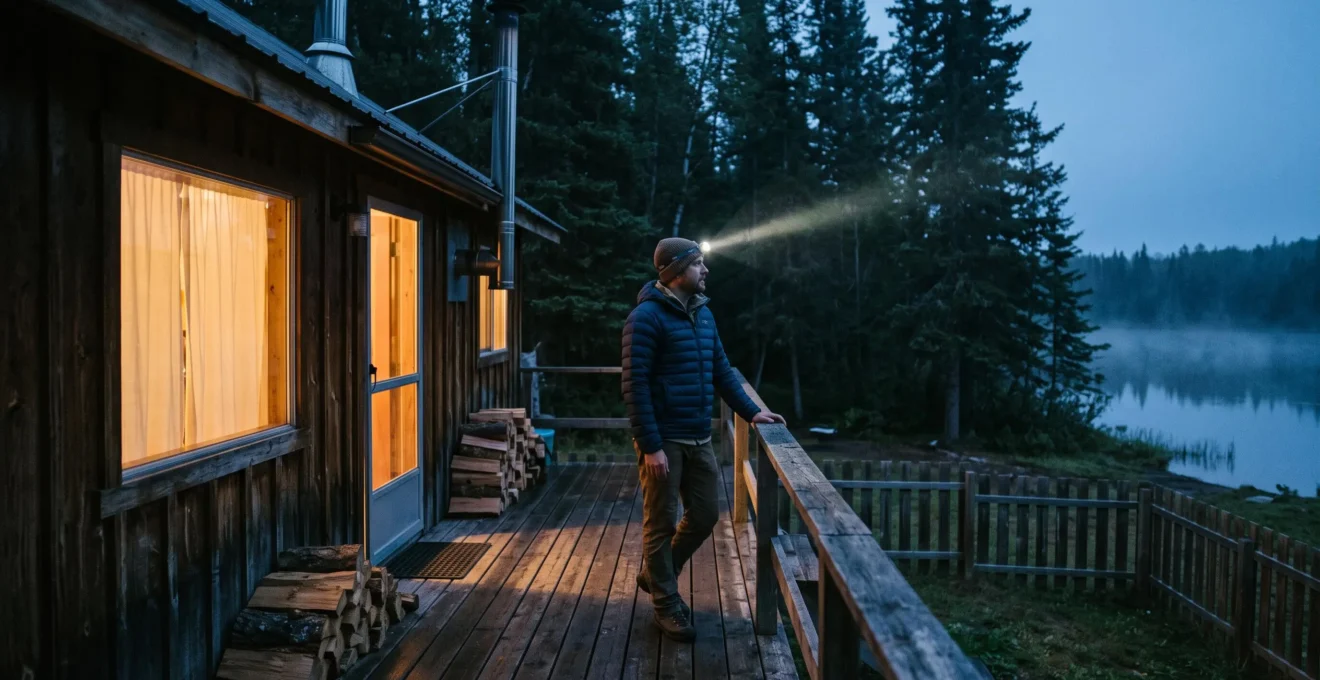
A forest cabin can look peaceful in photographs yet fill with rustling branches after dark. A beach cottage may offer beautiful sunsets but keep a light sleeper awake with crashing waves. Even a secluded mountain retreat can feel exhausting when temperatures drop and the heating struggles overnight.
For travelers who feel overwhelmed by crowds, traffic and constant stimulation, the most restorative natural setting is the one that matches their sensory needs, not necessarily the most remote or picturesque destination. A sheltered forest valley or inland lake may suit someone sensitive to wind, while a protected coastal bay might work better for someone who enjoys steady background sound.
The practical approach is to evaluate what happens after sunset: noise, darkness, bedroom temperature, accessibility and the distance from other people. Those details determine whether a destination offers the conditions you need to rest, rather than simply looking relaxing during the day.
Finding a nature escape that genuinely feels restful
- Match the landscape to your senses: sheltered forests and inland lakes are useful starting points for wind-sensitive travelers; protected coastal locations may suit those who enjoy surf sounds.
- Investigate nighttime conditions: check nearby roads, lighting, heating, cooling and guest reviews before booking.
- Choose comfort over extreme isolation: a small, accessible lodge with reliable temperature control may be more restful than a remote cabin with uncertain facilities.
- Why Can a Beautiful Nature Location Still Feel Stressful After the First Night?
- How to Choose a Natural Setting Using a 5-Question Sensory Checklist Before Booking?
- Forest or Ocean: Which Is Better if You Need Quiet Nights and Minimal Wind?
- The Location Choice Mistake That Turns a Nature Escape Into Constant Annoyance
- When Is the Best Time to Book a Nature Escape to Avoid Crowds and Bad Weather Swings?
- Off-Grid Cabin or Serviced Lodge: Which Is Better When You Need Reliable Heating at Night?
- Eco-Lodge or City Hotel: Which Is Better if You Need Air-Con and Still Want Lower Impact?
- How to Tell if an “Eco-Friendly” Stay Is Real Without Ending Up in an Uncomfortable Room
Why Can a Beautiful Nature Location Still Feel Stressful After the First Night?
A beautiful natural setting can still feel stressful because daytime scenery reveals very little about nighttime sensory conditions. Wind, wildlife, artificial lighting, fluctuating temperatures and unfamiliar sounds may disturb sleep once the initial excitement fades. The first night often exposes a mismatch between what a traveler expected from the landscape and what their senses actually experience.
Imagine a hypothetical lakeside cabin surrounded by woodland. During the afternoon, the water is still and the forest seems silent. After dark, insects become noticeable, branches brush the roof, and an outdoor security light illuminates the bedroom whenever an animal passes.
None of these disturbances necessarily makes the property unsuitable for everyone. Someone accustomed to rural sounds might barely notice them. Another traveler could experience repeated awakenings.
The difference matters because relaxation is personal: a setting that reduces stimulation for one person may increase it for another.
Several overlooked features deserve attention:
- Sound transmission: lightweight walls, poorly sealed windows and exposed roofs can make wind, rain or nearby activity more noticeable.
- Artificial light: security lamps, outdoor paths and uncovered windows can create unwanted brightness.
- Mechanical noise: generators, pumps, refrigerators and heating systems may cycle intermittently during the night.
- Natural activity: insects, birds and nocturnal animals can produce unexpected sounds.
- Temperature changes: an attractive cabin may become uncomfortable if insulation or heating is inadequate.
It also helps to distinguish two different experiences. Environmental stress comes from identifiable disturbances such as noise, light or uncomfortable temperatures. Escape stress describes the unease some travelers feel when familiar cues disappear, especially in very dark or isolated surroundings.
The solutions are different. Environmental stress calls for better building features or a quieter location. Discomfort with isolation may call for accommodation with nearby staff, reliable communication and familiar amenities.
Before choosing another nature escape, briefly review your last two trips. Write down what disturbed your sleep, whether it was continuous or intermittent, and whether it came from the building or its surroundings. This small self-audit provides more useful guidance than a general preference for forests or beaches.
Once your main trigger becomes clear, the next step is to turn it into a practical accommodation filter before committing to a booking.
How to Choose a Natural Setting Using a 5-Question Sensory Checklist Before Booking?
Choose a natural setting by answering five questions about nighttime sound, bedroom light, temperature control, nearby activity and physical accessibility. Use accommodation photographs, satellite maps, destination information and direct answers from the host to verify each condition. Prioritize the factors that most affected your previous trips instead of assuming every quiet-seeking traveler needs the same environment.
A booking description may promise tranquility without explaining whether the bedroom faces a road, whether the windows have blackout curtains or whether heating operates overnight. A sensory checklist converts those vague promises into details you can investigate.
The following five questions work across forest retreats, coastal cottages, mountain lodges and lakeside accommodation.
| Sensory factor | Question to answer | How to verify it |
|---|---|---|
| Nighttime sound | What sounds are audible inside the bedroom after dark? | Read recent sleep-related reviews and ask the host about roads, wildlife and machinery. |
| Light exposure | Can the bedroom become genuinely dark? | Check window orientation, curtains, outdoor lighting and nearby buildings. |
| Temperature | Can you control warmth or cooling throughout the night? | Confirm the heating or cooling equipment and any operating restrictions. |
| Nearby activity | How close are roads, neighbors and shared facilities? | Inspect satellite imagery and clarify distances with the host. |
| Accessibility | Can you comfortably reach and use the accommodation? | Check approach roads, gradients, stairs, paths and essential facilities. |
Free mapping tools make these questions easier to answer. Satellite imagery can reveal whether a cabin sits beside a visitor car park or behind a line of trees. Light-pollution maps can provide context about surrounding artificial brightness, although they cannot confirm whether a bedroom has adequate curtains.
Topographic maps, elevation data and coastal orientation can help identify exposed ridges, headlands and sheltered valleys. They indicate potential exposure rather than guaranteeing calm weather.
A particularly useful step is the one-email test. Ask the host three questions:
- What can guests normally hear from the bedroom at night?
- Can guests independently control heating or cooling throughout the night?
- How far away is the nearest occupied building or frequently used access road?
Compare the specificity of the answers. A response naming an access road, describing the heating system and explaining the nearest building’s position is more useful than simply saying the accommodation is peaceful.
Your five-action pre-booking sensory checklist
- Identify your main trigger: review previous trips and create a one-sentence note naming the condition most likely to disturb your sleep.
- Inspect the surroundings: save a map screenshot showing the property, nearest road, neighboring buildings and major visitor facilities.
- Verify bedroom conditions: record the curtain type, window orientation, heating or cooling controls and any missing details.
- Contact the host: send the three nighttime questions and keep the written response with your booking notes.
- Make a weighted decision: score each of the five factors from 1 to 5 for personal suitability, then flag any non-negotiable requirement that remains unverified.
The scoring method is a personal decision aid, not a scientifically validated relaxation scale. Someone especially sensitive to sound might give nighttime noise greater importance than the other factors. Another traveler who struggles with temperature changes might treat reliable heating or cooling as essential regardless of the overall score.
With those requirements established, you can compare natural environments more realistically, starting with the two landscapes that are often assumed to offer the most peace: forests and coastlines.
Forest or Ocean: Which Is Better if You Need Quiet Nights and Minimal Wind?
A sheltered forest or inland lake is often a better starting point than an exposed coastline when quiet nights and minimal wind are priorities. Trees, terrain and protected valleys can reduce wind exposure, while oceanfront properties may experience stronger winds and persistent surf. However, local geography, seasonal weather and nearby visitor activity matter more than the landscape label alone.
Forests and oceans create different sound environments. A forest may contain periods of relative quiet interrupted by birds, insects, falling branches or rustling leaves. Coastal accommodation may have a steadier background of breaking waves, but surf volume changes with swell, weather, shoreline shape and the property’s distance from the water.
Neither pattern is automatically relaxing. Someone who enjoys consistent background sound may prefer the coast, while another person who wakes at sudden noises may dislike intermittent forest activity.
Wind can be the deciding factor. A cottage on an exposed headland may experience gusts striking windows and roof surfaces. An accommodation in a protected bay can feel different, just as a forest cabin on a ridge can be more exposed than one in a sheltered valley.
Before booking, inspect whether the property occupies a headland, an open beach, a protected bay, an exposed hillside or a valley enclosed by vegetation. Compare that position with local prevailing winds and seasonal weather information.
For travelers considering mountains, the same principle applies: a high, open viewpoint may provide spectacular scenery but less shelter. A lower, accessible valley location may be more comfortable when wind exposure is the main concern.
| Setting | Likely advantages | Potential disturbances |
|---|---|---|
| Sheltered forest | Tree cover and possible wind protection | Wildlife, insects, moving branches and nearby trails |
| Exposed coast | Steady surf that some travelers find comforting | Wind, waves and storm-related noise |
| Inland lake | Potentially calm water and protected surroundings | Boat activity, insects and visitor facilities |
| Mountain valley | Terrain shelter and access to natural scenery | Cold nights, access traffic and localized wind |
There is an important exception to any simple forest-versus-ocean recommendation. A cabin near a popular forest trailhead may become busy at dawn, while a beach outside its main visitor season may have very little human activity.
That is why crowd patterns, accommodation construction and specific geography belong in the same decision as the broader landscape.
If a quiet forest or lake sounds appealing, inspect its exact position next. Being close to a protected landscape does not necessarily mean being insulated from the activity around it.
The Location Choice Mistake That Turns a Nature Escape Into Constant Annoyance
The most consequential location mistake is choosing accommodation because it is labeled “in nature” or “near a national park” without checking its proximity to roads, parking areas and visitor facilities. A scenic property can still be exposed to repeated human activity. Examining its actual surroundings is more reliable than trusting the destination category or promotional description.
Consider a hypothetical rental beside the main entrance to a popular nature reserve. The cabin overlooks woodland, but the access road carries early arrivals, service vehicles and departing visitors. Its location provides convenient access to the landscape without necessarily providing a quiet place to sleep.
This illustrates an important distinction between proximity to nature and separation from activity.
Protected-area boundaries do not block sound. The U.S. National Park Service identifies motor vehicles, generators, visitor activity and maintenance equipment among the sources of human-generated noise affecting natural environments. Its National Park Service overview of noise sources also explains that sound can enter protected places from outside their boundaries.
This does not establish that every park entrance or reserve-adjacent property is noisy. It does show why the surrounding transport and visitor infrastructure deserves attention.
One practical concern is the concentration of activity around access points. Visitor centers, boat launches, parking areas and trailheads may attract repeated arrivals or departures even when the surrounding landscape is largely undeveloped.
Before booking, use a map to trace the route between the nearest town, the accommodation and the main attraction. Ask whether the property shares the only practical access road with large numbers of visitors.
Then search recent guest reviews for specific terms such as “road,” “traffic,” “noise,” “parking” and “generator.” Look for repeated descriptions of the same disturbance rather than drawing conclusions from one isolated complaint.
Distance should be interpreted carefully. There is no universal setback distance that guarantees silence: road usage, terrain, vegetation, building construction and the timing of activity all affect what a guest may hear.
Overcorrecting into complete isolation creates a different problem. An hour-long unpaved approach, unreliable communications or difficult access to essential services may feel unsettling, especially when traveling alone or managing mobility limitations.
Define a personal distance-to-help threshold: how far are you comfortable being from staff assistance, transport, medical services or a reliable communication point? Confirm access conditions and mobile coverage rather than assuming either is available.
Once the property’s surroundings appear suitable, consider when you will visit. Even an excellent location can feel very different during peak visitor periods or unsettled weather.
When Is the Best Time to Book a Nature Escape to Avoid Crowds and Bad Weather Swings?
The best time for a quiet nature escape is usually a destination-specific period when visitor demand is relatively low and the weather remains suitable for your comfort needs. This may occur during a shoulder season or on weekdays, but there is no universally quiet month. The goal is to identify an overlap between manageable conditions and reduced visitor activity.
Start by investigating what attracts visitors to the destination. Coastal areas may be busiest during favorable beach weather. Mountain destinations can experience peaks during hiking or winter sports seasons. Forests may attract additional visitors during popular foliage periods.
School holidays, public holidays and local events can change these patterns. A quiet-looking destination may still experience concentrated demand over a particular weekend.
The calendar also changes the sensory character of nature itself. Some forests become noticeably louder when seasonal insects are active. Coastal properties may experience stronger surf during particular weather systems, while mountains can have rapid changes in wind and temperature.
For example, the U.S. National Park Service explains in its Joshua Tree National Park busy-season visitor advice that weekdays are typically less crowded than weekends. It also identifies holidays and spring break as periods of heavier visitation.
This is destination-specific guidance, not a universal calendar rule. Joshua Tree’s seasonal visitor patterns should not be used to predict those of a beach in Australia or a forest retreat in the United Kingdom.
The important lesson is to investigate both the visitor calendar and the sensory calendar.
For each destination under consideration, compare:
- Peak visitor periods, including school holidays and major events.
- Typical nighttime temperatures during the intended dates.
- Seasonal wind, rainfall and storm exposure.
- Periods of noticeable insects or wildlife activity.
- Weekday versus weekend demand at nearby attractions.
Booking timing requires a separate decision. A small cabin property with very few suitable rooms may have limited availability, making an early reservation sensible. A larger hotel may provide more alternatives, although this depends on local demand and the exact dates.
Early booking helps secure scarce accommodation; it does not make long-range weather forecasts reliable. Check cancellation conditions and revisit official weather information as departure approaches.
If your schedule is flexible, consider arriving on a Monday or Tuesday rather than Friday. In destinations where weekend day-tripping drives crowd levels, that simple adjustment may matter more than traveling a greater distance to a supposedly remote location.
After selecting your dates, confirm that the accommodation can maintain a comfortable bedroom overnight. In colder places, heating reliability becomes a particularly important distinction between accommodation types.
Off-Grid Cabin or Serviced Lodge: Which Is Better When You Need Reliable Heating at Night?
A serviced lodge is generally the safer choice when dependable overnight heating is essential, provided the property confirms its heating arrangements. An off-grid cabin can also be comfortable, but its performance depends on insulation, heat supply and energy storage. If cold temperatures repeatedly interrupt your sleep, heating reliability should take priority over the appeal of total isolation.
Off-grid accommodation is not necessarily cold. Some cabins have effective insulation, appropriately sized heating systems and reliable overnight energy supplies. Others depend on limited stored electricity, manually operated wood stoves or heating equipment with specific restrictions.
The distinction is especially important after sunset.
A cabin using solar power and batteries must have sufficient stored energy to support its overnight electrical loads. Heating may place substantial demand on that supply, depending on the equipment and building design.
A wood stove introduces another consideration: whether it can maintain suitable room temperatures throughout the night without intervention. This depends on the stove, fuel, insulation and weather, and cannot be established from a photograph of a fireplace.
Ask four questions before choosing an off-grid stay:
- What is the primary heat source, and is there a backup?
- Can the system maintain warmth overnight without guests refueling or resetting it?
- How is the cabin insulated, and is it regularly occupied during cold weather?
- Does the property operate during the coldest part of the local season?
A cabin that closes during winter is not automatically poorly insulated. Seasonal access, business demand and maintenance can also explain closures. However, the answer may prompt useful questions about cold-weather operation.
Serviced lodges offer different advantages. Staff may be available to resolve heating problems, and conventional building systems can provide more predictable room temperatures. However, corridors, adjoining rooms, restaurant areas and shared facilities may introduce unwanted noise.
For a sensitive sleeper, an end-of-corridor room, a standalone lodge unit or a small property with limited shared space may provide a useful compromise.
The decision depends on your non-negotiable requirements. Choose a serviced property when cold nights would substantially affect your ability to rest and you want accessible assistance. Consider off-grid accommodation when the host can explain its insulation, overnight heating and backup arrangements convincingly.
Also verify hot water, charging facilities and communication options. An accommodation that feels wonderfully isolated during the afternoon may create avoidable anxiety if basic conveniences are less dependable than expected.
For any combustion-based heater, confirm suitable ventilation, installed carbon monoxide detection and safe operating instructions. Never use unvented or improvised combustion appliances to heat a sleeping room.
In warmer climates, the equivalent challenge is keeping the bedroom cool. That raises a different accommodation question: whether an environmentally conscious stay can provide the temperature control you need.
Eco-Lodge or City Hotel: Which Is Better if You Need Air-Con and Still Want Lower Impact?
If air-conditioning is essential for comfortable sleep, choose accommodation that explicitly guarantees suitable nighttime cooling rather than relying on an eco-lodge label. Some eco-lodges use passive cooling or restrict mechanical systems, while hotels may offer individually controlled air-conditioning. The lower-impact choice depends on actual building performance, energy use and operating practices, not the accommodation category alone.
Environmental responsibility and sleeping comfort do not have to conflict. A well-designed building can reduce cooling demand through insulation, shading, efficient windows and appropriate ventilation.
These features are useful when comparing smaller hotels and nature lodges, but their effectiveness depends heavily on local climate.
The U.S. Department of Energy home-cooling guidance identifies insulation, shading, ventilation and other cooling approaches that can reduce energy demand. It also cautions that ventilation is not an effective cooling strategy in hot, humid climates.
This distinction is particularly relevant to travelers who struggle to sleep in warm bedrooms. A listing that mentions open-air architecture or natural ventilation may sound appealing, but that description cannot establish actual nighttime comfort.
Look for specific features such as:
- Deep roof overhangs or effective window shading.
- Ceiling fans and screened windows that permit airflow.
- Insulation and building materials appropriate to the climate.
- Cross-ventilation where outdoor conditions make it effective.
- Independently controlled air-conditioning in rooms where it is needed.
Elevation can sometimes improve nighttime conditions, but it is not a guarantee of cooler bedroom temperatures. Humidity, airflow, solar exposure and construction also matter.
Compare accommodation using expected nighttime temperatures, not daytime averages alone. Ask whether the room retains heat after sunset and whether guests can control cooling without relying on a centrally restricted schedule.
| Decision factor | Eco-lodge | City hotel |
|---|---|---|
| Air-conditioning | May be available, limited or replaced by passive cooling | May offer individually controlled systems; confirm room details |
| Environmental performance | Depends on verified operations and construction | Depends on energy systems, building efficiency and management |
| Nighttime noise | Potential wildlife, wind or equipment noise | Potential traffic, corridor or ventilation noise |
| Guest assistance | Varies by size, location and staffing | May offer more extensive on-site services |
A practical compromise might be a certified urban hotel with efficient cooling, an eco-lodge offering air-conditioning in selected rooms, or a naturally ventilated lodge booked during a cooler season.
None is automatically the lowest-impact option. A credible comparison would require information about energy consumption, building operations and other environmental impacts.
For travelers whose sleep is disrupted by heat, reliable nighttime cooling is a legitimate booking requirement. Choosing a comfortable property is more sensible than paying for environmental claims that leave essential needs unresolved.
The remaining task is to establish whether the property’s sustainability claims are credible and whether its approach to conserving resources affects the guest experience.
What matters before making the final booking decision
- Verify the environmental claim: a recognizable certification, independently checked standard or documented operating practice provides more information than an unexplained “eco-friendly” label.
- Keep sustainability and comfort as separate tests: environmental practices do not establish whether a bedroom will be quiet, dark or temperature-controlled.
- Ask for property-specific evidence: clear information about energy, water, guest facilities and nighttime conditions is more useful than broad promises of responsible travel.
How to Tell if an “Eco-Friendly” Stay Is Real Without Ending Up in an Uncomfortable Room
To identify a genuinely eco-friendly stay without sacrificing comfort, verify its environmental practices and bedroom conditions separately. Look for credible third-party certification or specific evidence of responsible operations, then confirm nighttime temperature, noise, hot water and essential facilities. A sustainability claim should describe how a property operates, not serve as an explanation for avoidable discomfort.
The term “eco-friendly” can refer to very different approaches. One property may invest in efficient heating, water-saving equipment, waste reduction and local employment. Another may emphasize a rustic design while providing little information about its environmental impact.
Minimal amenities are not, by themselves, proof of sustainability. Likewise, comfortable beds, reliable hot water and effective insulation do not make accommodation environmentally irresponsible.
The distinction becomes clearer when looking at certification.
The Global Sustainable Tourism Council distinguishes certification, accreditation and recognition of standards. A third-party certification evaluates a tourism enterprise against a defined standard. Accreditation assesses the competence and impartiality of certification bodies, while recognition establishes alignment between a standard and GSTC standards.
These are different forms of assurance. Membership in a sustainability organization is not the same as independent certification.
When a property advertises certification, look for the named scheme, the organization that issued the certificate, its scope and whether its validity can be checked.
Environmental operations worth investigating include:
- Energy: building efficiency, energy sources and equipment management.
- Water: conservation measures, wastewater treatment and responsible water use.
- Waste: reduction practices, reuse and appropriate disposal systems.
- Local benefits: employment, purchasing and relationships with nearby communities.
Specific claims are more informative than broad branding, but they still require verification. For example, describing a solar installation does not establish that all the property’s electricity comes from renewable energy.
Next, examine whether the sleeping environment matches your sensory requirements.
Search recent guest reviews for “hot water,” “fans,” “mosquito net,” “walls,” “noise,” “heating” and “air-conditioning.” These terms can expose recurring comfort problems that general ratings may conceal.
Check whether negative comments describe one-off maintenance incidents or repeated experiences across seasons. A review from a cool month may not predict summer bedroom temperatures, just as a summer review may tell you little about winter heating.
A simple two-question host filter combines environmental credibility with personal comfort:
- How does the property reduce its environmental impact, and which practices are independently verified?
- What is the bedroom typically like at night in terms of temperature and sound during my intended travel period?
Strong answers should contain observable details. Hosts may explain which rooms have air-conditioning, how overnight heating works, what guests can hear and which environmental measures are in place.
Be cautious when a host responds with general expressions such as “completely sustainable” or “perfectly peaceful” without describing the systems or conditions behind those claims.
Certification can improve confidence in environmental management, but it cannot guarantee uninterrupted sleep. Guest reviews and direct property questions remain necessary to assess room comfort.
For your next nature escape, shortlist two or three properties in settings suited to your sound and temperature preferences. Check their surroundings, request clear answers about nighttime comfort, and verify any sustainability credentials before booking. The right retreat does not need to be perfectly silent or completely isolated; it needs to feel comfortably predictable when you are ready to rest.
Can a nature retreat be restorative without being completely silent?
Yes. Complete silence is not necessary for everyone. Some travelers find steady natural sounds comfortable but struggle with sudden or unpredictable disturbances. Focus on the types of sound you tolerate well, whether they change overnight, and how effectively the accommodation limits unwanted noise. Personal preference matters more than a promise of absolute silence.
Is a private cabin always quieter than a small guesthouse?
No. A private cabin removes some disturbances associated with shared accommodation, but it may have thinner walls, exposed surroundings or noisy equipment. A well-insulated guesthouse room away from communal spaces can sometimes provide a more predictable sleeping environment. Compare construction, room location and recent reviews rather than assuming privacy guarantees quiet.
What should travelers with limited mobility check before booking a remote nature stay?
Ask about the full route from parking or transport drop-off to the bedroom, including gradients, steps, path surfaces and lighting. Confirm bathroom accessibility, internal doorways, emergency arrangements and the availability of assistance. Request specific measurements or photographs when necessary, because general labels such as “easy access” may not describe the features you need.
Should light-sensitive travelers choose the darkest possible destination?
Not necessarily. A dark natural environment may reduce exposure to distant artificial lighting, but the bedroom itself matters more for sleep. Outdoor security lights, uncovered windows and nearby buildings can introduce unwanted brightness. Travelers who feel uneasy in total darkness may prefer a room with controllable lighting rather than extreme isolation.
What is the best fallback if a nature stay feels overwhelming after arrival?
First identify the specific problem. Close curtains or windows where appropriate, adjust available temperature controls and contact the host about equipment noise or other disturbances. If the environment remains unsuitable, ask about another room or a quieter unit. Before traveling, keep essential contact details, alternative accommodation options and transport arrangements accessible, particularly when mobile coverage may be limited.