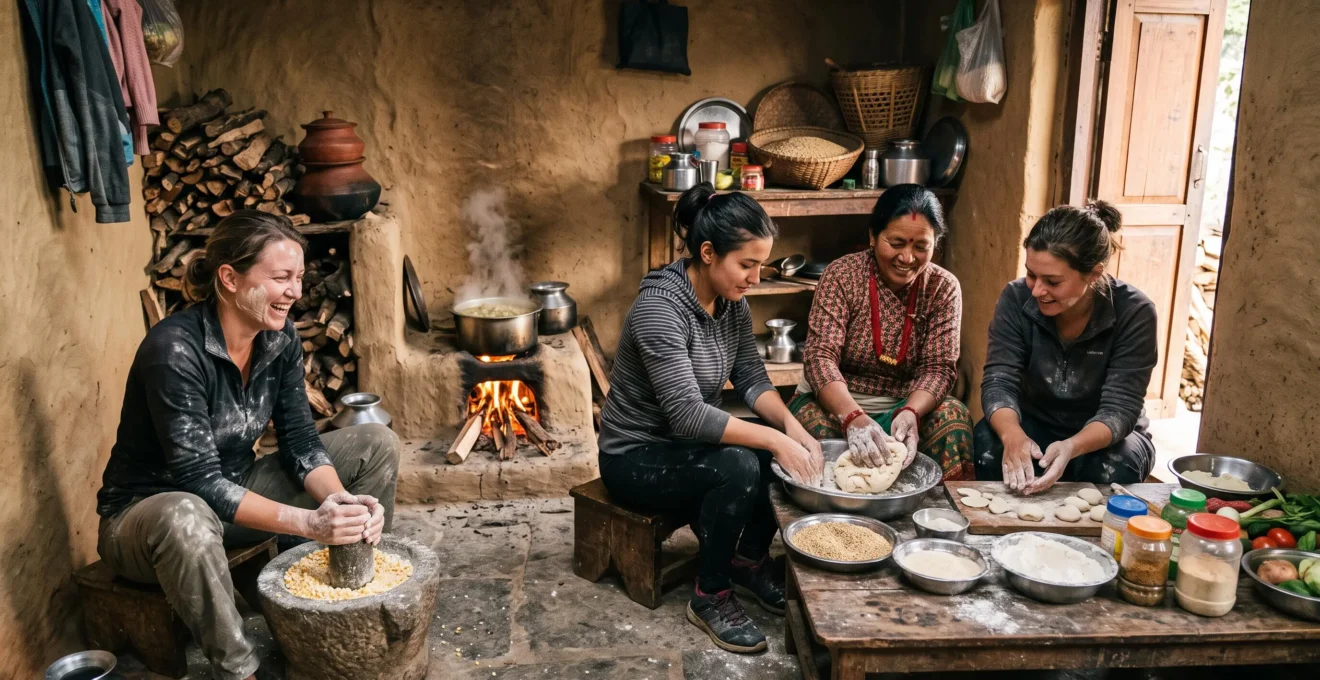
A cooking class where everyone follows identical instructions. A village visit that ends at the souvenir shop. A traditional ceremony presented as an exclusive opportunity to experience local life. These activities may be enjoyable, but how much meaningful cultural exchange actually takes place?
Choosing an immersive cultural program requires looking beyond attractive photographs, enthusiastic reviews, and promises of authenticity. The strongest experiences allow visitors to participate appropriately in activities that local people value, while respecting the hosts’ time, privacy, decisions, and economic interests.
That does not mean demanding access to private homes or rejecting every organised performance. An ethical cultural experience can be carefully planned and still create genuine connection. What matters is whether the people sharing their culture control how it is presented and whether visitors engage as respectful participants rather than consumers of someone else’s identity.
Before committing to a homestay, workshop, community visit, or cultural retreat, a few targeted checks can reveal how the experience works, who benefits, and whether its format suits your expectations.
How to recognise worthwhile cultural immersion
- Look for meaningful participation: choose activities where hosts and visitors interact naturally, rather than following a fixed performance designed solely for tourists.
- Verify host control and fair compensation: identify who operates the program, who receives payment, and whether local participants can refuse activities or visitors.
- Choose the right format and pace: match homestays, workshops, and cultural encounters to your language skills, social energy, and available time.
- Why Do Some “Immersive” Cultural Experiences Feel Like a Performance for Visitors?
- How to Vet an Immersive Cultural Program Using 7 Authenticity Signals Before Booking
- Homestay or Workshop: Which Feels Less Awkward if You’re Travelling Solo for 6 Days?
- The Cultural Etiquette Mistake That Can Shut Down a Meaningful Interaction in Seconds
- When Should You Schedule Cultural Immersion to Avoid Fatigue and Get Deeper Conversations?
- How to Vet an Experience for Fair Pay and Consent Using 7 Questions Before Booking
- How to Spot Locally Owned Tours and Shops Using 5 Clues Without Asking Awkward Questions
- How to Choose a Responsible Travel Experience Without Accidentally Supporting Exploitation
Why Do Some “Immersive” Cultural Experiences Feel Like a Performance for Visitors?
Some immersive cultural experiences feel staged because they are designed to deliver a predictable version of local life rather than involve visitors in how that life unfolds. Hosts may repeat demonstrations, shorten activities, or follow scripted interactions to meet tourist expectations. These arrangements are not necessarily dishonest, but they can limit genuine participation.
Sociologist Dean MacCannell explored this distinction in his foundational 1973 article, Dean MacCannell‘s research on staged authenticity. His analysis describes how tourist environments can create the impression that visitors have entered private, authentic social spaces when those settings have actually been arranged for tourism.
The underlying tension is straightforward: travellers want spontaneous encounters, while tourism businesses often need activities that can be scheduled, marketed, and delivered consistently.
A host demonstrating a traditional cooking technique for successive groups may genuinely enjoy teaching. Yet if the same dishes, stories, jokes, and photographs appear regardless of who attends, visitors are experiencing a curated presentation more than a shared activity.
Participation is a useful practical test. Ask whether your presence changes anything meaningful about the experience.
- Mostly observational: visitors watch a family prepare a meal, take photographs, and taste the finished food.
- Meaningfully participatory: visitors help prepare ingredients, learn techniques, adjust to the host’s instructions, and contribute to a meal the group actually shares.
Participation alone does not guarantee authenticity. A carefully scripted cooking workshop can still involve hands-on tasks. The stronger question is whether the activity allows genuine interaction, choice, and exchange.
Itinerary structure offers another clue. Experiences designed around cruise arrivals or tightly timed coach excursions may need to compress complex traditions into predictable slots. That creates pressure toward rehearsed demonstrations, although a short duration does not automatically make an activity inauthentic.
There is also an important exception: public performance can be culturally authentic. Festivals, dances, music, and ceremonies may traditionally involve performers and audiences. Attending a genuine community festival as a respectful spectator can be more appropriate than paying for supposed backstage access to a private ritual.
The distinction is not between performance and authenticity. It is between cultural expression controlled by its participants and activities reshaped primarily to satisfy tourist expectations.
Once that distinction is clear, the next challenge is evaluating a program before you arrive, when its marketing materials may reveal only part of the experience.
How to Vet an Immersive Cultural Program Using 7 Authenticity Signals Before Booking
To assess an immersive cultural program before booking, examine who created it, how hosts participate, whether activities allow genuine interaction, and where the economic benefits go. Seven practical signals can help identify promising experiences, although no individual signal guarantees authenticity. The strongest evidence comes from information that can be checked independently.
Start by examining the operator’s description instead of relying on photographs or star ratings. A credible program should explain what visitors will actually do, who will guide them, and how the activity relates to local life.
Use these seven signals as a working assessment:
- Community involvement: local participants help design and deliver the experience rather than simply performing an itinerary created elsewhere.
- Group size: the operator states a participant limit that makes the advertised interaction plausible.
- Identifiable hosts: guides, artisans, or host organisations are named where appropriate, with their involvement presented respectfully and with permission.
- Respectful imagery: promotional photographs portray hosts as active people rather than anonymous exotic subjects, without requiring them to pose or appear on camera.
- Clear local benefits: the description explains how participants are compensated or how the community benefits.
- Credible independent feedback: reviews describe conversations, shared tasks, and specific experiences rather than exclusively food, costumes, and entertainment.
- Verifiable local connections: the host organisation, workshop, or community enterprise can be confirmed through an independent presence or credible local reference.
These are editorial screening criteria, not a scientifically validated scoring system. Their value lies in the questions they encourage travellers to ask.
The GSTC Destination Standard, published by the Global Sustainable Tourism Council, identifies local and Indigenous community involvement in cultural experiences as an important sustainability indicator. It also addresses decent work and support for local enterprises. These are destination-level criteria, not proof that any particular operator meets them.
Next, cross-check the claims. Search for the host organisation’s own website or social presence, compare descriptions across booking platforms, and look for reviews from repeat visitors or people familiar with the destination.
Search review text for expressions such as “rehearsed,” “rushed,” “invited us to,” or “we were the only visitors.” These phrases are starting points, not verdicts. Read the surrounding context to distinguish genuine engagement from marketing language.
Pay particular attention to what reviewers describe doing. A review that explains how a host adapted a lesson to the group’s questions often provides more useful information than one praising the experience as unforgettable.
Be cautious with broad labels such as “community-based,” “authentic,” or “sustainable.” Their meaning depends on the program and any applicable standard. A label without supporting information is weaker evidence than clear descriptions of decision-making, compensation, and host participation.
Your five-step cultural program verification checklist
- Identify the actual host: save the names of the operator, host organisation, and activity leader in a short comparison note.
- Confirm the activity format: record the group-size limit, duration, and the specific tasks visitors will perform.
- Cross-check independent evidence: save two relevant review excerpts or credible local references, noting any unresolved concerns.
- Request ethical details: send the operator written questions about host compensation, consent, and control over scheduling; keep the response.
- Document your decision: prepare a brief go/no-go note identifying the strongest evidence, unanswered questions, and any reason to decline.
Once an operator passes those checks, consider whether the experience suits your travel style. A culturally worthwhile program can still feel uncomfortable if its social expectations do not match your needs.
Homestay or Workshop: Which Feels Less Awkward if You’re Travelling Solo for 6 Days?
For a solo traveller spending six days on cultural immersion, a workshop usually offers the easier social introduction because interaction revolves around a shared task and ends at a predictable time. A homestay can create deeper personal connections, but it also brings ongoing social expectations. The best choice depends on language ability, social energy, and the amount of privacy needed.
Homestays often appeal to travellers who want everyday contact rather than formal activities. Shared meals, household routines, and spontaneous conversations create opportunities to learn how hosts actually live.
However, living in someone’s home also involves adapting to their schedule. A guest may feel obliged to join every meal, maintain conversations, or remain socially available when they would rather rest.
Workshops create a different rhythm. Learning pottery, cooking, weaving, or farming techniques gives everyone a shared focus, reducing the pressure to sustain conversation continuously.
The comparison becomes clearer when considering specific needs.
| Decision factor | Homestay | Workshop |
|---|---|---|
| Social intensity | Frequent interaction throughout the stay | Interaction concentrated into scheduled sessions |
| Language requirements | Conversation may be central to the experience | Demonstration and shared tasks can bridge language gaps |
| Personal downtime | Depends on household expectations and available private space | Usually easier to plan outside activity hours |
| Potential connection | Repeated everyday contact with hosts | Shared learning with instructors and participants |
| Best suited to | Travellers comfortable with household routines | Travellers who prefer clear social boundaries |
Shared language can be the deciding factor. Six days with a host family may become exhausting for both sides when neither can communicate comfortably. A workshop allows participants to demonstrate techniques, ask simple questions, and learn through repetition.
Before booking, ask how previous guests and hosts usually communicated. An operator’s practical explanation is more helpful than a general assurance that language barriers are never a problem.
There is also a middle path: combine a homestay with daytime workshops. A host family that also offers farming, cooking, or craft activities can provide a natural shared focus when conversation becomes difficult.
For example, a hypothetical six-day arrangement could include introductory workshops, several nights with a host family, and unstructured afternoons. This offers repeated contact without requiring constant conversation.
Finally, clarify sleeping arrangements and pricing. Ask whether a solo supplement applies, whether another traveller may share your room, and how many guests the household hosts at once. Pairing solo travellers can change both privacy and the intimacy of the experience.
The most comfortable arrangement is not necessarily the least challenging. A little uncertainty can encourage learning, provided hosts and visitors have mutually understood expectations and the freedom to establish boundaries.
The Cultural Etiquette Mistake That Can Shut Down a Meaningful Interaction in Seconds
One of the quickest ways to make a cultural encounter uncomfortable is to treat a host as an immediate source of photographs, personal stories, or explanations. Asking for intimate access before establishing rapport can make the interaction feel extractive. Beginning with a greeting, attentive participation, and respect for boundaries creates a more balanced exchange.
Imagine arriving at a family-run workshop and immediately pointing a camera at the instructor. Even if the intention is to document a memorable trip, the host may feel expected to perform before any relationship has developed.
A better approach is to greet the person, listen to the introduction, and begin the activity. Photography can wait until the host has made clear whether it is welcome.
Consent to participate is not consent to be photographed. Permission to take an image should also be distinguished from permission to publish it online, particularly when children or private spaces are involved.
Before departure, focus your cultural etiquette research on three practical categories:
- Physical space and touch: appropriate greetings, personal distance, footwear, and restrictions around entering private or sacred areas.
- Photography consent: when cameras are inappropriate, whose permission is needed, and whether images may be shared publicly.
- Food, gifts, and reciprocity: how hospitality is offered, when declining is acceptable, and whether gifts might create discomfort or obligation.
Learning one local greeting can be particularly useful. It demonstrates preparation without requiring advanced language skills. The exact expression and appropriate gestures should be checked for the community you are visiting.
If you make a mistake, a brief acknowledgment is generally more useful than an elaborate apology that shifts attention to your embarrassment.
A practical response might be: “I’m sorry. I should have asked first. I won’t take any photographs unless you’re comfortable with it.”
Then follow through. Stop the behaviour, respect the answer, and allow the host to decide whether to continue.
Etiquette mistakes can also have consequences beyond the immediate interaction. In some community settings, hosts may be held responsible for visitors’ behaviour around family members, neighbours, or restricted spaces. The resulting tension can make participation in tourism less attractive, although consequences vary by community.
UN Tourism‘s Global Code of Ethics for Tourism calls on travellers to respect the customs and traditions of host regions and familiarise themselves with destinations before visiting. Adopted in 1999, this framework is not legally binding, but it provides a useful ethical reference.
Respect also includes recognising when someone is busy, tired, or simply not interested in an extended conversation. Cultural connection cannot be demanded, and making room for it often requires patience.
When Should You Schedule Cultural Immersion to Avoid Fatigue and Get Deeper Conversations?
Schedule demanding cultural immersion after you have had enough time to adjust to the destination, rather than automatically placing it immediately after arrival. Fatigue, unfamiliar surroundings, and travel stress can make sustained interaction difficult. Combine meaningful activities with unstructured time, and organise visits around the host community’s actual availability rather than a tourist-only timetable.
The most useful scheduling principle is adjust first, engage more deeply afterward. There is no universal number of recovery days: the appropriate interval depends on travel distance, sleep, health, language demands, and the intensity of the program.
Someone arriving after a long overnight journey may benefit from exploring the neighbourhood, observing local routines, and learning basic etiquette before joining a full-day family activity.
By contrast, a traveller who is already familiar with the destination may be comfortable beginning a workshop immediately.
Consider the community’s schedule as carefully as your own.
Market days, agricultural seasons, religious celebrations, school terms, and local holidays can affect what hosts are doing and whether visitors are welcome to participate.
A harvest activity, for example, only makes sense when harvesting is actually taking place and when hosts have the capacity and willingness to involve guests. Scheduling such an experience outside the relevant season may result in a demonstration rather than participation in current work.
However, a busy festival or harvest is not automatically the best booking opportunity. Hosts may be too occupied to provide the attention a visitor expects, and some ceremonies or tasks may be inappropriate for outside participation.
Ask what activities will be taking place during your dates and whether the program adapts to local conditions.
Limit the number of demanding interactions. Rather than stacking cooking, language lessons, craft visits, and household activities into one day, consider one substantial session followed by free time.
Unstructured afternoons in the same neighbourhood can make familiar faces, repeated greetings, and ordinary conversations possible without turning every interaction into a scheduled event.
Program length matters too. A short introductory workshop may be enough to learn a technique, while repeated sessions can support more developed conversations. Longer stays may deepen familiarity, but they can also increase obligations for both hosts and guests.
For a hypothetical six-day trip, a traveller might use the arrival period for adjustment, schedule workshops and a homestay during the middle portion, and reserve the final period for independent exploration. The sequence is a planning example, not a universal prescription.
Before confirming dates, ask what the community will genuinely be doing during your visit. An activity that fits local rhythms is often more valuable than an elaborate itinerary designed to fill every hour.
How to Vet an Experience for Fair Pay and Consent Using 7 Questions Before Booking
Fair pay and consent are best assessed by asking operators specific questions about compensation, decision-making, and participants’ freedom to refuse. Look for clear explanations of who receives booking revenue, who controls schedules, and how consent is managed. Written responses are particularly useful because they allow you to compare operators and identify claims that remain unverified.
Authenticity without ethical safeguards is not enough. An activity may involve genuine cultural practices while providing inadequate compensation or exposing participants to unwanted attention.
Use the following seven questions before committing to an experience.
- Who employs or contracts the hosts, and what share of the booking price do they receive? Ask whether compensation is fixed, activity-based, or determined by the hosts themselves.
- Can hosts refuse a visitor, decline an activity, or cancel without unreasonable penalties? Look for an actual process rather than a general statement about respect.
- Are photographs and recordings taken with informed consent, and is commercial image use compensated where appropriate? Clarify who controls publication and whether consent can be withdrawn.
- Do hosts set or approve their schedules? Establish whether the advertised activities fit their own availability and cultural boundaries.
- What happens to money paid on-site compared with money paid through the booking platform? Ask about intermediaries, fees, and any payments made directly to participants.
- Who owns the operating business, and where is it registered? Request its legal name where practical, then establish which organisation makes decisions.
- What feedback have previous hosts provided? Ask whether participants can raise concerns and whether their feedback has influenced the program.
The operator’s reaction can be informative. A specific explanation of payment arrangements and host decision-making is more useful than a vague assurance that everyone is treated fairly.
However, an unwillingness to disclose individual earnings publicly does not necessarily indicate exploitation. Privacy and contractual confidentiality can be legitimate concerns. Ask for an explanation of the payment model rather than demanding personal financial records.
Consent also goes beyond photographs. It includes the decision to host visitors at all, permission to enter homes or cultural spaces, and the ability to decline specific activities.
Host control must be ongoing. An agreement made when a program launches should not be assumed to cover every future visitor, ceremony, photograph, or schedule change.
Booking platforms introduce an additional layer. International marketplaces and outbound agencies may retain fees, while local businesses receive the remainder. The distribution varies by contract, so avoid assuming a fixed commission or that direct booking automatically benefits hosts more.
Compare the same activity through the platform and the local operator. Ask what each price includes and whether booking directly changes the amount or conditions received by hosts.
Keeping these questions in writing also reduces awkwardness. Travellers can request clarification respectfully before arrival, without expecting frontline hosts to negotiate compensation in front of guests.
Even a convincing answer about compensation leaves one more issue: who owns the operation and where its economic benefits ultimately go.
How to Spot Locally Owned Tours and Shops Using 5 Clues Without Asking Awkward Questions
Locally owned tourism businesses can often be identified by examining their legal identity, the people behind the operation, their commercial terms, their local partnerships, and the origin of the products they sell. None of these clues is conclusive by itself. Together, they help travellers understand who controls a business and where spending may generate benefits.
A storefront, local guide, or destination-specific brand name does not necessarily reveal ownership. A business may operate locally while belonging to a company registered elsewhere, or it may have a local ownership structure with substantial external financial involvement.
Five clues can make the picture clearer without requiring uncomfortable questions during an activity.
- Registration and contact details: examine the business’s legal name, listed registration location, physical address, and phone details. A local telephone prefix supports a local presence but does not establish ownership.
- Named owners and staff: look for people who explain their roles and connections to the enterprise, rather than generic claims about a passionate local team.
- Terms and payment information: check which legal entity accepts bookings, issues invoices, handles complaints, and appears in the terms of service.
- Economic partnerships: look for concrete relationships with local guides, farmers, craftspeople, suppliers, and community organisations.
- Identifiable makers: for shops and craft workshops, check whether products can be traced to named makers or production groups rather than being described only as traditional souvenirs.
Public records can provide additional context. Where accessible, compare business registration information with the operator’s website and advertised company name. Domain history may help assess how long an online presence has existed, although privacy protections and website changes limit what it can prove.
Review patterns also matter. Detailed feedback from residents, repeat customers, local suppliers, or knowledgeable visitors can offer useful clues about a company’s actual relationships.
Be careful not to confuse a limited digital footprint with dishonesty. Small community enterprises may rely on personal referrals, shared websites, or intermediaries because maintaining an independent online presence is expensive or impractical.
Local ownership is not the same as local economic benefit. A foreign-owned business may employ local professionals fairly, use local suppliers, and make substantial contributions to the destination. A locally registered enterprise may still distribute profits narrowly or exclude the community it claims to represent.
Conversely, a locally owned company may use an international booking platform for marketing while retaining meaningful control over the experience itself.
Ownership structures can also involve local investors, external financiers, or joint ventures. What matters is the combination of decision-making power, employment conditions, supplier relationships, and economic returns.
A practical approach is to favour transparency rather than insist on an idealised ownership model. Look for evidence that local participants influence decisions, receive fair compensation, and have sustainable opportunities to benefit.
Ownership research is therefore one part of responsible booking, not a moral ranking of businesses based on nationality. The final decision should combine authenticity, consent, compensation, and the wider consequences of the activity.
Key takeaways before booking
- Separate evidence from attractive claims: a convincing cultural experience should withstand questions about participation, ownership, and host involvement.
- Resolve ethical concerns before comparing convenience: unresolved safeguarding issues or an inability to establish meaningful consent should carry more weight than ratings or itinerary flexibility.
- Accept that not every experience deserves a booking: spending elsewhere, choosing an independently run workshop, or declining an intrusive activity can be a responsible outcome.
How to Choose a Responsible Travel Experience Without Accidentally Supporting Exploitation
Choose a responsible travel experience by verifying host consent, fair compensation, community involvement, and the activity’s potential harms before considering convenience or marketing claims. No booking process can provide perfect ethical certainty, but travellers can make better decisions by comparing credible evidence, identifying serious warning signs, and declining experiences that cannot demonstrate basic safeguards.
The earlier checks can be combined into a practical pre-booking review that takes approximately an hour, depending on how much information is publicly available and whether an operator responds promptly.
Begin with the experience itself: identify what visitors will do, whether their participation is genuinely welcome, and whether the activity involves private spaces, vulnerable people, or animals.
Next, examine who designs and delivers the program. Look for evidence of host participation in decisions, practical opportunities to refuse activities, and an explanation of compensation.
Then verify the operator’s identity and local partnerships. Compare its own descriptions with independent sources, examine booking terms, and investigate unresolved concerns.
Finally, decide whether the remaining uncertainty is acceptable. A program does not need to disclose every commercial detail, but serious questions about safeguarding or consent should not be brushed aside.
Some tourism activities warrant particular caution because their potential harm extends beyond disappointing visitors.
| Experience category | Serious warning sign | More responsible alternative |
|---|---|---|
| Orphanage and school tourism | Unsupervised access to vulnerable children or short-term visitors providing care without suitable qualifications and safeguarding | Support established, child-safe organisations without seeking direct access to children |
| Short-term volunteering | Visitors perform work that should reasonably be undertaken by paid local professionals without a demonstrated community need | Support locally led initiatives or contribute skills through appropriately managed programs |
| Wildlife experiences | Animals are handled, restrained, or encouraged into visitor contact without a credible animal-welfare justification | Choose responsible observation that respects animal welfare and applicable conservation guidance |
| Cultural and ceremonial access | Hosts cannot establish meaningful consent or visitors are promised unrestricted access to private or sacred activities | Attend community-authorised public events or choose activities explicitly designed and controlled by participants |
Child-focused tourism deserves particular scrutiny. The UK government guidance on overseas volunteering, updated on 12 June 2025, warns that orphanage visits and volunteering can have serious unintended consequences. It highlights safeguarding risks and the potential harm caused by frequent changes of untrained or inexperienced volunteers.
This does not mean every appropriately supervised educational visit is exploitative. It means access to children should never be treated as a tourist attraction, and safeguarding must take precedence over visitors’ desire for an emotionally rewarding encounter.
Good intentions can also create unintended harm.
Giving gifts directly to children may encourage unequal expectations or bypass local arrangements for distributing support. Donating goods can be less useful than purchasing locally or contributing to an organisation that has identified a genuine need.
Similarly, short-term unskilled volunteering may appear generous while creating additional supervision work or replacing opportunities for paid local workers. Support should follow locally defined priorities rather than assumptions about what visitors can contribute.
Responsible tourism is not a search for perfect moral certainty. It involves judging trade-offs transparently. Fair working conditions and meaningful host consent should generally carry more weight than vague sustainability labels, attractive promotional imagery, or unrelated environmental claims.
Even reputable standards describe principles and management expectations; they cannot establish that every participant in an individual booking has been treated fairly.
Consider a hypothetical choice between two cultural workshops. One has beautiful advertising and numerous enthusiastic reviews but cannot identify who delivers the activity or explain the hosts’ ability to refuse bookings. The other provides less polished marketing but names its instructors, describes their roles, and answers compensation questions clearly.
The second workshop offers stronger verifiable evidence, even if the first appears more impressive online. If neither can address serious ethical concerns, declining both is a defensible decision.
For your next cultural experience, shortlist a few suitable programs, send their operators the same questions about participation, pay, and consent, and compare the responses before booking. Choose the experience where respectful involvement is possible on the hosts’ terms—not the one that promises the most exclusive access.
Can a cultural experience be authentic if tourists pay to attend?
Yes. Payment does not automatically make an experience inauthentic. Local artists, instructors, guides, and families can legitimately earn income by sharing knowledge and cultural practices. The important questions are whether participants control what they share, receive appropriate compensation, and can maintain personal and cultural boundaries.
Is a small-group cultural tour always better than a large-group experience?
Not necessarily. Smaller groups can make conversation and individual participation easier, but group size alone does not establish ethical quality. A professionally managed larger event may respect its performers and community more effectively than a poorly organised private visit. Assess the format, host control, and participant expectations together.
Should travellers avoid cultural activities when they do not speak the local language?
No. Hands-on activities can support meaningful interaction through demonstration, observation, and shared tasks. However, language barriers affect comfort and expectations, particularly during extended homestays. Before booking, ask whether interpretation is available, how hosts communicate with guests, and whether the experience requires sustained conversation.
What if an ethical cultural tourism operator has very few online reviews?
A limited review history is not automatically a warning sign, particularly for small or recently established community enterprises. Seek alternative evidence such as identifiable hosts, credible local references, transparent booking conditions, and clear answers about compensation and consent. If important safeguarding or operational concerns remain unresolved, consider another program.
Is it appropriate to negotiate the price of a locally run cultural workshop?
Negotiation depends on local commercial customs and the operator’s pricing policy. A published workshop fee may reflect preparation, materials, skilled labour, and participant limits. Rather than assuming negotiation is expected, ask what is included and whether there are legitimate group or longer-stay rates. Respect a stated fixed price and avoid pressuring individual hosts to reduce their compensation.