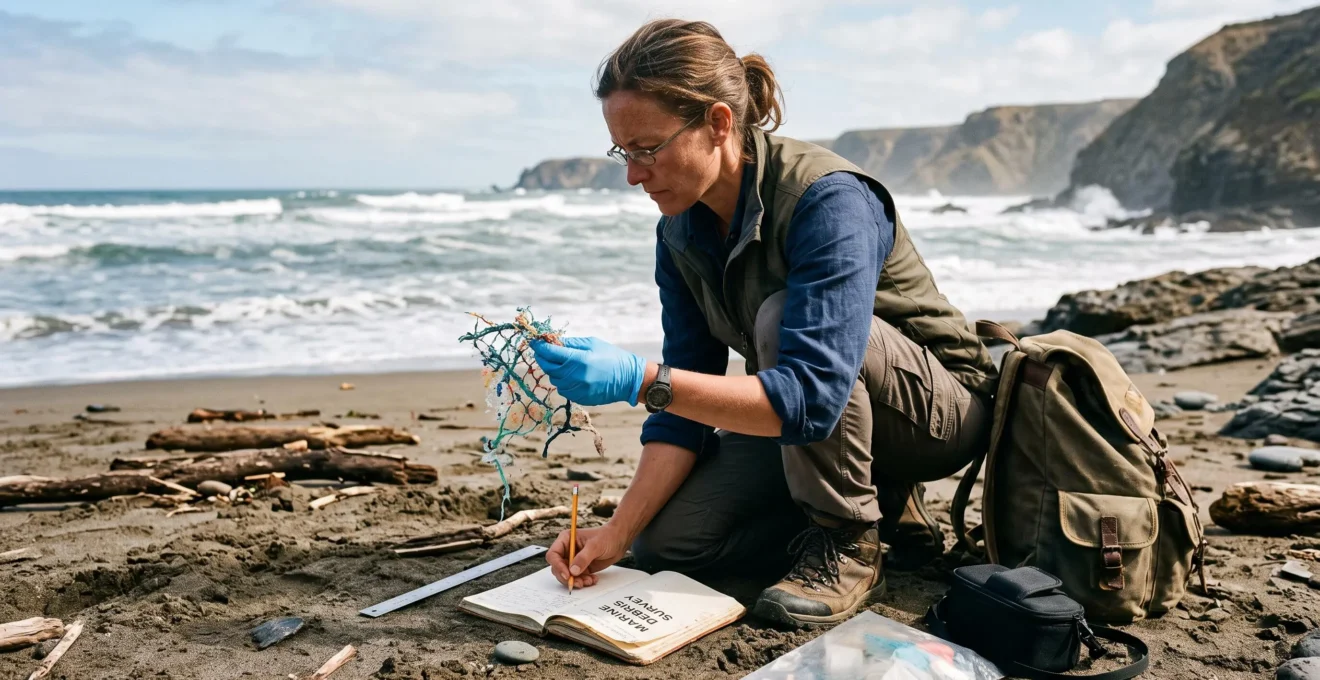
The most legitimate conservation activity for one free holiday morning is usually a supervised, locally requested task that requires little training and produces a verifiable contribution. A properly organized beach clean-up, standardized biodiversity survey, or marine-debris monitoring session may qualify. Handling wildlife or attempting habitat restoration without training generally does not.
The difference is not how adventurous an activity looks or how much effort it demands. It is whether the work addresses an identified environmental need, follows appropriate procedures, and contributes to an ongoing project.
Travellers have good reasons to question experiences advertised as opportunities to save wildlife, restore nature, or give back to a destination. Some activities prioritize visitor satisfaction over conservation outcomes. Others are legitimate but poorly explained, making their value difficult to judge.
With one morning available, the practical goal is not to become a conservation expert. It is to find a credible project, understand the limits of your contribution, and perform a useful task without creating additional environmental harm.
One-Morning Conservation: The Essential Decisions
- Choose a defined task: Prefer supervised debris removal or standardized citizen science over activities involving untrained wildlife handling.
- Verify the organizer: Look for a named local conservation partner, a specific objective, clear procedures, and evidence that results are used.
- Protect the environment first: Follow instructions, avoid disturbing wildlife, and schedule the activity early enough to accommodate poor field conditions.
- Why Do Some “Conservation Experiences” Feel Like a Photo Op Instead of Real Help?
- How to Check if a Conservation Project Is Credible Using 6 Proof Signals Before You Join?
- Beach Clean-Up or Citizen Science: Which Creates More Impact if You’re Not Super Fit?
- The Conservation Volunteer Mistake That Can Do More Harm Than Good in 30 Minutes
- When Should You Schedule Conservation Activities So You Don’t Miss the Best Field Conditions?
- How to Learn the Basics of Any Ecosystem in 90 Minutes Using Signs, Sounds, and One Checklist?
- How to Check if an Eco-Friendly Accommodation Is Legit Using 6 Listing Clues?
- How to Tell if an “Eco-Friendly” Stay Is Real Without Ending Up in an Uncomfortable Room
Why Do Some “Conservation Experiences” Feel Like a Photo Op Instead of Real Help?
Some conservation experiences feel performative because they are designed around what visitors want to do rather than what the local ecosystem needs. A meaningful activity begins with an identified environmental problem, assigns participants suitable tasks, and has a purpose beyond the experience itself. The decisive question is whether the work would still matter without tourists watching.
Consider two hypothetical coastal activities. In the first, visitors collect a few pieces of rubbish, pose for photographs, and leave without knowing what happens to the waste. In the second, a local environmental organization directs volunteers to a regularly monitored shoreline, explains what to collect, and records the material removed.
Both involve picking up litter. Only the second clearly demonstrates a connection between the task and an organized conservation process.
The distinction is between participation value and outcome value. Participation value includes learning, awareness, and personal engagement. Outcome value concerns the contribution to environmental management, research, restoration, or protection.
Both can matter, but they should not be confused. A memorable experience does not automatically generate measurable ecological benefits.
Short activities are particularly appropriate when work can be divided into consistent, low-skill tasks. Debris collection, recording observations, and counting designated indicators can accommodate occasional volunteers when supervision and methods are appropriate.
By contrast, handling animals, building sensitive habitats, and carrying out specialist restoration may require training, permits, continuity, and professional oversight. More direct contact with wildlife does not mean greater conservation value.
Before booking, ask three questions:
- What specific local problem does this activity address? Look for an identifiable environmental concern rather than a broad promise to protect nature.
- Who decided this work was needed? The answer should identify an appropriate local organization, conservation manager, researcher, or landowner.
- What happens after participants leave? There should be an understandable process for handling collected materials, managing observations, or continuing the project.
Paying a participation fee is not automatically suspicious. Legitimate organizers may need to fund supervision, equipment, transport, waste disposal, or conservation operations. Equally, a free activity may still serve commercial interests or create unnecessary environmental disturbance.
The relevant questions are whether charges are transparent, local partners benefit appropriately, and conservation needs determine the activity.
A limited schedule can actually encourage better choices. Instead of seeking dramatic encounters, concentrate on work that local conservation teams can safely delegate to occasional participants. The next challenge is verifying that the advertised project genuinely operates that way.
How to Check if a Conservation Project Is Credible Using 6 Proof Signals Before You Join?
A credible conservation project should provide evidence of local authorization, a defined environmental objective, repeatable activities, accountable results, transparent finances, and knowledgeable supervision. Travellers can assess these six signals through a short review of the operator’s website, partner information, independent feedback, and direct answers. Attractive branding alone is insufficient.
The most revealing question is “Who asked for this work to be done?” A conservation project should respond to an environmental need recognized by someone responsible for the site or species, not simply to demand for tourist experiences.
Use the following six-signal assessment before making a booking.
- Named local partner or site authority. Check whether the organizer identifies a reserve, park, landowner, conservation NGO, or research institution. Look for independent confirmation that the relationship exists.
- Specific conservation objective. Replace vague statements such as “help save the ocean” with a concrete task, such as surveying marine debris on a designated stretch of shoreline.
- Evidence of recurring local activity. Look for previous sessions, locally involved volunteers, project updates, or continued monitoring. Recurrence demonstrates an ongoing operation, although it does not prove ecological success.
- Clear destination for results. Ask where collected waste goes, how wildlife observations are checked, or which database receives survey records. A useful answer should describe a process rather than promise unspecified impact.
- Transparent participation costs. Request a breakdown of what the fee covers and whether funds reach the conservation partner. Transparency matters more than whether participation is free or paid.
- Staff who can explain the local problem. Ask what would happen if the activity did not take place. A competent organizer should explain the work’s purpose, limitations, and safety requirements without relying on promotional language.
One documented model of traceable fieldwork is NOAA’s Marine Debris Monitoring and Assessment Project. It provides shoreline survey procedures, field datasheets, guidance for submitting observations, and access to monitoring information.
This illustrates an important distinction: recording debris through a standardized survey is not the same as removing it. Both may have value, but a project should explain which activity it conducts and why.
NOAA’s framework is an example of documented monitoring, not an endorsement of individual tourist operators. Local access rules, permissions, and survey suitability must still be verified.
Glossy partnership logos are weaker evidence than a traceable working relationship. If a project claims to support a research institution, check whether the institution independently acknowledges the collaboration or can confirm it when contacted.
Your Five-Step Conservation Booking Verification
- Identify the local authority or conservation partner. Save the official name and independent website or contact details.
- Find the precise environmental objective. Write down one sentence describing the problem the activity addresses.
- Verify previous or scheduled sessions. Record one dated example of activity or written confirmation of a recurring programme.
- Request the procedure for handling results and participation fees. Keep the relevant published information or written explanation.
- Ask about supervision, physical requirements, and prohibited actions. Save a response that establishes what you may and may not do.
If these checks produce contradictory answers, do not assume that a convincing website resolves the issue. A legitimate small project may have limited documentation, but an organizer should still be able to explain its work.
For an unplanned beach clean-up with no clearly identifiable organizer, avoid joining under uncertain instructions. Where lawful and safe, you may instead use designated public waste facilities for ordinary litter, without entering protected areas, disturbing natural materials, or claiming participation in a verified conservation programme.
A credible project does not need an impressive visitor experience. It needs accountable operations. Once that is established, the next decision is which task suits your physical capacity and ability to follow the required method.
Beach Clean-Up or Citizen Science: Which Creates More Impact if You’re Not Super Fit?
Neither beach clean-ups nor citizen science can be declared universally more impactful for travellers with limited fitness. A supervised clean-up is appropriate when removing identified waste is the local priority. Citizen science may be preferable when an established project needs accurate observations. Both can offer accessible roles, but their value depends on correct procedures rather than physical effort alone.
The practical comparison involves four factors: physical demands, learning time, usefulness of a single contribution, and the consequences of mistakes.
A beach clean-up can involve walking on uneven sand, bending, carrying bags, and exposure to heat. However, some organizers can assign lightweight sorting, recording, or short sections of accessible shoreline.
Citizen science may involve less lifting but requires concentration, accurate identification, and careful reporting. A seated observation point or stationary recording role may be suitable when permitted by the project protocol.
The following comparison can help narrow the choice.
| Decision criterion | Organized beach clean-up | Protocol-based citizen science |
|---|---|---|
| Physical demand | Variable; potentially substantial on soft sand | Variable; stationary or accessible surveys may be available |
| Learning requirement | Waste identification and safe collection instructions | Observation, identification, and data-recording rules |
| Value of one session | Appropriate debris can be removed and processed | Valid observations can enter an ongoing dataset |
| Principal error risk | Wildlife disturbance or removal of natural habitat materials | Incorrect identification, location, timing, or reporting effort |
| Useful adaptation | Short accessible sections, recording, or supervised sorting | Stationary counts, paired identification, or approved recording roles |
Choose the clean-up when a local organizer has identified a debris problem, established a collection procedure, and arranged appropriate disposal. Choose citizen science when an established programme provides clear instructions and accepts a defined period of observation.
For example, eBird‘s official observation rules and best practices explain how bird records should be associated with appropriate locations, dates, observation protocols, and reporting effort.
These requirements matter because a biodiversity observation is useful only when researchers can interpret what was recorded and how. Uncertain identifications should not be presented as confirmed species.
Accuracy matters just as much when removing rubbish. Natural objects such as driftwood, shells, and seaweed deposits may provide habitat, nutrients, or shelter. Removing them indiscriminately can damage the environment a clean-up is intended to protect.
Likewise, collecting the greatest number of wildlife observations is not necessarily helpful. Reliable records are more useful than numerous speculative identifications. In either activity, ask a supervisor before improvising.
For travellers with reduced mobility, request specific adjustments before booking. A buddy can assist with species identification, an accessible survey point may replace a long walking route, or a designated recording task may reduce lifting.
These accommodations depend on the site’s accessibility and the project’s actual requirements. Never assume that a sensitive field protocol can be modified without permission.
The strongest contribution is not necessarily the one that leaves you exhausted. It is the task you can perform safely, consistently, and as instructed. That also requires understanding when helpful intentions can turn into harmful interventions.
The Conservation Volunteer Mistake That Can Do More Harm Than Good in 30 Minutes
The most dangerous mistake an inexperienced conservation volunteer can make is intervening with wildlife without authorization. Touching animals, moving nests, feeding individuals, or handling specimens can cause injury, stress, disrupted behaviour, or habitat disturbance. In sensitive situations, even a brief intervention may have lasting consequences, making restraint more responsible than improvised rescue.
Conservation activities sometimes place volunteers close to vulnerable species. The instinct to help an animal that appears injured, stranded, abandoned, or exposed can be powerful, especially when no supervisor is immediately visible.
But visual appearances are not enough to diagnose distress.
A resting marine animal may be behaving normally. Young animals are not necessarily abandoned because a parent is absent from view. Moving them can interfere with natural behaviour and may be illegal under local wildlife-protection rules.
NOAA‘s guidance on responsible marine wildlife encounters advises visitors not to touch, feed, pursue, or disturb marine animals, and recommends contacting an appropriate authority when an animal may need assistance.
The specific hazards differ by species and location. Handling may expose wildlife to stress, injury, pathogens, or disruption of parental care. Human scent alone should not be treated as a universal cause of abandonment.
A useful prevention routine can be completed during the first 30 minutes of a session. This is a practical preparation sequence, not a formally validated training protocol:
- Arrive before the scheduled start. Allow time for the organizer’s safety and ecological briefing instead of joining work already underway.
- Disclose your experience honestly. Explain that you are a short-term participant and identify any tasks for which you lack training.
- Confirm prohibited actions. Repeat the rules concerning wildlife contact, restricted areas, tools, specimens, and uncertain objects.
- Establish a stop-and-ask procedure. Agree on how to contact a supervisor when something unexpected occurs.
If you encounter an apparently injured or stranded animal, maintain a safe distance and report its location to the organizer or the relevant local wildlife authority. Follow any instructions given by authorized responders.
Do not move, feed, transport, or attempt to treat wildlife simply because immediate assistance seems compassionate. Where a situation threatens human safety, prioritize personal safety and contact the appropriate emergency service.
Some mistakes, such as a corrected field note, can be addressed within a project’s data-quality process. Others, such as damaging a nest or injuring an animal, may not be reversible.
The appropriate default for uncertain wildlife encounters is to avoid intervention while seeking qualified guidance. Once the safety boundaries are clear, thoughtful scheduling can further improve the chances that the morning’s work is actually useful.
When Should You Schedule Conservation Activities So You Don’t Miss the Best Field Conditions?
Schedule a conservation activity around the site’s environmental conditions and the organizer’s established field programme, preferably early in your holiday. Coastal work may depend on tides, wildlife surveys on light and temperature, and species monitoring on seasonal presence. There is no universally optimal morning: the correct window depends on the task, habitat, and local safety requirements.
Starting with your preferred holiday time and searching for an activity to fill it can produce a poor match. A more reliable approach is to identify a credible project first and then arrange your itinerary around a suitable session.
Different conservation tasks depend on different variables.
- Beach clean-ups: Tide conditions affect shoreline access, exposed debris, and potential hazards. Safe working windows must be determined locally rather than assuming that low tide always makes conditions suitable.
- Coastal surveys: Some monitoring protocols require consistent tidal or shoreline conditions so observations can be meaningfully compared.
- Bird and wildlife observation: Species behaviour, daylight, weather, and disturbance levels influence what participants can observe. A morning session may be appropriate for some projects but not others.
- Seasonal species monitoring: Migratory arrivals, breeding seasons, and other ecological cycles determine whether the target species are likely to be present.
For a coastal project, consult an authoritative local tide forecast and the organizer’s access guidance. For wildlife monitoring, check sunrise or sunset information when relevant and ask whether particular weather or temperature conditions restrict the survey.
Where activities involve seasonal wildlife, verify the expected local occurrence period through an appropriate conservation authority, reserve, or scientific organization. An operator’s advertised season is not a guarantee that an animal will be present.
For example, a hypothetical traveller planning a week at a coastal destination could contact a conservation group before departure and discover that its supervised monitoring session occurs only on selected mornings. The traveller could then reserve an early session and retain a later day for a possible weather-related rescheduling.
This is safer than reserving the final morning of the holiday, when a cancellation may eliminate the opportunity entirely.
A practical scheduling sequence is to confirm the project’s recurring dates, ask what field conditions would trigger cancellation, identify a suitable session, and reserve another possible time if the organizer offers one.
Also check whether a session requires advance registration, a minimum age, specific clothing, accessible transport, or prior training. A publicly listed activity should not be assumed to accept spontaneous participation.
Weather forecasts remain uncertain, and fieldwork can be cancelled for good ecological reasons. An organizer that refuses to proceed during unsafe or inappropriate conditions may be demonstrating responsible management rather than poor service.
A well-timed activity improves the opportunity to contribute but cannot guarantee an environmental outcome. Preparing to recognize the habitat and follow the observation procedure makes that opportunity more productive.
How to Learn the Basics of Any Ecosystem in 90 Minutes Using Signs, Sounds, and One Checklist?
A traveller can prepare for a conservation activity in 90 minutes by learning the site’s main environmental issues, recognizing a small number of relevant species or habitat signs, and practising observations using reliable local material. This preparation does not create expertise, but it can improve questions, reduce avoidable mistakes, and make the organizer’s instructions easier to follow.
The objective is functional environmental awareness, not mastering the ecosystem. You need to understand what the activity is looking for, why those indicators matter, and which observations you should leave unclassified when uncertain.
Divide the preparation into three phases.
- First 20 minutes: Understand the ecosystem and its pressures. Read the reserve’s or organizer’s published information. Identify the principal habitat, the locally documented conservation problem, and the reason volunteers are involved. Record any restricted areas or sensitive species mentioned.
- Next 30 minutes: Learn five to ten useful indicators. Use an appropriate regional field guide or conservation organization to study distinctive species, habitat features, or signs of disturbance. Prioritize those relevant to the scheduled task. Distinguish what you can confidently recognize from what requires specialist identification.
- Final 40 minutes: Practise observation. Listen to trustworthy recordings of locally relevant bird or frog calls where applicable, examine reference images, and rehearse separating direct observations from guesses. If the activity involves shoreline monitoring rather than species identification, spend this phase learning the relevant debris categories and survey instructions.
Create one short observation card containing the exact categories required by the organizer. It might include the approved observation method, what to count, what to photograph, how to note location and time, and when to ask for confirmation.
The card should reproduce the project’s actual protocol where one exists. A personal checklist must not override official recording requirements or create an alternative dataset.
For a hypothetical coastal bird survey, a useful card could remind the observer to record the designated location, observation period, confidently identified species, and any uncertainties for supervisor review. The precise fields would depend on the selected programme.
This preparation also supports credibility checks. Someone familiar with the expected habitat can ask why a project is surveying a particular species, whether its stated objectives match local ecological conditions, and why certain areas are protected from visitors.
However, recognition is not proof of expertise. Similar-looking species, unfamiliar calls, and seasonal variations can cause mistakes even among prepared observers.
Do not turn uncertainty into a confirmed record. If you cannot identify an organism confidently, follow the programme’s rules for uncertain observations or request assistance.
The same caution applies when distinguishing native from invasive species or healthy from disturbed habitats. Such classifications often require local knowledge and ecological context rather than visual impressions alone.
Learning a few useful indicators makes participation more focused without encouraging amateur intervention. It can also improve how you evaluate local accommodation providers, especially those claiming a close relationship with conservation work.
How to Check if an Eco-Friendly Accommodation Is Legit Using 6 Listing Clues?
An eco-friendly accommodation listing is more credible when it provides verifiable evidence of environmental management, specific operating practices, local economic participation, and accountable responses to guest questions. Certifications can help, but they are not sufficient on their own. Six practical listing clues can help travellers distinguish operational sustainability from broad marketing claims.
The same reasoning used for conservation projects applies to hotels, guesthouses, and lodges: Which local environmental problem do these practices address?
A property in a water-scarce destination should be able to explain its approach to water demand. A coastal accommodation near a protected habitat should be able to describe how it manages access, waste, and environmental disturbance.
Examine these six clues before booking.
- Verifiable certification or scheme membership. Look for the full name of the certification scheme and check the property’s status with the relevant certification body where possible. A logo without a verifiable record is weak evidence.
- Specific environmental measures. Prefer descriptions of actual energy, water, purchasing, and waste-management arrangements over unsupported claims that a property is green or nature-friendly.
- Evidence of implementation. Examine recent guest photographs and reviews for refill facilities, waste-separation arrangements, or other practices the property advertises. Images provide clues, not a complete audit.
- Local hiring and sourcing. Look for identifiable arrangements involving local staff, producers, suppliers, or service providers rather than general statements about helping communities.
- Transparent explanations of environmental investment. Ask how the property supports its stated measures. Price alone cannot establish sustainability: expensive accommodation may perform poorly, while a modestly priced property may manage its impacts responsibly.
- Substantive management responses. Check whether staff answer questions about environmental operations with concrete explanations rather than repeating advertising slogans.
The Global Sustainable Tourism Council‘s Hotel Standard provides an international framework covering sustainability management, local community benefits, cultural heritage, and environmental impacts.
The standard helps travellers formulate informed questions. It is not, by itself, evidence that a particular hotel has been independently audited or certified.
Certification systems vary across destinations. Smaller accommodation businesses may lack formal labels for legitimate financial or administrative reasons, so the absence of certification should invite closer examination rather than automatic rejection.
Conversely, a recognized-looking sustainability logo does not remove the need to verify property-level practices.
A credible local accommodation provider may also help identify conservation activities. Ask which nearby organizations work regularly with local residents, whether visitors can join approved activities, and how the property knows the projects are legitimate.
Such referrals are useful leads, not independent proof. Apply the same project checks before booking a volunteer session.
Environmental responsibility is only one part of choosing accommodation. Once the claims appear credible, it is still necessary to establish whether the room meets your practical comfort and accessibility needs.
Key Takeaways Before Choosing Your Stay
- An accommodation provider’s sustainability claims should match identifiable local environmental conditions and documented practices.
- Certification, guest photographs, and management responses provide different types of evidence; none offers complete assurance independently.
- A comfortable base near a credible field project can make responsible participation easier without requiring unnecessary personal sacrifices.
How to Tell if an “Eco-Friendly” Stay Is Real Without Ending Up in an Uncomfortable Room
A genuinely eco-friendly stay does not have to be uncomfortable. The practical approach is to verify sustainability measures separately from room conditions, checking recent guest experiences and asking precise questions about essential amenities. Environmental performance and comfort are different criteria: a property should explain both rather than treating reduced convenience as automatic proof of sustainability.
Some accommodations implement environmental measures that guests barely notice, such as renewable energy procurement, efficient building systems, responsible purchasing, or carefully managed water use.
Others make more visible operational choices, including limited air conditioning, reduced laundry frequency, natural ventilation, or shared facilities. These arrangements may suit certain travellers, but they should be explained before booking.
Sustainability is not measured by discomfort. A room without cooling is not automatically greener than one using an efficient, appropriately managed cooling system. Environmental performance depends on local conditions and the property’s broader operations.
Begin by identifying the comfort requirements that matter to you. Common considerations include bed dimensions, private bathroom availability, hot-water reliability, cooling or heating, noise, insect protection, step-free access, and proximity to transport.
Then read recent negative reviews specifically for recurring comfort problems. A single complaint may reflect personal preference or an isolated incident. Multiple independent descriptions of the same unresolved issue deserve greater attention.
Use the timing of those reviews carefully. A complaint from several years ago may no longer apply if the property has made documented improvements. Conversely, a recent cluster of similar concerns may indicate current operating conditions.
Three direct questions can clarify common uncertainties:
- How is hot water supplied, and are there periods when it may be unavailable?
- What cooling or heating system is available in the specific room category being booked?
- Where relevant, what mosquito or other insect protection is provided, and are windows screened?
For accessibility needs, ask separately about room access, paths, bathroom arrangements, and transport. General descriptions such as accessible or nature-friendly are not enough to confirm suitability.
Two types of misleading eco-claims deserve attention. The first involves environmental branding that cannot be substantiated, potentially leading travellers to pay for benefits that have not been demonstrated.
The second involves advertised practices that are absent or inconsistently implemented. A property might claim to reduce disposable plastic, for example, while recent guest evidence suggests that single-use supplies remain standard.
These situations have different consequences, but both require checking operational evidence rather than accepting the listing’s description.
Comfort checks also support the conservation morning itself. Adequate sleep, reliable transport, accessible facilities, and appropriate cooling can make it easier to arrive prepared and follow demanding field instructions.
Choose the accommodation and conservation project as related but independently verified decisions. A hotel that recommends a volunteer experience should still be able to identify the actual conservation organizer.
For your next holiday, identify a locally requested conservation task, confirm the organizer’s procedures, choose a role suited to your abilities, and reserve an appropriate morning early in the trip. Then select accommodation that meets both your environmental expectations and essential comfort needs. One carefully planned morning is a realistic contribution when useful work, qualified supervision, and respect for the ecosystem come before the visitor experience.
Is one morning of conservation volunteering actually worth doing?
It can be worthwhile when the project has a genuine need for short-term participants and assigns tasks that can be completed accurately within the available time. Supervised debris removal and standardized observations are examples. A single session can contribute work or data without necessarily producing a measurable ecological improvement by itself.
Should a legitimate conservation project provide a certificate of participation?
A participation certificate is optional and should not be treated as proof of ecological impact. More useful evidence includes the name of the responsible organization, the task completed, the procedure followed, and an explanation of how the work contributes to the ongoing project. A certificate may document attendance without verifying conservation outcomes.
Can children or older travellers join a one-morning conservation activity?
Eligibility depends on the organizer’s rules, field conditions, supervision arrangements, and individual capabilities rather than age alone. Some projects may provide accessible recording or observation roles, while others require walking over uneven ground or carrying equipment. Confirm minimum ages, accessibility, insurance requirements where applicable, and task restrictions directly with the organizer.
What if a project cannot show immediate environmental results?
Not all legitimate conservation activities produce immediate visible results. Monitoring programmes may collect observations over time before changes can be assessed. Ask what the project measures, how information is checked, and who uses the results. A clear monitoring process is meaningful evidence of purpose, but it should not be confused with proof that conservation outcomes have already improved.
What should travellers do if a conservation activity is cancelled at short notice?
Ask whether the organizer offers a later approved session or a suitable alternative task. Avoid independently entering protected habitats or conducting improvised surveys to replace cancelled fieldwork. If no supervised activity is available, visiting an educational facility, learning from official conservation materials, or supporting a verified local organization may be more responsible than forcing an unsuitable volunteer opportunity.