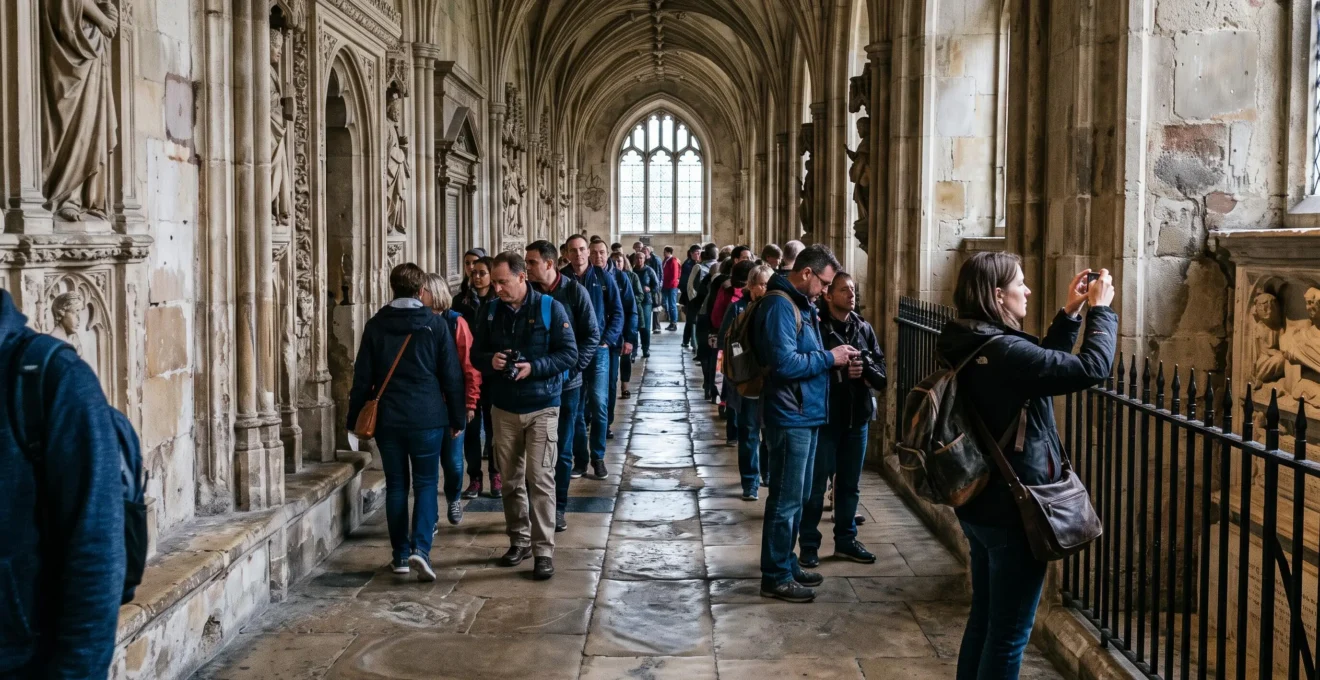
Every visit to a historic monument carries a small physical footprint. Shoes gradually abrade old surfaces, accidental contact can affect vulnerable materials, and concentrated crowds place demands on buildings never designed for modern tourism. Even considerate travellers contribute to these pressures simply by being present.
Yet avoiding heritage places altogether is not necessarily the answer. Responsible tourism can generate admission revenue, support local craftspeople, sustain conservation programmes, and encourage communities to protect places of cultural importance. The challenge is to enjoy access without adding unnecessary damage or overwhelming a site’s capacity to accommodate visitors.
Responsible heritage travel begins with three decisions: when to visit, how to behave once inside, and where to direct tourism spending. Choosing an appropriate time slot, respecting conservation restrictions, considering less-visited attractions, and supporting accountable preservation organisations can all contribute to a more sustainable visit.
The most useful approach is not to seek a perfectly impact-free holiday, but to make informed choices that work with each site’s conservation needs.
Responsible heritage visits: the essentials
- Reduce concentrated visitor pressure by checking official entry arrangements, choosing quieter periods where appropriate, and exploring suitable alternative sites.
- Protect fragile materials by staying on designated routes, avoiding physical contact, and following site-specific photography and access restrictions.
- Support preservation through legitimate organisations, responsible local guides, and donations whose purpose and financial reporting can be verified.
- Why Do Heritage Sites Wear Out So Quickly Even When Visitors “Behave”?
- How to Plan a Heritage Day That Avoids the Most Overcrowded Hours Without Missing the Highlights?
- Famous Heritage Landmark or Lesser-Known Alternative: Which Feels More Rewarding on a 2-Day Trip?
- The Small Rule-Break Most Visitors Don’t Notice That Causes Real Heritage Damage
- When Should You Support Heritage Preservation So Your Donation Doesn’t Get Lost in Admin?
- How to Vet a Heritage Tour Guide’s Credibility in 10 Minutes From the Listing and Reviews?
- How to Build a 2-Day Attractions Plan Around Timed Tickets Without Sprinting Across Town?
- Which 3 Attractions Should You Book First to Avoid 2-Hour Queues on a 48-Hour Trip?
Why Do Heritage Sites Wear Out So Quickly Even When Visitors “Behave”?
Heritage sites deteriorate under repeated use because even careful visitors create physical and environmental pressures. Footsteps abrade historic flooring, incidental contact affects vulnerable surfaces, and dense crowds can alter indoor conditions. The extent of damage depends on the materials, building environment, visitor numbers, and protective measures. Good behaviour reduces avoidable harm, but cannot eliminate cumulative wear.
Historic surfaces are not interchangeable with modern building materials. An original stone stair may have survived centuries of occasional use, yet concentrated daily foot traffic can gradually polish or erode its surface. Timber floors, delicate decoration, and archaeological remains may be especially vulnerable where visitors have direct access.
Indoor environments introduce additional complications. Visitors release heat, moisture, and carbon dioxide through breathing and perspiration. In enclosed or poorly ventilated spaces, large groups can influence environmental conditions relevant to the conservation of certain materials. Vibration from movement may also require assessment at particularly sensitive structures, although its significance varies considerably between sites.
Visitor impact and visitor pressure are different. Impact describes what an individual visit may cause; pressure describes the combined demands placed on a site by visitor numbers, timing, movement, and behaviour.
A carefully managed building may accommodate substantial visitation without unacceptable deterioration. Conversely, a fragile interior may require strict access controls even when its visitors follow every instruction.
According to UNESCO’s guidance on managing visitor behaviour at World Heritage sites, monitoring visitor movements and identifying concentrated pressures are important components of sustainable tourism management. The guidance addresses distributing visitors across times and locations, controlling access, and recognising particularly vulnerable areas.
Conservation responses can include protective or replica walking surfaces, restricted rooms, designated circulation routes, and limits on admissions. Some sites may open sensitive spaces selectively or rotate access according to conservation requirements. These interventions protect heritage but can reduce how much of an original monument remains directly accessible.
Individual travellers cannot establish safe carrying capacities or install protective infrastructure. Those responsibilities belong to site authorities and conservation specialists. Visitors can, however, comply with capacity controls, avoid unnecessary crowd concentration, and support the organisations maintaining protective systems.
The practical implication is straightforward: personal courtesy matters, but choosing when and where to visit can be just as important. That makes planning the next essential preservation decision.
How to Plan a Heritage Day That Avoids the Most Overcrowded Hours Without Missing the Highlights?
Plan a lower-pressure heritage day by checking the site’s official opening schedule, timed-entry availability, and known busy periods before choosing your visit. An early or late admission slot may offer a calmer experience, but neither is universally quieter. Prioritise the most popular feature, allow time for less-visited areas, and verify which facilities remain available.
Begin with the monument’s official website rather than general recommendations about the best time to visit. Look for its admission calendar, seasonal hours, visitor notices, and booking availability. Some attractions publish information about expected crowding or recommend particular visiting windows.
Compare weekdays with weekends, public holidays, school holidays, and scheduled local events. A weekday morning may be relatively peaceful outside the main tourist season but extremely busy during a school-group arrival period. Cruise-ship schedules and major festivals can also change local demand.
Where timed entry exists, the first available slot is worth investigating. Late-afternoon admission may provide another option, provided the final entry time leaves enough time to experience the attraction properly.
Once the admission window is selected, organise the visit around one priority feature. At a castle, that might be the historic state rooms; at an archaeological site, a fragile excavated area with controlled access. Visit it during the least congested period available under the site’s rules.
Use quieter galleries, courtyards, gardens, or interpretation areas to complete the experience rather than repeatedly returning to a crowded focal point. Follow the site’s designated route wherever movement is controlled.
Off-peak does not always mean full access. Guided tours may operate less frequently, seasonal rooms may close earlier, and cafés or transport services may have reduced hours. Confirm the specific services important to your visit before finalising tickets.
Illustrative heritage-day schedule
Consider a hypothetical historic complex with timed morning admissions, a popular central hall, quieter gardens, and a small museum. A traveller could reserve an early admission, visit the central hall first, explore the museum when circulation becomes busier, and finish in the gardens if they remain open.
This is a planning example, not a verified itinerary or a guarantee of reduced conservation damage. Actual quiet periods, access rules, and visitor capacity must be checked with the individual site.
If the only available visit coincides with peak demand, respecting the official capacity system is more useful than seeking unofficial access. Another option is to divide a short trip between a major landmark and a suitable secondary attraction.
Famous Heritage Landmark or Lesser-Known Alternative: Which Feels More Rewarding on a 2-Day Trip?
For a two-day cultural trip, combining one major landmark with one or two carefully chosen secondary sites often offers a rewarding balance. Famous monuments may provide exceptional historical significance and interpretation, while smaller attractions can offer more time for observation and meaningful local encounters. Neither category is automatically more sustainable; conservation capacity and visitor management determine the better choice.
Iconic heritage attractions often attract visitors for compelling reasons: distinctive architecture, internationally important collections, or direct connections to historical events. Established admission systems, trained staff, and interpretation resources can make them accessible and informative.
Smaller sites may offer a different experience. A regional museum, historic district, community-managed monument, or restored industrial building can reveal local histories that receive less attention from international visitors.
The following comparison helps identify what matters most for a short visit.
| Decision factor | Famous landmark | Lesser-known alternative |
|---|---|---|
| Crowding | May experience concentrated demand, especially at popular features | May be quieter, although small capacity can make modest crowds significant |
| Access | Often uses formal ticketing, security, and timed admissions | May offer flexible admission or have limited opening days |
| Interpretation | May provide extensive exhibitions, audio guides, and tours | May offer specialist or locally grounded interpretation, sometimes with fewer resources |
| Local economic contribution | Can support established tourism employment and heritage operations | Can direct visitor spending towards smaller communities and organisations |
| Conservation considerations | Higher demand may require substantial visitor-management measures | Limited staffing and conservation budgets may restrict safe capacity |
Distributing demand can benefit a destination when alternative sites have the resources and willingness to receive additional visitors. Spending on local admission fees, authorised tours, and nearby independent services can also spread tourism’s economic benefits beyond the main attraction.
However, a quiet monument is not necessarily equipped for an influx of visitors. Particularly fragile archaeological sites may have minimal supervision, restricted paths, or conservation programmes that depend on limiting access.
A practical two-day combination is one flagship visit during an officially available, potentially quieter slot, followed by a smaller heritage site with published visitor arrangements. A third stop can be added if travel distances, opening hours, and the site’s capacity make it reasonable.
Choose alternatives through official regional heritage directories, museum networks, or local visitor information services. Check their conservation status, access requirements, and whether they welcome independent visitors. Avoid promoting unprotected or culturally sensitive places as unrestricted discoveries.
A thoughtful combination can make a short trip richer without treating heritage preservation as a competition between famous and obscure places. Whichever attraction is selected, careful behaviour inside its most sensitive areas remains essential.
The Small Rule-Break Most Visitors Don’t Notice That Causes Real Heritage Damage
One of the easiest heritage rules to overlook is the prohibition on touching historic surfaces, even briefly. Fingers, bags, clothing, and equipment can make unintended contact with fragile materials. A single touch may seem insignificant, but repeated contact can cause gradual surface changes. The safest approach is to respect barriers and keep belongings away from original features.
Touching carved decoration for a photograph, resting a backpack against masonry, or leaning on an old railing may feel harmless in the moment. However, historic materials often have weathered surfaces, decorative finishes, or structural vulnerabilities that are not apparent to visitors.
The National Park Service guidelines for visiting archaeological places explicitly warn against touching pictographs and petroglyphs because oils from human skin can damage their surfaces. The guidance also instructs visitors not to remove artefacts or disturb archaeological features.
This warning concerns particular kinds of archaeological resources and should not be interpreted as proof that every stone, metal, or wooden object deteriorates through an identical process. Conservation risks depend on the material and its condition.
Nevertheless, a useful principle applies widely: do not assume a surface is safe to touch simply because it looks solid.
Photography can create additional risks when visitors lean across barriers, place equipment against historic surfaces, or disregard restricted areas. Flash photography and selfie sticks should be avoided wherever site rules prohibit them. Their permissibility varies by attraction and may reflect conservation, safety, security, or crowd-management concerns.
Food and drinks also require attention. In sensitive interiors, crumbs, spills, and discarded packaging can complicate cleaning and pest management. Use designated eating areas rather than assuming that an ordinary museum or monument corridor is suitable for refreshments.
A five-action heritage protection check before entry
- Read the entrance signage and identify any no-touch, photography, or restricted-access rules; record the restrictions relevant to your visit.
- Secure your backpack or carry it in front where required; confirm that it cannot brush against walls or exhibits.
- Check the approved visitor route on the site map; identify the paths and barriers you must respect.
- Put food and drinks away before entering sensitive interiors; locate the permitted refreshment area.
- Check your camera or phone setup against the site’s rules; disable prohibited features and put away restricted equipment.
The behaviour of other visitors is not reliable guidance. If someone crosses a barrier or touches a carving, that does not establish permission. Follow posted rules and staff instructions, even when the surrounding crowd behaves differently.
If a damaging action occurs nearby, alerting site staff is generally more constructive than confronting another visitor or physically intervening.
Preventing direct damage is the most immediate contribution a traveller can make inside a monument. Supporting the people and institutions responsible for long-term conservation requires a different kind of decision.
When Should You Support Heritage Preservation So Your Donation Doesn’t Get Lost in Admin?
Support heritage preservation when you can verify who will receive the money, what work it may fund, and how the organisation reports its activities. There is no universally best donation date or administrative-cost percentage. A clearly documented restoration appeal, transparent membership programme, or accountable conservation charity is generally more informative than an emotional appeal without financial details.
Heritage funding takes several forms. On-site donation boxes may support an attraction’s operations or conservation work, depending on the organisation. Official site trusts and foundations may finance specific projects, while national heritage bodies and international conservation organisations can distribute resources across multiple locations.
The distinction between operating expenses and conservation expenditure deserves care. Professional staff, documentation, research, monitoring, and administration can all be necessary for effective preservation. A low administrative-cost figure does not, by itself, demonstrate superior conservation outcomes.
Before giving, examine the organisation’s identity, stated purpose, and available reporting.
- Legal status: Is the recipient an official heritage body, recognised foundation, or appropriately registered charity?
- Financial transparency: Are annual accounts, financial summaries, or other disclosures available?
- Purpose of the gift: Is the contribution restricted to a named restoration project or available for general operations?
- Accountability: Does the organisation publish conservation updates, project outcomes, or explanations of its work?
For organisations operating in England and Wales, the UK government charity register search service allows donors to investigate registered charities, including their activities, trustees, and financial information.
That register does not cover every charitable organisation across the United Kingdom. Scotland and Northern Ireland have separate registration systems, and some legitimate organisations may be exempt or excepted from particular registration requirements.
Donation timing matters mainly in relation to a project’s needs and the donor’s circumstances. Recurring contributions can provide predictable funding, which may be useful for continuing conservation programmes. A substantial one-off gift may be appropriate when a legitimate organisation has a clearly described project or urgent funding requirement.
Some institutions offer memberships, patron arrangements, or restoration sponsorship schemes. Before participating in an adopt-a-stone or similar programme, check whether the contribution supports a specific intervention, a wider conservation fund, or primarily a symbolic recognition scheme.
Be cautious about unofficial collections near monuments and online campaigns with unclear ownership. Gift-shop purchases may contribute to a site’s revenue, but the portion supporting conservation should not be assumed without an explicit statement.
Financial support is one way to strengthen preservation. The choice of a tour operator can also influence visitor conduct and determine whether tourism spending supports knowledgeable local professionals.
How to Vet a Heritage Tour Guide’s Credibility in 10 Minutes From the Listing and Reviews?
A heritage guide can be screened in approximately ten minutes by checking their qualifications, group size, itinerary, conservation practices, and review history. Look for specific evidence of historical knowledge and responsible visitor management rather than relying on ratings alone. Where professional licensing is required, verify the relevant credentials before booking.
Begin with the operator’s listing. A credible description should make clear what the tour covers, who delivers it, how many participants may attend, and whether admission is included.
Professional requirements differ between countries and destinations. Some locations regulate guiding at particular monuments, while others permit guides with different backgrounds and qualifications. Avoid assuming that a credential from one jurisdiction automatically authorises guiding elsewhere.
Use a short screening sequence:
- Minutes 1–2: Identify the guide or operator and look for relevant credentials, specialist knowledge, or verifiable experience.
- Minutes 3–4: Check the maximum group size and whether the route is appropriate for the site’s visitor-management arrangements.
- Minutes 5–6: Review the itinerary for official entrances, permitted access, and realistic time allocations.
- Minutes 7–8: Read detailed reviews for evidence of historical accuracy, considerate group management, and respect for conservation rules.
- Minutes 9–10: Examine cancellation conditions and prepare questions about any missing information.
Reviews are most informative when they describe observable behaviour. Comments about a guide explaining historical context, keeping groups together, respecting restricted areas, or allowing sufficient time to appreciate a site are more useful than generic praise.
Repeated references to rushed visits, excessive group sizes, blocked pathways, or ignoring staff instructions deserve closer attention. Individual reviews can be incomplete or subjective, so look for consistent patterns rather than treating one comment as definitive.
A particularly valuable sign is the guide’s willingness to explain why conservation restrictions exist. Responsible interpretation connects a monument’s cultural significance with the responsibilities associated with its protection.
Conversely, an operator promising unauthorised access to closed spaces should raise concern. Legitimate special-access tours may exist, but their authorisation should be confirmed through the responsible institution.
If the listing is vague, contact the operator with three questions: What qualifications or permissions apply to this tour? What is the maximum group size? How does the itinerary accommodate the site’s conservation and access rules?
Specific, verifiable answers matter more than immediate replies. Response speed may indicate customer-service reliability, but it is not proof of professional competence.
A responsible guide can improve a heritage visit, but even an excellent tour becomes stressful when several timed attractions are arranged without realistic travel and access buffers.
How to Build a 2-Day Attractions Plan Around Timed Tickets Without Sprinting Across Town?
Build a two-day attractions itinerary by grouping nearby heritage sites before choosing timed-entry reservations. Place the least flexible admissions first, allow realistic margins for travel and security checks, and leave space for unplanned delays. A geographically coherent itinerary reduces unnecessary rushing and makes it easier to follow visitor routes and conservation instructions.
Start by placing potential attractions on a map. Group them by neighbourhood, historic district, or transport corridor, and consider dedicating each day to one compact area.
Only then compare timed-entry availability. A convenient admission slot is of limited value if reaching it requires crossing the city immediately after another demanding visit.
Use each timed booking as an anchor rather than filling every available hour. Estimate the full time commitment, including arrival procedures, admission checks, orientation, the visit itself, and departure.
Include buffers for public transport, walking between sites, toilets, meals, and possible queues. These should be based on the destination’s actual conditions, not a universal interval.
For example, consider this explicitly hypothetical arrangement:
| Planning element | Day 1: Historic centre | Day 2: Museum district |
|---|---|---|
| Primary booking | Timed admission to a major monument | Timed admission to a heritage museum |
| Flexible activity | Nearby historic streets or public heritage interpretation | Smaller museum or authorised cultural attraction |
| Break | Meal outside sensitive monument interiors | Rest period between attractions |
| Contingency | Shorten the optional activity if admission is delayed | Keep the secondary attraction flexible |
The schedule is a planning illustration, not a recommendation for a particular city or an estimate of actual admission times.
Official timed-entry arrangements can help site managers regulate admissions and anticipate visitor flows. Their direct conservation benefit depends on how each site uses the system, including whether capacity limits and protective measures are in place.
The difference between a reservation and immediate access is important. A timed ticket may secure admission during a specified window while still requiring visitors to queue for security or ticket checks.
Before travelling, save each operator’s arrival instructions, late-entry policy, and any permitted exchange or cancellation options. Check whether tickets are linked to specific names or dates.
If a delay threatens a booking, consult the official conditions before making assumptions. Contact the operator where necessary, and be prepared to abandon a flexible secondary stop rather than rushing through a protected area or attempting to bypass admission procedures.
Once the route is practical, the final planning decision is which attractions need early reservations and which can remain flexible.
Key takeaways before booking
- Prioritise admission systems with limited capacity or strict time-slot availability rather than automatically booking the most famous attraction first.
- Use official booking information to distinguish genuine entry constraints from exaggerated queue-time claims.
- Preserve flexibility around the main reservations so travel delays do not encourage rushed or rule-breaking behaviour.
Which 3 Attractions Should You Book First to Avoid 2-Hour Queues on a 48-Hour Trip?
For a 48–hour heritage trip, book the attraction with the strictest entry quota first, followed by the one with the greatest credible queue risk, then the site with the most limited opening or daily capacity. These are booking priorities, not necessarily three different attractions. Two-hour queues are possible at some busy destinations, but their frequency cannot be assumed without site-specific evidence.
The first booking priority is an attraction with restricted or rapidly exhausted timed-entry availability. This may include a fragile historic interior, archaeological area, or guided-access monument. Check its official reservation calendar and any published limits before committing to other activities.
The second priority is an attraction where walk-up admission may involve substantial waiting. Look for the site’s own seasonal advice, entrance procedures, and recommendations for advance reservations. Do not rely on a generic claim that every popular attraction requires a two-hour queue.
The third priority is a site with limited operating days, short opening windows, or restricted daily access. A smaller monument may be harder to fit into an itinerary than a famous museum that offers several admission sessions.
In some destinations, one attraction may meet all three criteria. In others, only one or two sites may require reservations at all. The purpose of the framework is to identify constraints, not to force exactly three purchases.
For an example of actual operator policy, the English Heritage visitor booking and admission FAQs explain that booking online in advance provides guaranteed entry at its properties under the applicable arrangements. Individual property information and ticket conditions remain important.
Guaranteed admission should not be confused with an absence of security checks or waiting. It also does not establish that advance booking directly reduces physical deterioration at every attraction.
Once the essential reservations are secured, arrange less restrictive activities around them. Keep optional stops flexible, particularly when travel times are uncertain or visitor conditions are likely to change.
Booking through an attraction’s official website or authorised sales channel can clarify admission conditions and help avoid misleading resale offers. It may also make the relationship between the visitor’s payment and the site’s operator easier to understand, although revenue arrangements vary.
The preservation benefit comes from respecting managed access. A reservation is valuable when it helps visitors comply with the site’s admission system, avoid unauthorised entry, and organise movement responsibly. Simply buying tickets earlier does not guarantee lower wear on heritage materials.
For your next cultural trip, select the essential heritage experiences, confirm official entry arrangements, and leave space for slower exploration. Follow local conservation guidance, consider appropriate secondary sites, and support preservation work through accountable organisations. These decisions allow cultural heritage to remain accessible without treating access as an unlimited resource.
Is visiting a popular heritage site always harmful?
No. The consequences of visitation depend on a site’s vulnerability, visitor-management systems, conservation resources, and the concentration of demand. Responsible visits can also generate income and public support for preservation. Follow the site’s own admission rules and avoid assuming that all popular monuments experience identical conservation problems.
Should travellers avoid sharing lesser-known heritage sites on social media?
Consider the site’s conservation status and community preferences before sharing its precise location. Publicly accessible, professionally managed attractions may welcome responsible promotion. Fragile archaeological remains, sacred places, and sites without adequate visitor infrastructure may require greater discretion. Never encourage entry to restricted areas or reveal sensitive access routes.
Does paying an entrance fee mean the money goes directly to restoration?
Not necessarily. Admission revenue may support staffing, operations, visitor facilities, maintenance, conservation, or other activities, depending on the institution’s funding model. Check the operator’s published financial information if knowing how the money is allocated matters to your decision.
What should visitors do if a historic room or monument is temporarily closed?
Respect the closure and consult the official explanation or visitor information. Restricted access may relate to conservation, safety, maintenance, or operational requirements. Consider an approved alternative gallery, exhibition, or nearby attraction rather than attempting to enter through an unauthorised route.
Can children enjoy heritage sites without putting fragile objects at risk?
Yes, where the site welcomes family visits and appropriate supervision is provided. Explain boundaries and no-touch rules in advance, choose suitable interpretation activities, and allow breaks before fatigue makes careful behaviour difficult. Interactive exhibits or handling collections should be used only where the institution explicitly permits contact.