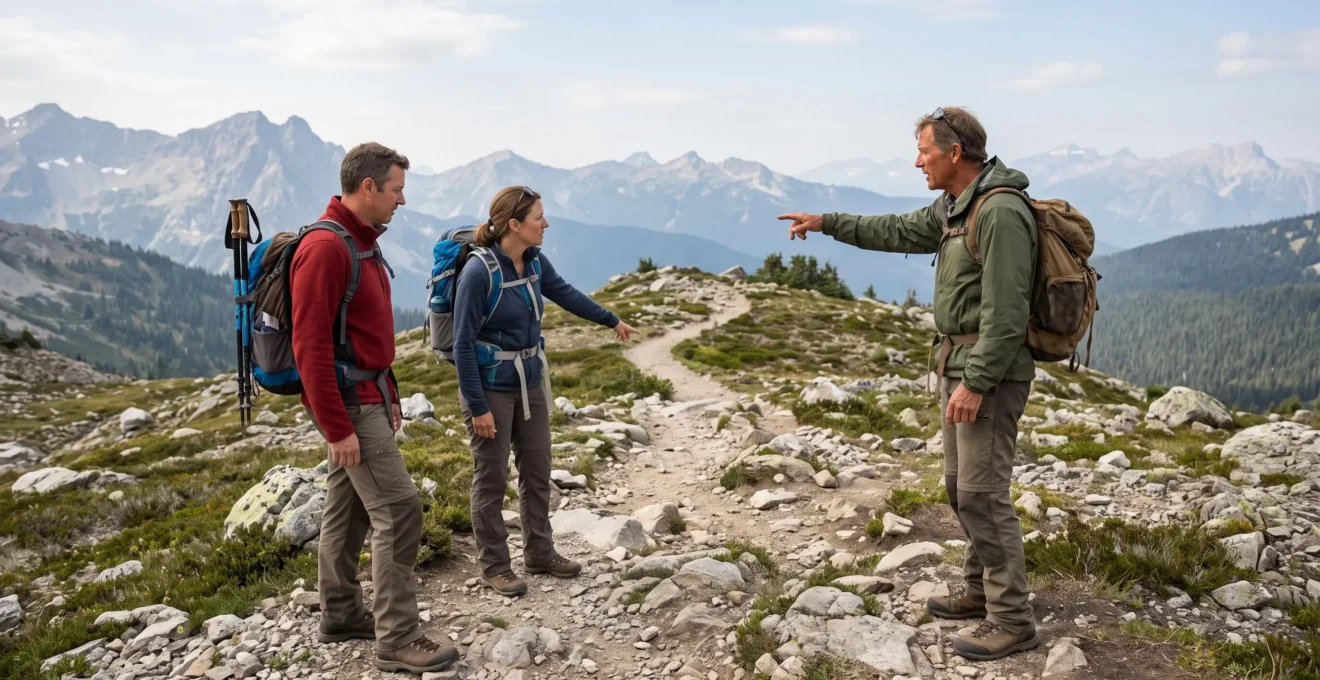
A guided wilderness trip should challenge your sense of adventure without exhausting your ability to enjoy the experience. The right expedition is not necessarily the shortest, easiest, or most expensive. It is the one whose physical demands, environmental exposure, wildlife encounters, and guiding arrangements match your actual capabilities and interests.
Yet choosing confidently can be difficult. One operator’s “moderate” hike may involve sustained climbing, while another’s includes gentle forest trails and frequent interpretation stops. A private guide might offer greater flexibility without automatically providing greater wildlife safety. Even a comfortable mountain retreat can become complicated when weather interrupts transport, heating, or electricity.
The most reliable approach is to compare measurable demands with recent experience, identify the conditions that make you uncomfortable, and verify how an operator handles changes. That means examining terrain, elevation, walking time, guide qualifications, wildlife procedures, and contingency arrangements before paying a deposit.
The goal is not to eliminate uncertainty from wilderness travel. It is to choose an adventure that leaves enough physical and mental capacity to stay curious, make sound decisions, and appreciate the environment.
Choosing a wilderness trip: the essentials
- Compare hiking distance, cumulative elevation gain, hours on foot, and maximum elevation against a recent comparable outing.
- Evaluate guides by their local expertise, wildlife procedures, route flexibility, and response plans—not marketing labels alone.
- Choose destinations, seasons, and accommodation with realistic alternatives for fatigue, difficult weather, and interrupted access.
- Why Do “Moderate” Wilderness Tours Feel Brutal After the First 2 Hours?
- How to Decode a Wilderness Tour Difficulty Rating Using 4 Numbers Before You Book?
- Rainforest or Desert: Which Feels More Rewarding if You Can Only Hike 5 km a Day?
- When Is the Best Season for Guided Wilderness Trips to Balance Wildlife and Comfort?
- Private Guide or Small Group: Which Is Better if You’re Nervous About Wildlife Encounters?
- The Packing Mistake That Can Cause an Early Turnaround on a Wilderness Day Trip
- How to Plan a Remote Mountain Retreat for 5 Days Without Getting Stuck or Under-Prepared
- How to Build a 72-Hour Backup Plan for Food, Heat, and Power at a Remote Cabin?
Why Do “Moderate” Wilderness Tours Feel Brutal After the First 2 Hours?
A moderate wilderness tour can feel unexpectedly exhausting because its difficulty depends on more than distance. Sustained climbing, unstable ground, temperature, humidity, and limited recovery opportunities can compound fatigue. After two hours, a hiker may discover that their everyday fitness does not translate directly to wilderness endurance, especially when unfamiliar terrain also creates mental stress.
The two-hour point is an illustrative scenario, not a physiological threshold. Some travellers struggle much earlier; others comfortably hike for several hours. What matters is how the route’s demands accumulate relative to the individual’s conditioning, experience, and available recovery.
Consider a hypothetical traveller who regularly walks 8 km on paved paths. They book a guided 6 km mountain hike labelled “moderate,” expecting something easier because the distance is shorter. The itinerary instead includes rocky climbs, awkward descents, and prolonged exposure to afternoon heat. Their cardiovascular fitness may be adequate for flat walking, but their legs, balance, and feet face unfamiliar demands.
Steep descents are particularly easy to underestimate. They require controlled braking, balance, and repeated muscular effort. A daypack also changes how the body moves and how much work is required.
Psychological overload can intensify the experience. Narrow paths, exposed viewpoints, changing weather, or fear of delaying a group may reduce concentration and increase tension. Improving aerobic fitness alone will not necessarily resolve a fear of heights or discomfort around wildlife.
The National Park Service hiking safety recommendations emphasize matching trails to experience, physical fitness, equipment-carrying ability, terrain, and environmental conditions. They also encourage choosing routes that participants can both complete and enjoy safely.
A useful preparation exercise is a trial hike resembling the proposed excursion. Match the terrain, walking duration, footwear, and approximate daypack load. Pay attention to how comfortably you walk during the final section, rather than judging readiness by your initial energy.
Finishing is not the same as enjoying. If a comparable walk leaves you too tired to observe wildlife, listen to your guide, or appreciate the scenery, the proposed expedition may consume more of your reserve than you want.
Once you understand which demands matter most, the next step is to replace vague difficulty labels with measurable itinerary details.
How to Decode a Wilderness Tour Difficulty Rating Using 4 Numbers Before You Book?
To assess a guided wilderness tour, request four figures: total hiking distance, cumulative elevation gain, expected hours on foot, and maximum elevation reached. Together, they provide a practical screening framework for effort, endurance, climbing, and altitude exposure. They do not constitute an official universal rating, and terrain, weather, equipment, and individual acclimatization still require separate consideration.
Start by recording these four numbers for every tour you are considering. Use consistent units when comparing itineraries.
| Measurement | What it reveals | What to clarify |
|---|---|---|
| Total hiking distance | Overall distance to cover and potential endurance demands. | Does it include optional walks, detours, and return sections? |
| Cumulative elevation gain | Total uphill climbing rather than the difference between starting and finishing elevations. | Are climbs concentrated into one steep section or distributed across the route? |
| Expected hours on foot | Time spent walking, standing, and negotiating terrain. | Are interpretation stops, meals, and transfers included in the advertised duration? |
| Maximum elevation reached | Potential exposure to higher-altitude conditions. | Does the itinerary allow appropriate acclimatization when needed? |
These measurements help reveal why similarly graded tours can feel different. One may require considerable climbing over a relatively short distance, while another involves longer walking hours on gentler ground.
For example, consider two hypothetical guided hikes. Tour A covers 5 km with 600 m of cumulative ascent over four hours on foot. Tour B covers 11 km with 150 m of ascent over five hours. Tour A emphasizes climbing demands; Tour B places greater emphasis on sustained walking endurance. Neither is automatically easier for every traveller.
Maximum elevation requires separate attention because travelling at altitude can change exertion and introduce altitude-illness concerns, depending on the elevation, rate of ascent, acclimatization, and individual circumstances.
The Shenandoah National Park‘s hiking difficulty rating system illustrates why grades should be interpreted cautiously. Its park-specific formula uses distance and elevation gain, yet the park explicitly acknowledges that its calculation is imperfect. A short, steep trail may deserve a more demanding classification than its numerical score suggests.
Even complete numerical information cannot describe every hazard. A relatively short trail may involve slippery roots, loose scree, river crossings, technical scrambling, exposed ridgelines, or steep descents. Heat, humidity, and carried equipment also influence how demanding the journey feels.
Before selecting a trip, complete a secondary terrain-and-exposure check:
- Footing: Identify sand, mud, loose stones, roots, scrambling sections, and any required traction.
- Exposure: Check shade availability, steep drops, wind, precipitation, and temperature extremes.
- Recovery: Establish how often practical breaks are possible and whether sheltered rest locations exist.
- Flexibility: Ask about shorter routes, alternative endpoints, and procedures when someone cannot continue.
Ask the operator to identify the hardest continuous section, the pace expected of the slowest participant, and the longest interval between realistic rest opportunities. Clarify whether a planned turnaround is available or whether the group must continue to a fixed exit point.
Five booking checks to complete before paying
- Request the route profile: Save written confirmation of distance, cumulative ascent, hours on foot, and maximum elevation.
- Compare a previous hike: Record one recent outing with similar conditions and note your energy level at the finish.
- Identify demanding terrain: Obtain a description of the steepest, most unstable, or most exposed section.
- Confirm support arrangements: Save the operator’s explanation of pacing, rest opportunities, turnaround options, and emergency procedures.
- Verify booking flexibility: Keep written terms covering cancellations, alternative routes, and what happens if you cannot complete the excursion.
Once the physical profile is clear, you can make a more informed choice about the type of landscape that offers the richest experience within your comfortable walking range.
Rainforest or Desert: Which Feels More Rewarding if You Can Only Hike 5 km a Day?
With a comfortable walking limit of 5 km per day, either rainforest or desert can provide a rewarding guided wilderness experience. Rainforests often suit travellers interested in close observation of ecological relationships, while deserts can emphasize geology, open landscapes, and adaptations to aridity. The better choice depends on route accessibility, environmental conditions, guide interpretation, and how much can be experienced without exceeding your walking limit.
Distance is a poor substitute for experience quality. A knowledgeable naturalist may spend considerable time examining plants, insects, bird activity, and forest structure along a compact trail. A desert guide might use a similarly short route to explain rock formations, soil patterns, erosion, and specialized vegetation.
Both experiences can be immersive without requiring an ambitious endpoint. Their physical demands, however, may be very different.
| Consideration | Rainforest | Desert |
|---|---|---|
| Potential highlights | Plant diversity, forest ecology, birds, insects, and interconnected habitats. | Geology, landforms, arid-adapted species, expansive views, and landscape photography. |
| Common physical challenges | Humidity, muddy surfaces, slippery roots, and uneven footing. | Direct sun, exposed terrain, loose sand, and limited shade. |
| Interpretation style | Frequent close observation and ecological explanations. | Landscape interpretation, geological history, and adaptation to dry conditions. |
| Useful route features | Stable paths, manageable gradients, and suitable observation stops. | Short loops, accessible viewpoints, and sheltered rest opportunities. |
These descriptions are general possibilities, not guarantees about every rainforest or desert. A developed forest trail can be easier than a sandy desert route, while a hot, humid forest may be uncomfortable despite offering shade.
A practical selection method is the experience-density test. Ask what you will observe or learn during each portion of the route. Are interpretation stops distributed throughout the excursion? Is the principal attraction accessible without an additional climb? Does wildlife observation require long periods of standing or further walking?
For travellers prioritizing ecology and intricate natural detail, a naturalist-led forest walk may be especially satisfying. Those who enjoy geological history, landscape photography, and open horizons may prefer desert environments.
Vehicle-supported access can expand the possibilities. A guided excursion that connects several short walks or viewpoints may provide greater variety than one continuous trail, provided the operator can accommodate the planned walking limit and local access rules permit the arrangement.
Also clarify whether the advertised 5 km includes walking from the parking area, optional stops, and the return journey. Small uncounted segments can matter when the distance limit is firm.
After choosing the environment that suits your interests, consider when conditions make its wildlife and landscapes most enjoyable to explore.
When Is the Best Season for Guided Wilderness Trips to Balance Wildlife and Comfort?
The best season for a guided wilderness trip is the period when your preferred wildlife experiences align with acceptable weather, accessible trails, and manageable physical demands. No single season works across destinations. Migration, breeding activity, rainfall, temperature, and seasonal access restrictions vary by ecosystem, so travel dates should be chosen using location-specific information rather than general wildlife calendars.
Begin by identifying the experience that matters most. Watching a particular species, observing flowering plants, exploring unusual geological features, and enjoying comfortable walking weather may each favor different travel periods.
Wildlife activity also changes with local ecological conditions. Rainfall, seasonal food availability, reproductive cycles, and temperature can affect where animals occur and when they are active. However, these patterns do not guarantee sightings on a particular day.
Peak wildlife interest and peak walking comfort may not coincide. Conditions associated with distinctive ecological events can also involve insects, muddy trails, intense heat, rainfall, or shorter practical activity windows.
The right compromise depends on your priorities and tolerance for uncertainty.
Use the following decision matrix when comparing potential travel periods. It is a planning template, not a forecast for any particular destination.
| Factor | Information to collect | Booking decision |
|---|---|---|
| Wildlife priorities | Locally documented seasonal activity of target species or natural phenomena. | Choose whether the potential opportunity justifies the conditions. |
| Weather comfort | Historical temperature, rainfall, humidity, and relevant exposure patterns. | Compare conditions against your personal tolerance. |
| Trail accessibility | Seasonal closures, route conditions, and transport limitations. | Confirm that suitable alternatives remain available. |
| Itinerary flexibility | Operator policies for weather changes, missed sightings, and modified routes. | Prefer meaningful alternatives when the original plan cannot proceed. |
Before committing, consult official park information, historical climate records, seasonal access notices, and recent guidance from qualified local operators. Historical conditions help with planning but cannot predict the exact weather on your dates.
Assess how much you would enjoy the itinerary if its main wildlife attraction were absent. A trip with botanical interpretation, geological observation, accessible viewpoints, and adaptable walking routes may remain valuable despite missed sightings.
Ask operators whether they change departure times to manage environmental exposure, which alternative routes they use during poor conditions, and how they decide when an excursion should be postponed or cancelled.
Seasonal flexibility is particularly important for travellers with limited stamina. A difficult day becomes more manageable when shortening a walk does not mean losing every meaningful experience.
Once the destination and season are reasonably aligned, the guide’s experience and group format become the next important factors in managing uncertainty.
Private Guide or Small Group: Which Is Better if You’re Nervous About Wildlife Encounters?
A private guide may be preferable when wildlife anxiety requires personalized pacing, detailed explanations, or flexible observation choices. A well-managed small group can offer reassurance through shared awareness and coordinated movement. Neither format is inherently safer everywhere. The appropriate choice depends on local species, guide competence, group procedures, and whether the operator can accommodate your comfort level without compromising wildlife safety.
Private guiding offers the potential for greater customization. You may be able to discuss specific fears beforehand, ask detailed questions, or request an alternative viewing location when conditions permit.
Small-group tours can provide a different kind of confidence. Participants may feel reassured by shared observations, consistent group instructions, and the presence of other travellers. The experience can also encourage discussion and collaborative learning.
However, group size alone does not establish safety. In bear habitat, travelling with others can be a particularly important precaution. The National Park Service guidance on staying safe around bears recommends group travel and explains that groups may be detected by bears at greater distances.
That advice concerns bears and should not be automatically extended to other wildlife species. Encounter procedures vary according to the animal, local conditions, and applicable park rules.
When evaluating either guiding format, focus on the operator’s prevention and response procedures.
- Local expertise: Ask about experience with the species and habitats you are likely to encounter.
- Pre-trip briefing: Confirm that participants receive clear guidance on distances, behavior, and unexpected encounters.
- Group positioning: Establish how the guide manages spacing, movement, and visibility.
- Unexpected encounters: Ask what happens when wildlife occupies the intended route or approaches the group.
- Participant anxiety: Clarify whether someone can withdraw from an observation without creating additional risk.
A capable guide should prioritize avoiding unsafe encounters rather than promising close-up wildlife experiences. Observation distances must follow the requirements applicable to the species and location. Wildlife behavior is unpredictable, and no guiding format can guarantee safety.
The practical difference between private and group tours often emerges when preferences conflict. A private guide may be able to change a planned observation more readily, while a small group may need to follow a shared schedule and route.
Ask whether a second qualified guide is available when participants have different needs, whether a frightened traveller can return safely, and what arrangements exist when an individual cannot continue. These questions are more useful than relying on an advertised maximum group size.
Learning goals also matter. Private guiding may suit travellers seeking extensive interpretation or repeated opportunities to ask questions. A small group may provide richer discussion and shared discoveries, provided its pace and behavior expectations are compatible with yours.
The strongest choice is the arrangement that allows curiosity to replace unnecessary anxiety while preserving responsible wildlife behavior. Appropriate equipment preparation then helps make that choice workable on the trail.
The Packing Mistake That Can Cause an Early Turnaround on a Wilderness Day Trip
A common packing mistake is choosing equipment without matching its protection, weight, accessibility, and functionality to the actual route. An unnecessarily heavy pack increases exertion, while insufficient water, unsuitable footwear, or inadequate weather protection can undermine an otherwise manageable hike. There is no established evidence here that one specific packing error causes most early turnarounds, but a poorly matched kit can contribute to an avoidable change of plans.
A generic packing list cannot account for every wilderness environment. The useful starting point is the itinerary itself: terrain, weather, duration, remoteness, guide provisions, and personal requirements.
For example, stable footwear suitable for a dry, maintained trail may perform poorly on wet roots or loose rocky ground. Likewise, clothing adequate at a warm trailhead may not provide sufficient protection during a colder, windy period at higher elevation.
Hydration planning should consider exertion, temperature, humidity, the duration of the activity, reliable water sources, and supplies provided by the operator. There is no single water quantity that suits all people and routes.
Separate equipment into three categories:
- Essential safety equipment: Required navigation, weather protection, hydration, first-aid provisions, and other items appropriate to the route and operator’s instructions.
- Condition-dependent equipment: Additional traction, sun protection, insulation, insect protection, or other supplies required by the expected environment.
- Nonessential comforts: Items that may improve enjoyment but can be reduced when pack weight becomes excessive.
Before removing anything, confirm what the guide supplies and what each participant must personally carry. Remote or demanding excursions may require equipment that would be unnecessary on a short, accessible trail.
Equipment functionality matters as much as ownership. Before departure, complete a representative walk wearing the actual footwear, carrying the loaded daypack, and using the planned hydration and clothing system.
Check for pressure from shoulder straps, footwear friction, restricted movement, uncomfortable pack balance, and difficulties accessing essential supplies. Adjustments made before the trip can prevent minor problems from becoming persistent sources of discomfort.
Finally, consider what happens if critical equipment becomes unusable. A soaked insulation layer or damaged boot may require a different response on a remote trail than on an accessible short walk. Backup arrangements should reflect the consequences of failure without adding unnecessary weight.
Once equipment and physical demands are aligned, a longer wilderness stay can be planned around a mixture of exploration, learning, and recovery rather than uninterrupted strenuous activity.
How to Plan a Remote Mountain Retreat for 5 Days Without Getting Stuck or Under-Prepared
A successful five-day remote mountain retreat combines appropriately challenging guided activities, recovery time, reliable access arrangements, and flexible booking terms. Plan fewer demanding hikes than the maximum you could theoretically complete, confirm how transport and accommodation operate during poor weather, and identify realistic alternatives. The retreat should remain rewarding even when one excursion becomes unsuitable or access conditions change.
Five days provide an opportunity to experience a mountain environment without treating every day as a physical test. Alternating exploration with lighter activities can help manage accumulated fatigue while leaving more attention for learning.
The following is a hypothetical five-day itinerary, intended to illustrate pacing rather than prescribe a universal schedule.
| Day | Proposed activity | Planning purpose |
|---|---|---|
| 1 | Arrival, accommodation orientation, and a short introductory nature walk. | Check access arrangements, equipment, and personal readiness. |
| 2 | Primary guided wilderness hike suited to recent fitness experience. | Explore more demanding terrain while energy reserves are relatively fresh. |
| 3 | Short interpretive walk, scenic observation, or recovery-focused activity. | Support recovery and maintain opportunities for learning. |
| 4 | Flexible guided excursion chosen according to conditions and energy. | Allow an ambitious outing or an easier alternative. |
| 5 | Short optional activity and departure with an appropriate transport margin. | Avoid depending on a demanding excursion immediately before leaving. |
Remote accommodation requires a separate suitability assessment. A cabin described as secluded may still have dependable road access, while another property may depend on a mountain road vulnerable to weather-related restrictions.
Before booking, confirm the access route, transport provider, expected road or trail conditions, seasonal limitations, and the responsibility for deciding whether travel should proceed. Ask what happens if the route becomes impassable.
Establish how emergency assistance can be contacted, what communication coverage is available, and how medical support could realistically be reached. The practical implications of remoteness depend on the specific property and surrounding infrastructure.
Booking resilience matters when accommodation, transport, and guiding reservations depend on one another. Review cancellation and rescheduling terms for each service rather than assuming a weather-related change to one reservation automatically changes the others.
Check relevant travel insurance conditions, including exclusions, activity coverage, and circumstances in which interrupted access may or may not be covered. Coverage depends on the policy and applicable circumstances.
A final readiness review should confirm that the trip’s physical demands are suitable, guides can adapt activities, access arrangements are credible, and worthwhile alternatives exist. These safeguards can make the retreat more enjoyable without removing its adventurous character.
The remaining preparation task is to examine what happens if the cabin itself loses access to essential services. A defined backup plan makes the accommodation decision more robust.
Key takeaways before staying in a remote cabin
- Remote accommodation is only as resilient as its access, communications, and essential service arrangements.
- A backup generator or heating system should be assessed by what it can actually operate, how it is maintained, and whether it can be used safely.
- Agree on the circumstances that would require assistance, a change of accommodation, or remaining sheltered until conditions improve.
How to Build a 72-Hour Backup Plan for Food, Heat, and Power at a Remote Cabin?
A 72-hour remote-cabin backup plan should provide for safe drinking water, suitable food, essential heating, lighting, communication, and decisions during a service interruption. Start by identifying which cabin systems depend on electricity or external fuel, then confirm the supplies and equipment available for all occupants. Three days is a planning scenario, not a guarantee that access or services will be restored within that period.
Particularly isolated accommodation may require a longer contingency period. The appropriate preparation depends on the season, road access, forecast conditions, individual needs, and availability of local assistance.
Begin with food and drinking water. Determine the number of occupants, dietary requirements, sanitation needs, and whether the cabin’s water supply relies on an electrically powered pump or treatment system.
Select shelf-stable foods that can be eaten without refrigeration and, where possible, without cooking. If meals require heating, verify that the available appliance remains usable during a power failure and is approved for the setting.
Next, map the cabin’s essential service dependencies.
| Service | Possible dependency | Question for the property manager |
|---|---|---|
| Heating | Electricity, fuel supply, pumps, or powered controls. | What safe heating remains available if the main system fails? |
| Cooking | Electric appliances, gas supply, or fuel availability. | Which cooking arrangements remain operational during an outage? |
| Drinking water | Electric pumping, purification, or external supply. | Is stored drinking water available if normal service stops? |
| Refrigeration | Continuous electricity and appliance performance. | How should perishable food be managed if power is lost? |
| Communications | Mobile coverage, electricity, or network infrastructure. | What independent communication options are available? |
| Lighting | Mains electricity or rechargeable equipment. | Are working battery-powered lights and replacement power supplies provided? |
A generator does not automatically make a cabin self-sufficient. Its capacity, fuel, maintenance, permitted operation, and connection to essential systems all matter. Guests should request clear instructions rather than improvising repairs or electrical connections.
Safe heating and cooking deserve particular attention. The CDC guidance for staying safe during a power outage warns about carbon monoxide from fuel-burning equipment and the risks associated with improper generator operation.
Portable generators should be operated outdoors and kept at least 20 feet (approximately 6 m) from windows, doors, and vents, consistent with CDC guidance. Carbon monoxide detection, manufacturer instructions, and applicable local safety requirements remain essential.
Never use charcoal grills or portable camping stoves indoors. Gas ranges and ovens should not be used as space heaters. Avoid improvised combustion-based heating arrangements, even when the cabin becomes uncomfortable.
Food safety also changes during prolonged interruptions. The CDC explains that an unopened refrigerator generally keeps food safe for up to four hours without electricity. An unopened full freezer may maintain safe conditions for approximately 48 hours, compared with 24 hours for a half-full freezer. These figures depend on the specified conditions and do not replace food-safety assessment.
Independent lighting and communication arrangements should be accessible before an outage occurs. Battery-powered lanterns are preferable to candles where fire risk is a concern. Confirm whether a mobile signal is available and establish an alternative way to request assistance when coverage is unreliable.
Finally, agree on decision points before arrival. Consider whether indoor temperatures remain safe, drinking water is available, access roads are passable, communication remains functional, and any occupant has particular support needs.
Leaving is not always the safest response during severe mountain weather. If conditions make travel hazardous, following local emergency guidance and sheltering in place may be safer until assistance or a suitable departure window becomes available.
Before confirming your booking, request written details of cabin supplies, backup heating, drinking water, communications, emergency contacts, and access procedures. Compare those arrangements with the needs of your travelling party and the likely conditions. Choose a property and guided itinerary that can remain safe and worthwhile when the original plans need to change.
Do I need previous wilderness experience to join a guided expedition?
Not necessarily. Some guided wilderness experiences are designed for beginners, while others require established hiking skills or technical competence. Ask the operator about prerequisites, the most demanding terrain, equipment requirements, and the guidance provided. A suitable introductory trip should match your present abilities rather than depend on learning essential physical skills under pressure.
How can I tell whether a wilderness tour operator is trustworthy?
Look for verifiable local experience, appropriate guide training, clear safety briefings, realistic itinerary descriptions, transparent booking terms, and documented emergency arrangements. Ask how the operator responds to changing weather, participant fatigue, and unexpected wildlife encounters. Relevant permits, insurance, qualifications, and operating requirements vary by destination, so confirm the rules applicable to the specific activity and location.
What should I do if I realize during a guided hike that I cannot continue comfortably?
Tell your guide promptly rather than trying to conceal increasing fatigue, discomfort, or anxiety. Explain what you are experiencing so the guide can assess the situation and available options. Depending on terrain and safety conditions, the response may involve resting, adjusting the pace, using an established turnaround route, or arranging assistance. Never separate from the group without an agreed safe procedure.
Can a guided wilderness experience still be adventurous if I avoid difficult hikes?
Yes. Adventure can come from unfamiliar ecosystems, wildlife observation, landscape interpretation, and developing outdoor knowledge rather than covering extreme distances. A short guided route with strong naturalist interpretation may provide a richer experience than a strenuous excursion that leaves little energy for observation. Choose the degree of challenge that helps you remain engaged with your surroundings.
Should I book the most challenging trip I think I could finish?
Usually not if your priority is an enjoyable, educational wilderness experience. Finishing at your physical limit leaves less reserve for unexpected terrain, weather changes, and sustained attention. Compare the proposed itinerary with recent similar activities and favor a challenge you can complete comfortably enough to appreciate the landscape and respond to changing conditions.