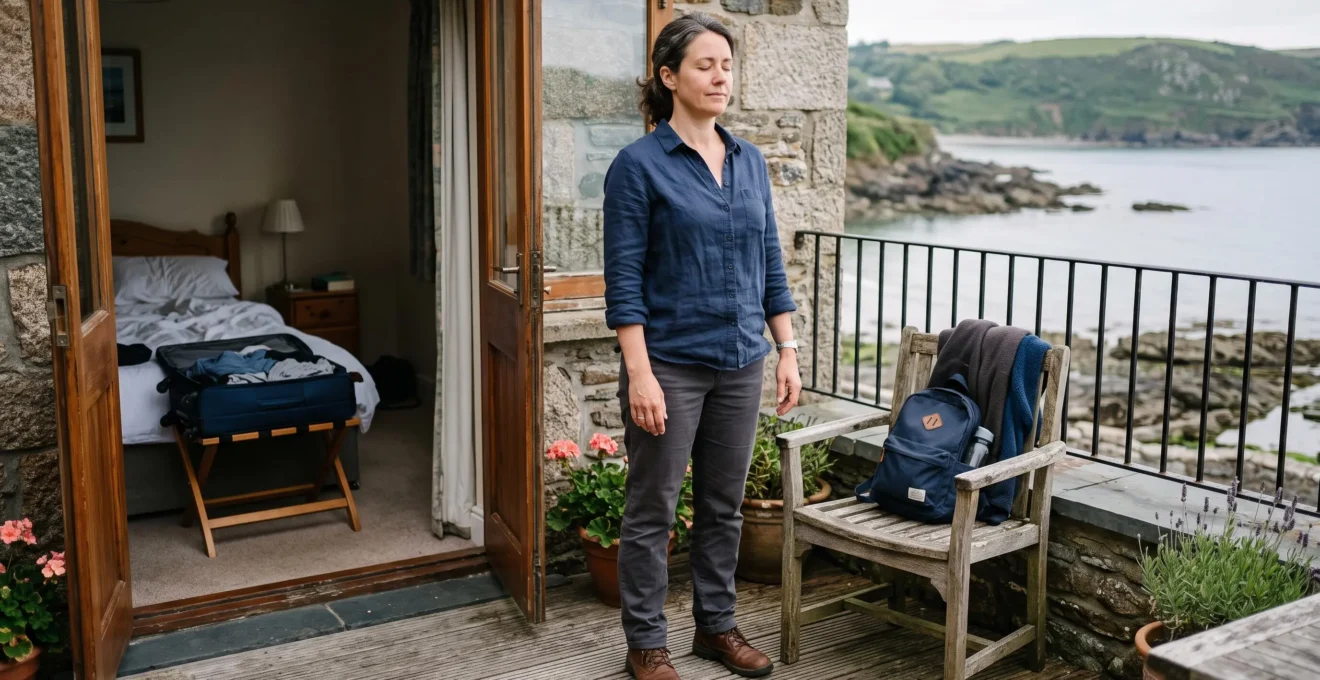
If you have seven days away and want to feel better, start with the problem that is actually bothering you. For everyday stress, try gentle breathing or progressive relaxation. For physical tension, consider a suitable massage. For restlessness, try comfortable walking or beginner-friendly movement. If you are exhausted, protecting sleep may be more useful than booking another activity.
The difficulty is that wellness holidays often present these options as parts of a complete lifestyle transformation. Sunrise yoga, cold plunges, elaborate spa circuits and evening mindfulness workshops can sound equally essential, even though they demand different amounts of energy, time and money.
A more useful approach is to treat wellness practices as a menu, not a compulsory programme. Choose one realistic objective, respect your limits and observe what happens afterward. Seven days can provide useful personal feedback, but they cannot guarantee lasting improvements or resolve an underlying health condition.
The aim is to return home knowing which practice deserves a place in ordinary life, without having sacrificed the holiday to find out.
Choosing a wellness practice without overcomplicating your holiday
- Match the practice to the problem: breathing for portable stress management, massage for temporary physical comfort, gentle movement for enjoyable activity and sleep opportunities for fatigue.
- Protect your recovery: avoid stacking demanding sessions, adding unnecessary early starts or treating discomfort as evidence of progress.
- Keep what you can repeat: test one manageable practice before adding another, and assess whether it will still fit your life after travelling home.
- Why Do Some Wellness Routines Make You Feel More Drained After the “Healthy” Week?
- How to Choose Your First Wellness Practice Using One Goal and Two Constraints?
- Breathwork or Massage: Which Works Better if You’re Stressed but Can’t Sit Still?
- The Influencer Routine Mistake That Can Wreck Your Sleep in 3 Nights
- How to Choose a Spa Treatment in 5 Steps When You Can’t Risk Redness at Dinner?
- In What Order Should You Add Wellness Practices During a Week Away So You Don’t Quit?
- How to Evaluate a Program’s “Aftercare” in 15 Minutes Before You Book?
- How to Choose a Wellness Program That You Can Actually Continue After You Fly Home
Why Do Some Wellness Routines Make You Feel More Drained After the “Healthy” Week?
Some wellness routines leave travellers exhausted because they replace ordinary holiday pressures with an equally demanding schedule of exercise, treatments and self-improvement activities. Early starts, unfamiliar physical exertion, restricted eating and constant social participation can accumulate faster than recovery. An activity marketed as restorative may still require energy, and several individually manageable activities can become overwhelming when combined.
Consider a hypothetical traveller who arrives after an overnight international flight. Their itinerary includes sunrise yoga, a long guided hike, a thermal spa circuit and an evening meditation workshop. Each activity might be enjoyable under different circumstances. Together, they leave little room for sleep, meals or unstructured rest.
This is the recovery paradox: the traveller is doing more activities associated with health while creating fewer opportunities to recover.
Restorative activities and demanding activities are not always separate categories. Gentle yoga may feel relaxing to someone familiar with the movements but physically challenging to a beginner. A silent meditation session may be peaceful for one person and emotionally uncomfortable for another.
Before committing, assess your energy budget across four dimensions:
- Travel fatigue: Have flights, transfers or disrupted meals reduced your energy?
- Sleep debt: Have you had enough opportunity to sleep recently?
- Physical exertion: Are you already tired from walking, hiking or unfamiliar exercise?
- Emotional load: Are crowds, social expectations or constant decision-making adding pressure?
A traveller arriving well-rested for a walking holiday may enjoy an active morning programme. Someone arriving with significant jet lag might reasonably choose a meal, gentle walk and an early evening without commitments instead.
Some adjustment discomfort is normal. Unfamiliar exercise can produce temporary muscle soreness. However, persistent exhaustion, dizziness, deteriorating sleep or increased anxiety should not be interpreted as proof that a treatment is working.
The NCCIH overview of relaxation techniques and their safety explains that relaxation methods are generally considered safe for healthy people but can sometimes produce unwanted experiences, including increased anxiety or intrusive thoughts.
At the end of each day, ask four questions: How much energy do I have left? How did I sleep? Does my body feel reasonably comfortable? Would I willingly repeat today’s activity?
This informal recovery check is a personal decision aid, not a clinically validated assessment. Its value lies in noticing patterns before the holiday becomes exhausting.
The best first practice is not necessarily the most intensive or prestigious. It is one whose effects you can tolerate, evaluate and potentially enjoy again.
How to Choose Your First Wellness Practice Using One Goal and Two Constraints?
Choose your first wellness practice by identifying one improvement you want to notice, then applying two practical constraints: available time and personal tolerance. If your goal is to feel calmer between sightseeing activities, a gentle breathing exercise may fit better than a scheduled workshop. If physical tension is the main problem, a suitable massage may make more sense. Start with what you can realistically try.
The one-goal, two-constraints rule prevents wellness planning from becoming another overwhelming decision.
Your goal should be observable rather than abstract. “Become healthier” offers little guidance. “Feel less tense after airport transfers” or “Enjoy an afternoon walk without feeling depleted” provides something you can actually evaluate.
Next, establish how much time you can comfortably spare and which physical or psychological conditions might make a practice unsuitable. For example, a traveller with limited free time who dislikes group activities could choose independent progressive relaxation instead of a lengthy retreat workshop.
Different practices also involve different commitments. The following comparison is an editorial selection tool, not a scientifically validated ranking of effectiveness.
| Practice and immediate goal | Ease of trying it | Facilities or supervision | Adjustability and limitations |
|---|---|---|---|
| Gentle breathing: short periods of stress | Easy to try during a quiet break | Usually none | Can be shortened or stopped; not a replacement for treatment of persistent anxiety |
| Progressive relaxation: general tension | Requires some quiet time and attention | Usually none | Can be adapted; may not suit everyone, especially when inward focus causes distress |
| Massage: temporary physical comfort | Requires an appointment | Qualified or appropriately trained practitioner and suitable facility | Pressure and duration may be adjusted; cannot be assumed to resolve chronic pain |
| Easy walking or beginner-friendly yoga: enjoyable movement | Walking is generally easier to arrange; yoga may need instruction | Depends on activity and individual needs | Intensity can often be reduced; excessive exertion can undermine recovery |
| Protected sleep opportunities: fatigue | Requires schedule flexibility | Usually none | Supports rest but does not establish or treat the cause of persistent sleep problems |
For someone primarily struggling with fatigue, adding a wellness technique may be less useful than removing optional commitments. Sleep should not become another activity to perform competitively.
Define success before beginning. You might hope to feel calmer after one recurring stressful situation, enjoy a chosen movement session without excessive fatigue or experience fewer interruptions to a planned rest period.
Seven days are an observation window, not a therapeutic deadline. Some benefits may be noticeable during an individual session; others may remain unclear. Neither outcome justifies assuming a medical condition has been treated.
If the chosen practice feels unsuitable, adjust or replace it rather than increasing its intensity merely because you paid for the experience.
A simple decision is especially useful when two popular practices appear equally attractive but require very different kinds of participation.
Breathwork or Massage: Which Works Better if You’re Stressed but Can’t Sit Still?
Gentle breathing is often the more practical starting option when stress appears unpredictably and you want something portable. Massage may suit someone seeking physical relaxation who prefers a practitioner-led experience rather than concentrating on an exercise. Neither is universally better, and neither requires lengthy seated meditation. If stillness increases agitation, comfortable movement may be the better first step.
The main distinction is not that one practice is more sophisticated. It is what each asks you to do.
With gentle breathing, you actively regulate your attention and breathing pattern. You can practise independently and stop whenever necessary. Massage shifts much of the practical responsibility to a practitioner, but introduces considerations involving touch, pressure, privacy, cost and availability.
Three everyday situations illustrate the difference:
- Stress during airport transfers: gentle, unforced breathing offers an option without an appointment, provided you are somewhere safe to pause and practise.
- Physical tension after sightseeing: an appropriately adapted massage may provide a comfortable holiday experience if touch is welcome and there are no relevant contraindications.
- Agitation when remaining still: a comfortable walk or gentle movement may be preferable before attempting a stationary relaxation exercise.
The NHS breathing exercises for stress describe a technique that can be performed standing, sitting or lying down, with breathing kept comfortable rather than forced.
The NHS suggests allowing air to move comfortably into the abdomen, breathing in through the nose and out through the mouth, and using a steady count that suits the individual. Its instructions recommend practising for at least five minutes and making the exercise part of a regular routine.
These instructions do not establish that breathing is more effective than massage, or that five minutes will produce a guaranteed result. They do demonstrate that a gentle relaxation technique need not depend on a special location or equipment.
Massage has a different advantage: it can be enjoyable as a service without requiring you to learn or practise a technique independently. That can be entirely worthwhile during a holiday, although the experience is less portable once you leave.
Before choosing either option, consider personal suitability. Tell a massage practitioner about relevant injuries, medical conditions, pain, sensitivity and preferred pressure. Confirm that you can decline specific techniques or stop the treatment. Touch should always be consensual.
With breathing exercises, avoid forcing unusually deep or rapid breaths. Gentle relaxation breathing should not be confused with intensive hyperventilation or prolonged breath-holding practices, which have different risks.
Stop or modify the activity if it causes dizziness, distress or uncomfortable symptoms. Persistent or severe symptoms warrant appropriate healthcare advice.
Combining gentle breathing and massage is possible, but adding both is not automatically more effective than choosing one suitable approach.
Once you have chosen a manageable option, its position in your daily schedule becomes important—particularly when travel has already affected your sleep.
The Influencer Routine Mistake That Can Wreck Your Sleep in 3 Nights
The mistake is copying a visually impressive wellness schedule without protecting enough time for sleep. Early exercise sessions, late treatments, evening activities and inflexible wake-up times may leave travellers less rested, despite the healthy appearance of every appointment. Sleep could deteriorate over three nights in a hypothetical example, but that is not a proven or universal timeframe.
Imagine arriving after a long-haul flight and immediately adopting an influencer’s destination routine: sunrise yoga, afternoon fitness challenges, elaborate spa appointments and evening group workshops.
On the first night, you stay awake later than intended. On the second, an early booking limits your sleeping time. By the third morning, you feel less alert than when you started. This is an illustrative scenario, not a documented outcome or a prediction.
For travellers crossing time zones, the problem may involve more than late nights. Jet lag reflects a temporary mismatch between the body’s internal clock and the destination’s local time.
The CDC Yellow Book chapter on jet lag disorder explains that sleep timing, strategically timed light exposure and daytime naps can influence circadian adaptation. The direction of travel matters, so the same light-exposure schedule is not appropriate for everyone.
Long daytime naps can also make nighttime sleep more difficult, while shorter naps may sometimes help alertness. Caffeine timing and existing sleep loss deserve consideration as well.
Apply a sleep-first filter before adding any fashionable wellness activity. Ask whether it reduces your opportunity to sleep, creates unwanted stimulation close to bedtime or requires waking earlier than your current recovery needs allow.
Sunrise yoga is not inherently a poor choice. It becomes problematic when participation consistently shortens sleep. An evening breathwork event may be comfortable for some travellers but inconvenient if travel to and from the venue keeps them awake. Destination fitness challenges deserve similar scrutiny when they require strenuous effort on already tiring days.
If sleep worsens, simplify the schedule. Remove optional early commitments, allow sufficient sleep opportunity and reduce late-evening obligations. Reconsider caffeine use, long naps and the timing of light exposure in relation to your journey.
Track practical observations such as time available for sleep and next-day alertness. Wearable devices may offer additional information, but their wellness scores should not be treated as medical diagnoses.
Protecting rest is often more valuable than perfectly completing an itinerary. The same principle applies when choosing spa treatments around important social plans.
How to Choose a Spa Treatment in 5 Steps When You Can’t Risk Redness at Dinner?
Choose a spa treatment by working backwards from dinner, assessing your actual goal, disclosing skin sensitivities, reviewing the precise procedure and checking its possible after-effects. A familiar non-facial relaxation treatment may be preferable to an unfamiliar facial involving active ingredients or extractions. No provider can guarantee that every treatment will leave your skin completely unchanged.
The central question is not whether a treatment is advertised as gentle. It is whether the specific procedure, your individual response and the available recovery time are compatible with your evening plans.
A relaxing body treatment and a facial involving exfoliation, extractions or active ingredients present different practical considerations. Skin interventions may produce redness, tenderness, swelling or other visible reactions.
The American Academy of Dermatology Association‘s advice on testing skin care products explains that unfamiliar ingredients can cause irritation or allergic reactions. Descriptions such as “hydrating”, “express” or “natural” do not establish that a product or procedure is reaction-free.
Even a product you have tolerated previously may be used differently during a professional service. The appropriate decision therefore depends on the actual treatment steps, not its marketing category.
Your tolerance for visible effects also depends on the occasion. Mild temporary flushing might be acceptable before a casual indoor meal but unwanted before professional photographs, a formal event or outdoor dining where sun exposure is expected.
Ask the provider specifically about possible redness, swelling, bruising and tenderness, along with any restrictions concerning makeup, sun exposure, heat or exercise. If the answers are vague or the expected recovery cannot be reconciled with your plans, postponement is a reasonable choice.
Your five-step spa treatment decision checklist
- Confirm your dinner deadline. Record your treatment start time, expected finish time and the interval available before leaving for dinner.
- Define the treatment goal. Write down whether you primarily want physical relaxation or a visible cosmetic result.
- Disclose relevant sensitivities. Prepare a short record of allergies, medications, medical conditions and previous skin reactions for the provider to assess.
- Request the exact procedure. Obtain a description of products, exfoliation, extractions or other interventions, plus plausible visible side effects.
- Check dinner readiness. Confirm aftercare requirements and decide explicitly whether to proceed, modify the service or postpone it.
This checklist is a practical screening process rather than a medical safety certification. It cannot predict individual reactions or replace assessment by an appropriately qualified professional when needed.
When the appointment is too close to dinner, consider postponing higher-intervention facial services. An appropriate non-facial relaxation treatment—or simply taking a quiet break without unfamiliar products—may better protect your plans.
Choosing fewer, more suitable experiences can protect both comfort and flexibility. That makes the order in which you introduce wellness activities just as important as the individual treatments.
In What Order Should You Add Wellness Practices During a Week Away So You Don’t Quit?
Begin with arrival recovery, introduce one manageable practice when you feel ready and repeat it before considering a second activity. Use the remaining days to observe how your choice affects energy, sleep and enjoyment. Add a complementary experience only if it fits comfortably around the rest of your trip. Progress should depend on your response, not a fixed activity quota.
A seven-day itinerary is most useful when treated as a flexible framework rather than a therapeutic programme. No evidence establishes that every traveller should add particular wellness practices on specific days.
Consider this hypothetical schedule for someone who wants to feel less stressed while still sightseeing, eating out and spending time with companions.
| Day | Suggested approach | Decision to make |
|---|---|---|
| Day 1 | Recover from travel, eat normally and take a comfortable walk if desired | How much rest do you currently need? |
| Day 2 | Try one gentle relaxation practice if ready | Was it comfortable and manageable? |
| Day 3 | Repeat the practice around ordinary holiday plans | Does it fit without creating pressure? |
| Day 4 | Keep the routine stable or reduce it if necessary | How are sleep, energy and enjoyment changing? |
| Day 5 | Consider one optional massage or guided session | Will the addition support your goal without excessive demand? |
| Day 6 | Revisit the preferred independent practice | Can you perform it without holiday-specific support? |
| Day 7 | Review the experience and plan one realistic repetition at home | What deserves to continue after departure? |
This is an example, not a required sequence. Travellers with jet lag, illness, significant fatigue or other constraints may need more time before introducing any structured activity.
The most important progression rule is simple: repeat before you add. If a gentle practice is tolerable and enjoyable, trying it again provides more useful personal feedback than immediately replacing it with something new.
Combinations should be evaluated according to their combined demands. Comfortable walking followed by relaxation may serve complementary purposes. A strenuous hike immediately followed by a demanding thermal circuit could instead make an already tiring day harder.
Different wellness categories do not automatically reinforce one another. Their timing, intensity and recovery requirements matter.
For the hypothetical traveller, gentle breathing might remain the portable anchor throughout the week. A massage could be an enjoyable optional addition, while sightseeing and social activities continue normally.
Weather changes, unexpected excursions or a spontaneous rest day should not be treated as failures. They are ordinary features of travel.
If fatigue increases, enjoyment decreases or appointments begin interfering with plans, maintain the current level or simplify it. There is no need to make the next day more demanding merely because the itinerary includes an empty slot.
Before paying for a more structured retreat, it is worth asking whether the provider helps participants preserve that flexibility after departure.
How to Evaluate a Program’s “Aftercare” in 15 Minutes Before You Book?
Evaluate wellness aftercare by checking three things: what support is actually included after departure, whether it teaches you to practise independently and what continuing commitments or costs apply. A fifteen-minute review can expose vague promises before you book, although it cannot establish programme quality conclusively. Useful aftercare should explain what happens when you return home, including how to adjust an unsuitable practice.
Aftercare is often presented as an added benefit of a retreat. It may involve follow-up sessions, written guidance, access to an instructor or a digital community.
These offerings are not interchangeable. A newsletter with inspirational messages may maintain contact with former guests, but it does not necessarily help someone repeat a relaxation exercise, adapt a movement routine or identify when to seek professional advice.
Use a three-part pre-booking audit, assigning approximately five minutes to each area as a practical screening method rather than a validated quality assessment.
- What support is included? Identify the exact follow-up materials, sessions, access periods and opportunities to ask questions. Ask who provides the support and what qualifications they hold.
- Does it build independence? Determine whether you receive understandable home instructions, adaptations for different abilities and a clear procedure for reporting when a practice is uncomfortable or unsuitable.
- What is the total commitment? Check additional fees, subscription requirements, cancellation terms, equipment needs, app access and whether live calls are practical across your home time zone.
Ask for an anonymised example of a post-retreat practice plan. A credible example should make clear what the participant is expected to do, what can be adjusted and which support remains available after leaving.
Also ask whether the programme’s follow-up is ordinary wellness coaching or clinical care. Messaging access to a retreat instructor should not be mistaken for medical monitoring, diagnosis or treatment.
Programmes offering clinical services need appropriately qualified professionals and a clearly defined scope of care. People with ongoing health problems should not assume that a general wellness package provides the follow-up their condition requires.
Finally, assess portability. If maintaining the programme depends on specialist equipment, regular payments or facilities available only at the retreat, its long-term usefulness may be limited for your circumstances.
A simpler programme with clear independent instructions can be easier to continue than an elaborate package requiring repeated purchases. That is a practical advantage, not proof that it is therapeutically superior.
The purpose of aftercare is not to keep travellers permanently attached to a destination. Its practical value lies in making the useful parts of the experience understandable and manageable elsewhere.
Key takeaways before choosing a programme
- Define the ordinary-life version of your preferred practice before committing to a destination-based package.
- Separate experiences you enjoy purchasing from skills you can use independently.
- Prefer clear instructions, realistic adaptations and transparent follow-up arrangements over promises of permanent transformation.
How to Choose a Wellness Program That You Can Actually Continue After You Fly Home
Choose a wellness programme that produces one personally useful outcome without requiring you to recreate the destination experience at home. Its core practice should fit your actual schedule, available space, physical limits and budget. Look for understandable instructions and appropriate support, then rehearse the practice independently before departure. A sustainable result matters more than the number of activities included.
The strongest test of a programme’s practicality begins with your home environment rather than the retreat’s facilities.
A quiet studio overlooking the sea may make relaxation feel effortless. Your ordinary life may involve commuting, shared living space, family responsibilities or irregular work hours.
A programme that only works under ideal conditions can still provide an enjoyable holiday. It simply should not be marketed—or purchased—as though the complete experience can automatically continue afterward.
Apply a home-environment compatibility test to your preferred activity. Consider how much uninterrupted time you realistically have, whether you need privacy, whether equipment is essential and what ongoing expenses would be involved.
Differentiate the destination service from the transferable skill. You can enjoy a massage without attempting to recreate professional treatment at home. A thermal circuit can remain a memorable experience rather than a new obligation.
Meanwhile, an independent breathing exercise, comfortable walk or manageable movement routine may be easier to incorporate into everyday life.
The point is not that inexpensive activities are always better. It is that sustainability depends on compatibility with your actual circumstances, not the apparent prestige of the experience.
Before leaving the destination, conduct a return-home rehearsal. Perform your chosen practice without resort-specific equipment, a guided group or the special setting that originally made it appealing.
If you cannot reproduce the activity independently, identify precisely what is missing. Perhaps you need written instructions, a simpler variation, an appropriate instructor or a safer alternative suited to your circumstances.
Then identify your first realistic opportunity to repeat the practice after the flight. It might be a short relaxation period during an ordinary evening, or a comfortable walk that fits an existing journey. Avoid assigning yourself an ambitious daily target that has no room in your usual schedule.
For activities requiring supervision or involving health considerations, independent practice may not be appropriate. Continuity can instead mean identifying a qualified professional or choosing a different, lower-commitment activity.
The final decision should connect four questions: Does the programme serve one meaningful goal? Does it respect your limits? Is the available support understandable and suitable? Can some useful part of the experience continue at home?
A programme does not need to satisfy an idealised vision of wellness to be worthwhile. A holiday may be valuable because it reveals that you prefer walking to yoga, find certain treatments uncomfortable or need more unstructured rest than expected.
Equally, discovering that a simple practice fits your life can be a more useful outcome than experiencing an elaborate itinerary that you never repeat.
For your next trip, choose one realistic outcome, try one suitable practice and notice how you respond. Before flying home, decide whether it deserves another attempt in ordinary life. Seven days do not need to create a new identity; they can simply help you make one better-informed choice.
Can you tell whether a wellness practice is helping after only seven days?
You may notice changes in immediate comfort, enjoyment or your response to familiar stressful situations during a seven-day trip. However, a week is not a validated timeframe for establishing therapeutic effectiveness. Record simple observations, including sleep, fatigue and willingness to repeat the activity. An unclear result does not automatically mean the practice has failed or that increasing its intensity would help.
Is it better to book a wellness retreat or choose individual activities?
Individual activities may suit travellers who want flexibility and are still exploring their preferences. A structured retreat may be worthwhile when its instruction, environment or professional support meets a specific need. Compare the actual commitments, qualifications, suitability and aftercare rather than assuming that a more comprehensive programme produces better results.
Should you continue a relaxation exercise if it makes you feel anxious?
No. Increased anxiety, intrusive thoughts or other uncomfortable reactions can occur during relaxation exercises. Reduce or stop the activity rather than treating distress as a required stage of improvement. A different approach, such as comfortable movement, may be more suitable. Seek advice from a qualified healthcare professional if symptoms are severe, persistent or concerning.
Can a spa treatment be completely safe before an important event?
No spa treatment can be guaranteed to produce zero unwanted reactions. Risk depends on the procedure, products, individual sensitivities and medical circumstances. Ask about possible visible effects and aftercare, particularly when considering unfamiliar facial treatments. If redness or swelling would seriously affect your plans, postponing the service is a reasonable option.
What if your favourite holiday wellness activity is impossible to repeat at home?
You do not need to reproduce every enjoyable travel experience. A massage or destination spa circuit can remain a holiday pleasure. Instead, identify what you valued about it—perhaps quiet time, comfortable movement or freedom from commitments—and consider whether a smaller, suitable independent habit could serve a similar personal purpose. If no practical alternative exists, the original experience can still have been worthwhile.