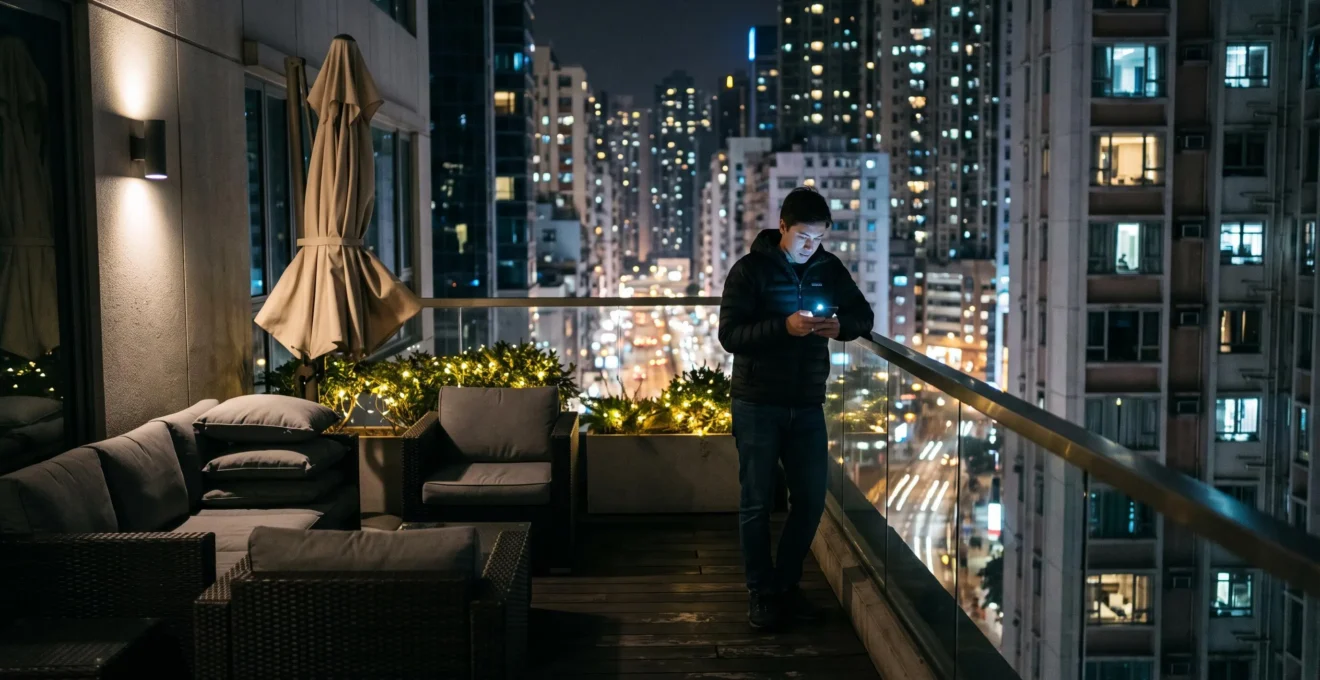
A penthouse terrace can be the most expensive feature of a city stay and the one you use least. Panoramic photographs reveal the skyline, but rarely tell you whether outdoor seating remains comfortable after sunset, whether neighbouring apartments overlook the dining table, or whether building management requires the terrace to be vacated at night.
Before booking a penthouse with a terrace, verify five essentials: permitted nighttime use, actual privacy, surrounding noise, practical access and the availability of help when something goes wrong. Confirm these details in writing rather than relying on the room category or the quality of the photographs.
The distinction matters particularly during a short luxury city break. A terrace that closes early, a rooftop bar transmitting bass into the bedroom, or an unreliable lift can undermine the reason for paying a premium. A carefully positioned top-floor suite may offer a better experience than a more impressive penthouse advertised around its views.
The objective is not to eliminate every inconvenience of city living. It is to establish whether the accommodation delivers the specific evening experience you intend to purchase.
Penthouse terrace booking: the essentials
- Request written confirmation of terrace hours, guest limits, private access and any restrictions imposed by building management.
- Check the terrace’s orientation, nearby windows, rooftop venues and nighttime lighting before paying a premium for the view.
- Prioritise sleep, dependable lift access and responsive on-site support over the prestige of the penthouse label.
- Why Do Penthouse Terraces Look Amazing but Feel Unusable After Sunset?
- How to Check Terrace Privacy and Noise Risk Before You Book a Penthouse in a Busy City?
- Penthouse or Top-Floor Suite: Which Gives Better Sleep When You’re in the City for 4 Nights?
- The One Building Rule That Can Make Your Penthouse Feel Like a Normal Flat
- When Should You Book a Penthouse to Avoid Event Week Price Surges and Limited Availability?
- The Room Category Mistake That Put You Above a Nightclub Even in a Luxury Hotel
- Why Do Historic City Centre Stays Feel Charming by Day but Exhausting at Night?
- What Separates True Luxury Accommodation From “Expensive” When Something Goes Wrong?
Why Do Penthouse Terraces Look Amazing but Feel Unusable After Sunset?
Penthouse terraces can become uncomfortable after sunset because listing photographs rarely show the conditions that determine evening usability. Weak lighting, wind exposure, falling temperatures, insufficient outdoor equipment and access restrictions can turn an impressive rooftop into a space suitable mainly for daytime photographs. A beautiful view does not establish that a terrace is practical at night.
Most promotional photography captures the terrace in attractive natural light, often around sunset. Furniture looks inviting, buildings acquire a warm glow and the skyline becomes the dominant feature. Once daylight disappears, however, the practical limitations may become obvious.
Outdoor lighting is the first distinction. Decorative LED strips, recessed floor lights and architectural wall fixtures can create an appealing atmosphere without providing enough illumination to read, serve dinner or move safely around steps and furniture.
Ask for a recent, unedited nighttime photograph or short video taken with the existing terrace lights switched on. A video showing the seating and dining areas is more informative than another skyline photograph. If the host cannot supply one, ask specifically whether the lighting is sufficient for an outdoor meal without additional lamps.
Height introduces another variable: exposure. A rooftop terrace can be affected by winds that are less noticeable at street level, although actual conditions depend on building geometry, shelter and weather. Temperatures may also become uncomfortable after sunset, particularly outside the warmest months.
Furniture alone is not evidence of evening comfort. Examine what accompanies it:
- Weather-resistant seating with cushions that are available during your stay.
- A functioning pergola, wind screen or other suitable shelter.
- Outdoor blankets or an appropriately installed heater, where permitted.
- Usable outdoor power outlets and sufficient practical lighting.
- A clear route between the interior and terrace without restricted stairways.
A further distinction concerns private terraces versus shared rooftop amenities. A property marketed around its rooftop may provide access to a communal terrace rather than an outdoor area belonging exclusively to the penthouse. Shared facilities can have fixed closing hours, separate booking requirements or restrictions on food and drinks.
Airbnb‘s ground rules for home hosts require accurate descriptions of amenities, privacy and surrounding conditions, as well as disclosure of restrictions on advertised facilities. That requirement makes written questions about nighttime terrace access particularly reasonable, although it cannot guarantee that every listing is accurate.
Once lighting, shelter and access have been confirmed, the next question is whether you can enjoy the terrace without becoming part of the surrounding neighbourhood’s evening activity.
How to Check Terrace Privacy and Noise Risk Before You Book a Penthouse in a Busy City?
To assess penthouse terrace privacy and noise before booking, investigate the surrounding buildings, street layout and nearby nightlife rather than judging height alone. Satellite imagery, Street View, recent guest reviews and precise questions to the host can reveal overlooking windows, rooftop bars and potential noise exposure. None provides certainty, but together they offer a more reliable assessment than listing photographs.
Start with the property’s exact location. Search the address in Google Maps, switch between satellite imagery and Street View, and identify nearby buildings of comparable height. An apartment on the highest floor of its own building can still sit directly opposite residential windows, office terraces or hotel balconies.
Look for the direction of the advertised view rather than assuming the entire terrace faces the same way. A panoramic photograph may be taken from its most attractive corner while the dining table sits opposite another building.
Street geometry matters too. In dense urban streets, sound may reflect between building façades and reach upper floors. The result depends on the height and spacing of buildings, the noise source, façade characteristics and the terrace’s position. A higher floor is not automatically quieter.
The World Health Organization identifies environmental noise as a relevant health and well-being concern in its WHO environmental noise guidelines, which consider transport and leisure noise among other sources. The guidance supports investigating likely exposure, not treating any particular floor or accommodation category as universally safer for sleep.
Next, identify nightlife within approximately two city blocks. Look for clubs, late-opening bars, restaurant terraces and rooftop venues. A nearby venue does not prove that the accommodation is noisy, but its operating hours and position provide useful questions for the host.
Ask directly:
- Which bars, clubs or rooftop venues operate within two blocks?
- Can people in neighbouring buildings see the terrace seating area?
- Does the terrace face a busy street, public square or internal courtyard?
- Have guests or neighbours raised nighttime noise complaints?
- Are the bedroom windows exposed to the same sources as the terrace?
Then examine reviews by date and travel pattern. Weekend visitors during peak tourist season may encounter different conditions from business travellers staying midweek. Search for terms such as “noise”, “music”, “bass”, “terrace”, “night” and “neighbours”. Read negative reviews in context rather than relying on the aggregate rating.
Five checks to complete before booking
- Confirm the exact location. Obtain the address or building position and save a satellite screenshot showing surrounding rooftops.
- Verify the nighttime setting. Request a recent terrace photograph or video with its normal lighting; save the response.
- Check privacy and noise. Mark nearby overlooking windows and nightlife venues on a map, noting the terrace’s orientation.
- Confirm access and restrictions. Request written terrace hours, guest limits, lift details and any roof or service-stair access conditions.
- Establish a problem-resolution contact. Save the name or contact method for the person available overnight, plus the stated procedure if the terrace cannot be used.
Vague replies are not proof of a hidden defect, but they leave a material purchasing question unresolved. If privacy and nighttime quiet are essential, consider an alternative property when the information cannot be verified.
Even a reasonably private terrace does not guarantee an undisturbed bedroom. Sleep quality deserves its own comparison, especially when the trip lasts only a few nights.
Penthouse or Top-Floor Suite: Which Gives Better Sleep When You’re in the City for 4 Nights?
For a four-night city stay, a well-insulated top-floor hotel suite with dependable overnight support may be a safer choice for sleep than an unverified penthouse. The penthouse can offer superior outdoor space and privacy, but roof equipment, nearby nightlife and terrace exposure introduce additional questions. The better option depends on actual room positioning, sound insulation and problem-resolution arrangements, not the category name.
Four nights leave relatively little room for disappointment. One disrupted night represents 25% of the booked nights, making the consequences of a poor room choice more concentrated than on a longer stay.
A penthouse may place its bedroom close to mechanical ventilation, rooftop heating and cooling equipment, lift machinery or other building services. Such equipment does not necessarily produce audible disturbance inside the accommodation, but its location should be checked.
The same applies to rooftop swimming pools, gyms and bars. Being on the highest residential floor does not mean that nothing active exists directly above it.
A managed hotel suite may offer advantages such as staffed reception, a clearer maintenance process and the possibility of a room change. Yet these benefits vary between hotels, and even expensive properties can have poorly positioned rooms.
Private penthouse rentals may offer greater independence and an entire outdoor area, but immediate assistance depends on the host or property manager. Platform protections can provide remedies for qualifying problems; they do not replace having somebody physically available to investigate a noise complaint at night.
The following comparison is a decision framework, not a guarantee about either category.
| Decision factor | Penthouse apartment | Top-floor hotel suite |
|---|---|---|
| Outdoor space | Potentially substantial private terrace | May have a balcony or no outdoor space |
| Noise exposure | Depends on street orientation, rooftop services and neighbouring buildings | Depends on room location, insulation and nearby hotel facilities |
| Nighttime assistance | Depends on host or local management availability | May have staffed overnight reception |
| Changing accommodation | May require finding another property | May be possible within the hotel, subject to availability |
| Building access | Lift arrangements and service access need confirmation | Hotel lift provision and operating arrangements need confirmation |
| Best fit | Travellers prioritising verified private space and independence | Travellers prioritising predictable service and sleep support |
Lift access deserves particular attention when evaluating a penthouse. Confirm whether the lift reaches the accommodation’s entrance, whether a final flight of stairs is required, and how guests enter the building late at night. If the only lift becomes unavailable, carrying luggage to a high-floor apartment could become a serious inconvenience.
Ask for the exact floor number and the location of rooftop equipment relative to the bedroom. In a hotel, request a room away from lifts, service areas and entertainment facilities. In a rental, ask whether the bedroom faces a quieter side of the building.
Finally, consider what the trip actually involves. If daytime sightseeing will leave little opportunity to use the terrace, reliable sleep and straightforward access may offer more value than additional outdoor square footage.
Once the accommodation type is settled, its operating rules require equal scrutiny. They can determine whether the advertised terrace is available at the hours you want it most.
The One Building Rule That Can Make Your Penthouse Feel Like a Normal Flat
The building rule most likely to undermine an evening-focused penthouse booking is a restriction on nighttime terrace use. Quiet hours, limits on outdoor gatherings or fixed rooftop closing times may prevent guests from using the property’s main attraction as expected. The precise restrictions vary by building, so obtain the applicable rules in writing before committing to the reservation.
Quiet-hours policies can restrict music, amplified sound, gatherings or other disruptive activity. Some buildings also set specific hours for access to shared rooftop spaces, while private terraces may remain accessible under broader noise rules.
These distinctions matter. A prohibition on outdoor music is not the same as a prohibition on quietly sitting outside, and a rule covering a communal rooftop may not apply identically to an apartment’s private terrace.
Ask what the rule actually permits, rather than accepting a general assurance that the building is “quiet” or “residential”.
A useful message to send before booking is:
“Could you please confirm the building’s official terrace rules, including any nighttime access restrictions, quiet hours, guest limits and restrictions on outdoor dining or music? Is the terrace accessible directly from the apartment throughout the evening, and can you share the relevant house rules before I reserve?”
In buildings governed by homeowners’ associations or condominium management, including many residential properties in the United States, applicable association rules may affect short-term guests even when a rental is otherwise permitted. In other markets, building regulations and local expectations may differ substantially.
In some European residential buildings, neighbour expectations may be enforced through formal house rules, customary quiet periods or complaints to building management. Travellers should not assume that a permitted rental automatically grants unrestricted outdoor use.
Access arrangements create a separate concern. A terrace reached through a shared staircase, locked service door or staff-controlled rooftop entrance may be inaccessible at night even when the apartment itself remains available.
Check whether the advertised space is exclusive to the apartment and whether reaching it requires keys, codes, building staff or use of a separate lift. Where access is conditional, obtain the operating hours and procedures.
A simple hypothetical example illustrates the distinction: two similarly priced penthouses advertise furnished terraces overlooking the same skyline. One permits quiet outdoor dining in the evening. The other closes its shared rooftop at a fixed hour. Their photographs may look equally appealing, but their value to a traveller planning late dinners outdoors is materially different.
The practical safeguard is written clarification before payment. A verbal assurance is less useful if a different rule is presented at check-in.
Once the rules meet your expectations, the remaining challenge is securing a suitable property at a sensible price, particularly around major city events.
When Should You Book a Penthouse to Avoid Event Week Price Surges and Limited Availability?
Book a penthouse as soon as your dates and essential requirements are reasonably firm if your stay coincides with a major event. Premium units may be limited, while conferences, concerts and sporting events can increase accommodation demand. If your schedule is flexible, compare equivalent stays one or two weeks apart before reserving. There is no universally reliable booking window.
Unlike standard rooms, penthouse inventory may consist of only one or a handful of suitable units at a property. A city can therefore have numerous luxury hotels yet relatively few apartments meeting specific requirements for terrace privacy, lift access, bedroom layout and nighttime use.
Major events can compress the available choice. Business conferences, stadium concerts, festivals and sporting fixtures may generate demand that extends beyond the immediate event venue.
+36%
Average increase in hotel daily rates during the selected major events analysed across Sydney, Melbourne and Brisbane, compared with typical trading periods. This historical research finding is not a penthouse-specific rate increase or a prediction for future events.
2025 CBRE Research report on Australian hotel demand and events, prepared for the Property Council of Australia.
The research illustrates the potential importance of event-driven demand, but it does not establish that penthouses always sell out first or that every major event causes comparable price increases.
For fixed dates, begin by checking local event calendars before comparing accommodation. Consult the destination’s official convention centre schedule, major venue listings, confirmed festivals and relevant sporting fixtures. Then prioritise properties that satisfy the practical requirements rather than choosing solely on price.
For flexible dates, compare the total cost of equivalent accommodation for the same length of stay. Keep the number of guests, cancellation terms, accommodation category and included services consistent. A lower nightly price may offer little advantage if cleaning fees, service charges or a restrictive cancellation policy change the overall value.
Compare total stay costs across the target dates and at least one alternative week. This establishes whether a meaningful premium actually exists for your specific booking.
Unexpectedly available accommodation during a major event is not automatically suspicious. A cancellation, new inventory or a property’s normal pricing strategy can explain availability. Nevertheless, verify recent reviews, exact room allocation, terrace rules and the cancellation conditions before treating the listing as an exceptional opportunity.
Where availability is limited, paying more for a verified terrace may be preferable to purchasing an apparently cheaper penthouse with unresolved access or noise questions. The appropriate premium depends on how much the outdoor space matters to the stay.
Price and availability, however, reveal nothing about the hotel’s internal layout. Even a prestigious property can place its premium accommodation surprisingly close to an entertainment venue.
The Room Category Mistake That Put You Above a Nightclub Even in a Luxury Hotel
The room-category mistake is assuming that a “penthouse suite” or “rooftop suite” must occupy the quietest part of a luxury hotel. Premium rooms can be located close to rooftop bars, event spaces, restaurants or building equipment. Their price and floor designation do not establish acoustic separation. Verify the actual room position relative to entertainment facilities before booking.
In a hotel with a rooftop lounge, the most desirable views and the busiest guest facilities may occupy the same upper levels. A suite positioned beside a bar entrance, beneath a rooftop event space or close to technical equipment can experience disturbance despite its premium classification.
Two forms of sound transmission deserve attention.
Airborne noise includes voices, music and traffic travelling through the air and entering through windows, doors or insufficiently insulated building elements. Its intensity depends on the source, distance, orientation and acoustic performance of the room.
Structure-borne noise involves vibration transmitted through floors, walls or other connected elements. Low-frequency sound from amplified music can sometimes remain perceptible even when conventional insulation reduces voices or higher-frequency noise.
Neither mechanism can be reliably evaluated from the number of stars awarded to the hotel.
Ask the reservations team whether the selected room is directly above, below or adjacent to the rooftop bar, nightclub or event facilities. Request an upper-floor layout or a clear description of the room’s relative position. A hotel may not provide a complete floor plan for security or privacy reasons, but it can often answer a specific location question.
Then examine reviews discussing music or vibrations. Management responses are informative, particularly when they describe whether the underlying issue was investigated or resolved. An offer of earplugs may be a considerate immediate measure, but it does not demonstrate that a recurring acoustic problem has been corrected.
Consider a hypothetical four-night stay in which a rooftop lounge operates near a suite’s bedroom. If music becomes disruptive on the first evening, contact reception while the disturbance is occurring. Ask staff to inspect the room and discuss a quieter alternative rather than waiting until checkout to raise the issue.
Hotel room changes depend on occupancy, room availability and the property’s policies. There is no guarantee that the hotel can provide a suitable replacement immediately, but early reporting gives staff an opportunity to act during the stay.
For a short visit, the preferable hotel is not necessarily the one with the most impressive rooftop venue. It is the one able to demonstrate that the accommodation and its entertainment facilities can coexist without undermining sleep.
Outside the hotel itself, the surrounding street pattern can create similar problems, particularly in historic districts where atmosphere and late-night activity occupy the same compact spaces.
Why Do Historic City Centre Stays Feel Charming by Day but Exhausting at Night?
Historic city-centre accommodation can feel tiring at night because the features that create daytime character often coexist with concentrated evening activity. Narrow streets, closely spaced façades, public squares and restaurant terraces may expose bedrooms and penthouse terraces to conversation, traffic and music. The effect varies by street and season, so the terrace’s orientation matters more than a neighbourhood’s reputation alone.
Historic districts frequently place accommodation within walking distance of restaurants, landmarks and pedestrian streets. This is a genuine advantage for travellers who want to explore without frequent transport arrangements.
Yet the proximity also reduces separation from public activity. Where tall façades border narrow streets, reflections can alter how sound travels. The effect is highly dependent on the specific urban geometry and should not be interpreted as proof that all historic districts are acoustically worse than modern neighbourhoods.
In a penthouse, the critical distinction is often between street-facing and courtyard-facing terraces.
A terrace overlooking a public square may offer the most recognisable photographs and direct views of architectural landmarks. It may also overlook outdoor restaurant seating, pedestrian gatherings or venues operating late into the evening.
Another terrace behind the same building might overlook an internal courtyard or neighbouring rooftops. This can reduce direct exposure to certain street-level noise sources, although ventilation equipment, neighbouring residents or sound entering through openings can still cause disturbance.
When choosing between the two, ask for a photograph showing the terrace’s actual orientation and the bedroom windows. A monument view from the living room does not establish that the terrace and bedroom face the same direction.
Seasonality adds another uncertainty. A city-centre apartment reviewed positively during a quiet winter period may be exposed to longer outdoor dining hours and more pedestrian activity during the summer tourist season. Conversely, a property that attracts complaints during a festival may be considerably calmer during other periods.
Filter reviews by month and compare stays made during the same season as your planned visit. Look for recurring descriptions of noise after sunset, rather than interpreting one isolated complaint as definitive evidence.
If the purpose of the trip is to enjoy the historic setting without sacrificing rest, a quiet rear-facing penthouse can be more satisfying than a prominent terrace directly overlooking the busiest square. The trade-off is often a less dramatic view.
Even after careful location research, unforeseen disturbances remain possible. The final distinction between genuine luxury and expensive accommodation is what happens when the property fails to deliver the expected experience.
Key takeaways before choosing the property
- A premium rate is not evidence of dependable nighttime assistance; verify who can actually respond when the reception desk or host is needed.
- Written confirmation of terrace access, noise conditions and room location establishes clearer expectations than promotional assurances.
- Choose an accommodation provider whose available remedies match the consequences of losing part of a short stay.
What Separates True Luxury Accommodation From “Expensive” When Something Goes Wrong?
True luxury accommodation distinguishes itself through effective service when a problem occurs, not simply through price, design or exclusivity. Responsive staff, practical alternatives and clear complaint procedures can preserve a stay affected by noise, access failures or unavailable amenities. Expensive accommodation without dependable support may leave guests negotiating a solution when immediate assistance matters most.
Consider two hypothetical penthouse bookings with similar terraces, views and nightly rates.
At the first property, a rooftop event unexpectedly disrupts the bedroom. A staffed reception team investigates, explains the available options and offers a quieter room if one is available.
At the second, the same disturbance occurs in a privately managed apartment. The owner is unavailable overnight, and the guest must contact a remote representative while deciding whether to remain or seek alternative accommodation.
Neither scenario establishes that hotels always deliver better service than private rentals. Professionally managed apartments can offer excellent local support, while some hotels handle complaints poorly. The difference is the actual service infrastructure supporting the reservation.
Before booking, verify whether an hotel has a staffed reception around the clock and whether assistance is available through a direct telephone number. Ask about the process for handling a room affected by noise or a major amenity failure.
For a private rental, establish whether a co-host or management company operates locally. Confirm who can attend the property after hours, especially if the lift, terrace door or building entry system becomes unusable.
Guest reviews can reveal more about these arrangements than general statements about luxury service. Look for reports describing a specific problem and the provider’s response. A well-explained resolution is more meaningful than a generic apology, although management replies should still be assessed alongside the guest’s account.
Response quality during the booking process offers another practical clue. Clear, specific answers about terrace hours, neighbouring venues and the exact floor show that the provider can address your immediate questions. Slow or evasive replies warrant caution, but do not reliably predict how every future complaint will be handled.
For Airbnb home reservations, the platform’s rebooking and refund policy for homes provides potential remedies for qualifying reservation issues, including certain significant discrepancies or unavailable advertised amenities. Under the policy effective February 6, 2025, guests generally need to report qualifying issues within 72 hours of discovering them.
Assistance or a refund is not automatic. Eligibility depends on the circumstances and supporting evidence, while comparable replacement accommodation depends on availability. Ordinary disturbance or a terrace that feels less comfortable than expected does not necessarily qualify.
For this reason, document material problems promptly with photographs, videos or written messages where appropriate, and contact the accommodation provider or booking platform through its official channels. Preserve the original listing description and the written confirmations received before arrival.
Ultimately, luxury should reduce the burden of solving problems. Spacious rooms and spectacular views matter, but responsive management can be more valuable when a short trip is at risk.
Before making the reservation, send the host or hotel a concise message requesting written confirmation of nighttime terrace access, applicable building rules, lift arrangements, nearby noise sources and overnight support. Compare the answers across your shortlisted properties, then choose the accommodation offering the clearest evidence that its most attractive feature will be available when you actually want to use it.
Can a penthouse terrace be private but still subject to building restrictions?
Yes. Exclusive access means the terrace is reserved for the accommodation, but it does not necessarily exempt guests from building quiet hours, restrictions on music or rules governing visitors. Request the applicable house rules and confirmation of permitted evening activities before booking.
Does a penthouse always include direct lift access?
No. A lift may stop one level below the accommodation, or the terrace may require access through additional stairs. Ask whether the lift serves the apartment entrance directly, whether any stairs are unavoidable and how access is managed late at night. Travellers with mobility requirements should obtain precise confirmation rather than relying on a general accessibility label.
Should you request an exact apartment number before booking?
An exact unit number can help establish the property’s position, but hosts may withhold it until a reservation is confirmed for security reasons. Instead, request the floor level, terrace orientation, neighbouring building heights and location relative to rooftop amenities. These details can support a useful risk assessment without requiring disclosure of private access information.
What should you do if the terrace is unavailable when you arrive?
First, establish whether the restriction was disclosed before booking and whether the terrace was advertised as a private or shared amenity. Photograph any relevant notices, preserve the listing and contact the provider promptly in writing. If the booking was made through a platform, use its formal reporting procedure and check whether the issue qualifies for assistance. Do not assume that every access restriction guarantees a refund.
Is a penthouse terrace worth paying extra for during a winter city break?
It can be, provided the outdoor space remains comfortable and accessible during the intended travel dates. Check seasonal weather exposure, usable lighting, suitable outdoor furniture, permitted heating arrangements and whether amenities are provided year-round. If evening terrace use is unlikely, a quieter suite with additional indoor space may represent better value.