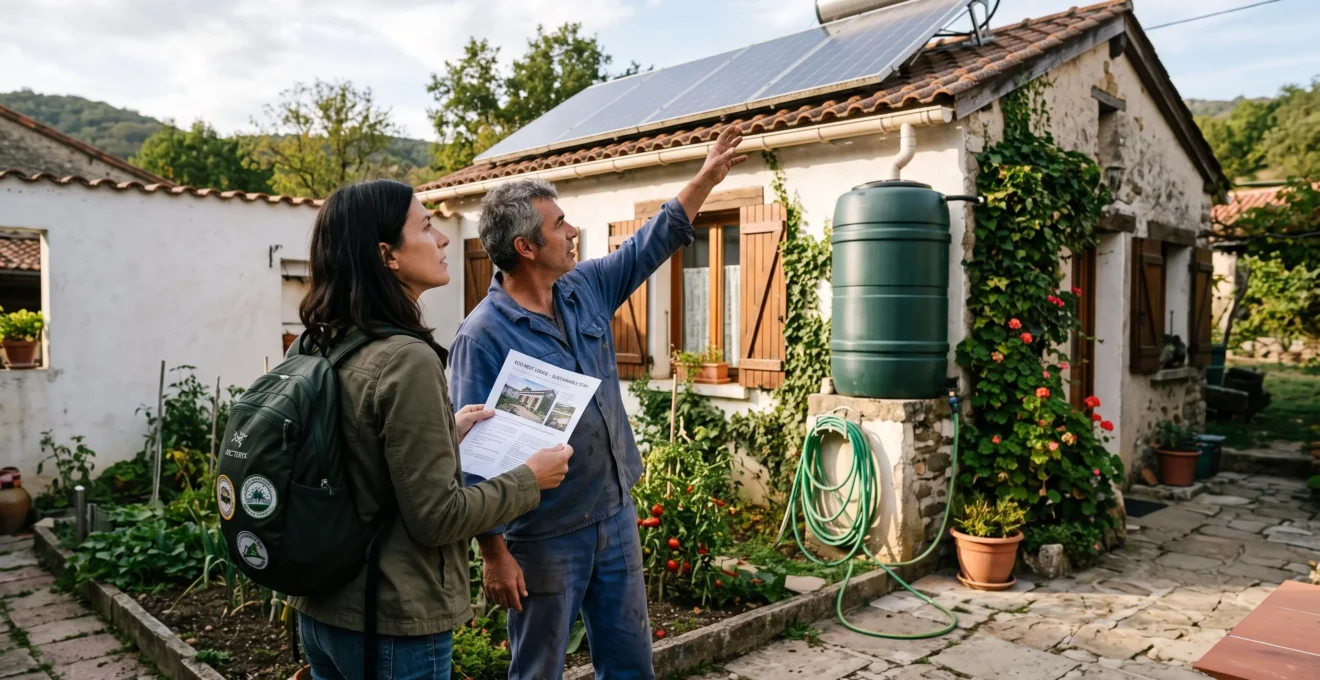
A hotel promises an eco-friendly escape. A tour operator advertises responsible adventures. An airline offers to offset your flight emissions at checkout. Each claim sounds reassuring, but none tells you, on its own, whether your trip will cause less harm.
Meaningful sustainable tourism claims describe specific practices, measurable outcomes and independently verifiable commitments. They address the major impacts of travel, including transport emissions, energy and water consumption, wildlife disturbance and effects on local communities. A green badge or attractive conservation photograph is not sufficient evidence.
The useful question is not whether a holiday can be labelled sustainable. It is whether one available choice has a defensible advantage over another, without transferring hidden costs to the destination.
That requires a practical approach: identify the biggest sources of impact, check who verifies the claims, examine trade-offs and recognise when a seemingly greener option may not be better. The same principles apply whether you are booking a weekend break, an international tour or accommodation in a remote natural area.
Sustainable tourism: what matters before booking
- Prioritise the biggest impacts. Transport, accommodation operations and resource-intensive activities generally deserve more attention than small cosmetic initiatives.
- Demand independently checkable evidence. A named certification, documented practices and transparent operating policies are more informative than vague green language.
- Compare realistic alternatives. Consider transport modes, trip length, seasonal pressures, wildlife protection and local benefits rather than assuming any single label guarantees sustainability.
- Why Do So Many “Sustainable” Trips Still Feel Like High-Impact Tourism in Practice?
- How to Vet a Tour Company’s Sustainability Claims Using 5 Proof Signals Before You Book?
- One Long Trip or Two Short Breaks: Which Is Lower Impact if Flights Are Involved?
- The “Carbon Offset” Mistake That Lets You Ignore the Bigger Impact Drivers
- When Should You Travel to Reduce Overtourism Pressure Without Missing the Best Weather?
- How to Check if an Eco-Friendly Accommodation Is Legit Using 6 Listing Clues?
- How to Check if a Conservation Project Is Credible Using 6 Proof Signals Before You Join?
- How to Tell if an “Eco-Friendly” Stay Is Real Without Ending Up in an Uncomfortable Room
Why Do So Many “Sustainable” Trips Still Feel Like High-Impact Tourism in Practice?
Many sustainable trips remain high-impact because their environmental claims focus on relatively small improvements while leaving major impacts unchanged. A hotel may eliminate plastic toiletries without addressing energy-intensive facilities, while a nature-focused holiday may still require long-distance flights and place additional pressure on fragile ecosystems. Sustainability depends on the whole trip, not its greenest feature.
Travel greenwashing works by directing attention towards visible, emotionally appealing details. Refillable bottles, recycled furnishings and tree-planting pledges are easy to promote. Transport choices, operating emissions, water scarcity and ecological disturbance are more difficult to communicate and may be less flattering.
Three different levels of commitment are frequently presented as though they were equivalent:
- Demonstrable impact reduction: An accommodation provider documents lower energy consumption, explains its measurement method and offers independently verifiable certification.
- Compensation: A company purchases carbon credits intended to support reductions or removals elsewhere, without necessarily reducing emissions from its own operations.
- Unsubstantiated green communication: An operator describes itself as an eco-lodge or responsible travel specialist without disclosing measurable practices or external verification.
These categories are not interchangeable. A credible certification may support particular management claims, but it cannot establish that the traveller’s entire holiday has a low environmental footprint.
The main impacts also vary by itinerary. For a flight-intensive holiday, aviation may dominate the climate calculation. At a water-stressed destination, accommodation facilities and leisure activities may create serious local pressures. Wildlife experiences can cause harm that a carbon calculation entirely misses.
A particularly important contradiction occurs when a fragile destination is promoted for its ecological qualities. More visitors may generate income for protection, but they may also increase erosion, disturbance, waste and demand for infrastructure. The net outcome depends on visitor management, ecological sensitivity and the distribution of economic benefits.
A useful sustainability assessment therefore starts with the largest potential harms and asks which booking decisions can genuinely reduce them. Once those priorities are clear, company claims become much easier to evaluate.
How to Vet a Tour Company’s Sustainability Claims Using 5 Proof Signals Before You Book?
To vet a tour company’s sustainability claims, examine five proof signals: independently verifiable certification, transparent local partnerships, specific environmental and visitor-management policies, evidence of local employment benefits, and clear answers to operational questions. Strong claims identify who is responsible, what is measured and how compliance is checked. Marketing descriptions alone cannot establish credibility.
The first distinction is between a company evaluating itself and an independent organisation assessing it. Certification also requires careful interpretation. The GSTC Recognition Manual for Sustainable Tourism Standards explains that recognition of a sustainability standard does not evaluate how the standard is applied by an individual business.
Likewise, accreditation of a certification body is different from certification of a specific tour operator. A B Corp credential, where relevant, concerns broader company performance and governance; it should not be treated as proof that every itinerary meets tourism-specific environmental requirements.
Beyond certificates, operational transparency matters. A tour operator should be able to explain who delivers its services, how group sizes are managed at sensitive sites and whether its guides and suppliers are locally based.
Watch for warning signs such as unnamed certifying organisations, generic photographs of pristine landscapes, sustainability pages without operational detail, or no written approach to wildlife welfare and community consent.
Five checks to complete before paying a tour deposit
- Find the named certification body and check the operator’s status in its public directory. Save the directory entry or record that verification was unavailable.
- Identify the accommodation, guiding and transport suppliers disclosed for your itinerary. Create a short supplier list distinguishing named providers from undisclosed ones.
- Find written policies on group sizes, sensitive habitats and wildlife encounters. Save the relevant policy statements or note their absence.
- Check disclosed information about local guides, employment and community payments. Record the specific commitments rather than accepting general promises.
- Email one precise question about an unresolved concern and keep the written reply. A useful answer should describe an actual procedure, not merely repeat the company’s sustainability slogan.
Cross-check the company’s statements against certification directories and detailed traveller reviews. Reviews describing actual group behaviour, guide practices or environmental conditions are more useful for corroboration than generic praise.
Even a credible operator may have weaknesses. The objective is not to find a business claiming perfection but to establish which claims can be verified and which risks remain unresolved.
After examining the operator, assess the journey itself. A well-managed tour can still carry a substantial transport footprint, making flight choices the next important comparison.
One Long Trip or Two Short Breaks: Which Is Lower Impact if Flights Are Involved?
One long trip is not automatically lower-impact than two short breaks. The result depends on total flight distance, routing, take-offs and landings, cabin class and the alternatives available. Short flights involve proportionally more fuel-intensive departure phases, but a single long-haul journey can still generate greater emissions than several shorter journeys. Compare actual itineraries rather than counting holidays.
Flight emissions do not increase in a perfectly linear relationship with distance. Fuel is consumed during taxiing, take-off, climbing, cruising and landing, with different operating characteristics in each phase. Consequently, a comparison based exclusively on kilometres can overlook relevant differences between routes.
For practical planning, evaluate three variables together:
- Total distance and routing: Add all flight segments, including connections and returns, rather than measuring only the straight-line distance between destinations.
- Number of flight segments: Consider whether connections introduce additional take-offs, landings and route distance.
- Cabin class: Compare the passenger footprint assigned to economy and premium cabins using the same methodology, recognising that allocation assumptions affect the result.
The distinction matters because two trips with the same number of travel days can have very different footprints.
| Travel scenario | Main impact driver | Practical interpretation |
|---|---|---|
| One long-haul return flight | Long total flight distance | Can outweigh two shorter flight-based holidays despite fewer journeys. |
| Two regional return flights | Combined distance and additional flight segments | May be lower or higher than one long-haul trip depending on the routes. |
| Two short breaks by rail | Rail transport and accommodation | May have substantially lower travel emissions than a long-haul flight, depending on the services used. |
| One itinerary with connecting flights | Detours and additional flight phases | Requires comparison with a feasible direct itinerary. |
A further complication is aviation’s non-CO2 climate effects. Aircraft can influence climate through processes including contrail formation and emissions at altitude. Different calculators handle these effects differently, so two estimates for the same itinerary may disagree without either necessarily being fraudulent.
The UK government’s 2026 greenhouse gas conversion factors provide documented emissions factors and methodology for organisational reporting. They can support structured travel comparisons, although travellers must supply relevant route information and apply consistent calculation boundaries.
Comparisons should use the same calculator, passenger allocation method and treatment of non-CO2 effects for every option. Avoid treating an estimate as a precise measurement of the individual flight’s climate impact.
There is also a distinction between climate efficiency and overall environmental impact. Spending longer at one destination may reduce repeated international travel, but the accommodation, transport and activities during that stay still matter.
When rail or other lower-emission transport is feasible, changing the transport mode may deliver a clearer advantage than changing holiday frequency. Where flying remains necessary, reducing avoidable emissions matters more than relying on compensation afterwards.
The “Carbon Offset” Mistake That Lets You Ignore the Bigger Impact Drivers
The carbon offset mistake is treating a payment for carbon credits as proof that a trip’s environmental impact has been cancelled. Purchasing credits does not prevent an aircraft from emitting greenhouse gases or eliminate pressure on a destination’s resources. Offsets may finance worthwhile climate action, but their credibility depends on project quality, and they cannot substitute for reducing avoidable travel impacts.
The problem starts when the offset becomes the final step in decision-making instead of a separate contribution. A traveller may select a more emissions-intensive flight, overlook accommodation energy use or increase trip frequency because the checkout offers an apparently simple solution.
That is a risk in how compensation is framed, not evidence that every traveller buying offsets behaves this way.
Carbon-credit credibility also varies significantly. The Core Carbon Principles establish requirements addressing additionality, permanence, double counting, independent verification and transparency.
Three questions are particularly useful when assessing a programme:
- Additionality: Would the claimed emissions reduction or removal have happened without the financing provided through carbon credits?
- Permanence: Could stored carbon be released later, for example through forest fire or land-use change, and how is that risk addressed?
- Double counting: Is there a credible system preventing the same emissions benefit from being issued, used or claimed more than once?
Independent verification, public documentation and transparent credit retirement records can strengthen a programme’s credibility. They do not make every project equally effective, and a recognised programme label does not automatically establish the quality of a particular credit.
For travellers, the more defensible decision hierarchy is to reduce avoidable impacts first: consider closer destinations, lower-emission transport, fewer unnecessary flights, feasible direct routes and economy-class travel. Then choose accommodation and activities with credible environmental practices.
Only after those decisions should optional financial support for carbon mitigation be considered. Such a contribution should be described accurately, without implying that a holiday has become environmentally neutral.
Carbon accounting also leaves important questions unanswered. Even a well-supported climate project does not automatically repair habitat disturbance, offset unsustainable water withdrawals or guarantee fair economic benefits for host communities.
Reducing the main impact drivers is more reliable than purchasing reassurance. The same principle applies to choosing travel dates, because the pressure placed on destinations changes throughout the year.
When Should You Travel to Reduce Overtourism Pressure Without Missing the Best Weather?
Travelling during the shoulder season can reduce exposure to peak visitor pressure while preserving suitable weather, but the best dates depend on the destination and activity. Tourist demand and favourable climate do not always peak together. Compare monthly visitor patterns with local weather conditions, then check seasonal closures and ecological restrictions before booking.
Tourism peaks are shaped by more than weather. School holidays, major events, transport schedules and international travel patterns can concentrate visitors within particular weeks, even when neighbouring months offer comparable conditions.
For instance, a coastal destination may remain comfortable after the main summer holiday period, while a hiking region may have suitable conditions before peak visitor numbers arrive. These are possibilities to test against local evidence, not universal seasonal rules.
A practical comparison uses two calendars: one for tourism demand and another for the conditions needed for the planned activities.
- Consult official destination tourism statistics, local visitor reports or attraction attendance data to identify busy and quieter months.
- Review month-by-month weather information, including rainfall patterns, temperature ranges and conditions relevant to the activity.
- Check whether accommodation prices and availability support the apparent demand pattern, without treating prices as direct visitor counts.
- Confirm that transport services, guides, trails and attractions will operate during the proposed dates.
- Check wildlife breeding periods, protected-area restrictions and local advice before treating quieter dates as environmentally preferable.
Moving demand outside peak months may help tourism-dependent businesses earn income over a longer period. However, that benefit depends on local employment arrangements, operating costs and where tourism spending goes. A quieter season does not guarantee that communities receive a larger share of revenue.
There are also practical disadvantages. Some businesses close, public transport may become less frequent and weather-sensitive activities can be restricted. A less crowded beach may offer a better visitor experience, while an exposed mountain trail may become unsuitable.
Ecological sensitivity is especially important. A destination’s low season may coincide with heavy rainfall, wildlife nesting or habitat recovery periods. Fewer tourists do not make access harmless when the ecosystem is particularly vulnerable.
The most appropriate dates are those offering suitable conditions without creating avoidable pressure on sensitive places. Once the timing is settled, accommodation claims deserve the same level of scrutiny.
How to Check if an Eco-Friendly Accommodation Is Legit Using 6 Listing Clues?
A legitimate eco-friendly accommodation listing should provide verifiable information about environmental management rather than relying on appealing descriptions. Look for six clues: identifiable certification, measurable commitments, specific operating practices, local employment policies, documented resource management and consistency between amenities and sustainability claims. None guarantees low impact individually, but together they make misleading listings easier to identify.
Start with the listing itself. A credible property should explain what it does, who checks it and how its practices affect day-to-day operations.
The six clues help separate meaningful evidence from vague language:
- Named certification: The listing identifies the scheme, certifying organisation and ideally a certificate number or searchable property record.
- Measurable commitments: Energy, water or waste claims include figures, defined reporting periods or stated measurement practices rather than unsupported promises.
- Concrete actions: Descriptions identify measures such as insulation, solar water heating, refill systems or waste separation instead of simply using the word green.
- Local employment: The provider explains its approach to hiring, training and purchasing from local businesses, ideally with specific commitments.
- Resource management: Information addresses electricity generation, water sourcing, wastewater treatment and consumption controls where relevant.
- Consistency across amenities: Photographs and facilities do not reveal obvious contradictions that the sustainability description leaves unexplained.
Certification checks should happen outside the booking platform. Search the certifier’s official directory and confirm that the listed property, certification status and relevant dates match. Also examine whether certification relies on on-site audits, remote assessment or self-reported information.
These verification methods do not all provide the same level of assurance. A standard recognised by a tourism body and a property certified against that standard are separate things.
Guest reviews provide another useful check. Search for mentions of hot-water reliability, air-conditioning, waste handling, construction noise, housekeeping and staff practices. Repeated firsthand observations may reveal whether the property’s promises operate consistently.
Reviews remain anecdotal, however. A single complaint about a broken appliance does not prove greenwashing, just as a favourable review does not verify environmental performance.
Pay particular attention to potential contradictions. A heated swimming pool in an arid region or unusually resource-intensive facilities may deserve closer examination. Such amenities are not definitive proof of poor performance; their actual impact depends on the energy source, water supply and management practices.
A trustworthy listing makes its commitments checkable and its limitations visible. This provides a stronger basis for comparison than photographs, badges or environmental adjectives alone.
How to Check if a Conservation Project Is Credible Using 6 Proof Signals Before You Join?
A credible conservation project should demonstrate that its activities serve a defined ecological purpose, not simply provide attractive experiences for paying volunteers. Check six signals: a legitimate local partner, a scientific management plan, published results, qualified supervision, financial transparency and written wildlife-welfare safeguards. The volunteer’s tasks should contribute to conservation objectives without displacing essential professional work.
Conservation volunteering is particularly vulnerable to confusing marketing because activities can feel meaningful even when their ecological benefits are unclear. Planting trees, observing wildlife or helping at a sanctuary may be useful, but participation alone does not establish a positive outcome.
The first proof signal is a credible local organisation with a clearly defined role in managing the project. Conservation should not depend entirely on the interests of an overseas booking intermediary.
Second, look for a management plan explaining the ecological problem, proposed intervention, relevant permits where required and method for monitoring progress.
Third, ask for previous results. Credible documentation might include monitoring reports, habitat surveys or other evidence appropriate to the project. The existence of activity photographs is not a substitute for ecological outcomes.
Fourth, identify the qualified professionals responsible for training, supervision and data quality. Fifth, examine how participation fees are distributed between administration, field operations and local partners. A credible programme should be able to explain these arrangements even when detailed financial reporting is limited.
The sixth signal is a written animal-welfare policy, especially where volunteers work near wildlife.
For elephant tourism specifically, World Animal Protection advises observation-led experiences rather than riding, bathing or touching animals. Its guidance also cautions against assuming that a venue is credible merely because it uses the word sanctuary.
That species-specific advice does not mean every form of animal handling by trained conservation professionals is inappropriate. Necessary veterinary or scientific activities are different from routine tourist interactions designed for photographs.
Before enrolling, request a typical daily schedule and ask three direct questions: What exactly will volunteers do? Who supervises them? How are the results measured?
Specific answers should identify tasks, qualifications and the records produced. Evasive responses are a substantial warning sign, particularly when the programme emphasises animal encounters or promotional experiences over conservation methods.
A project can still be worthwhile without dramatic results or close wildlife contact. Routine monitoring and carefully supervised data collection may be less photogenic but more consistent with long-term conservation objectives.
When a programme cannot explain its ecological objectives or volunteer responsibilities, declining to participate may be the more responsible choice. The same willingness to question marketing can also help travellers find accommodation that is both environmentally credible and comfortable.
What to remember when choosing where to stay
- Environmental performance and guest comfort are different dimensions. Assess both rather than assuming one determines the other.
- Prioritise investments in building efficiency, resource management and responsible operations over guest-facing sustainability slogans.
- Ask about practical limitations before booking. Transparent restrictions may be reasonable; undisclosed service problems are not evidence of sustainability.
How to Tell if an “Eco-Friendly” Stay Is Real Without Ending Up in an Uncomfortable Room
An eco-friendly stay does not have to be uncomfortable. Well-managed accommodation can reduce environmental impacts through efficient buildings, responsible water systems and lower-resource operations while maintaining reliable guest services. The key is to distinguish genuine environmental improvements from restrictions presented as ecological virtues. Check both sustainability evidence and the practical conditions that affect your stay.
A common misconception is that sustainable accommodation necessarily means cold showers, unreliable electricity or the absence of air-conditioning. In practice, some environmental improvements operate largely behind the scenes.
Better insulation can reduce heating and cooling demand without reducing comfort. Efficient hot-water systems can limit energy consumption while maintaining a reliable supply. Appropriate water-saving equipment can reduce unnecessary use without making basic washing facilities inadequate.
Local procurement and fair employment policies may also improve a property’s social and economic practices without changing the guest experience in obvious ways.
Booking platforms can help identify possible candidates, but their sustainability information requires interpretation. Google and Booking.com have used sustainability information and certification-related features in travel listings. Their current displays and eligibility rules may differ, so a badge or filter should be treated as a starting point, not independent proof of comprehensive environmental performance.
Where a platform identifies a certification, check the certifying organisation and confirm the property’s status separately. Where information comes from property declarations, distinguish those statements from independently assessed evidence.
A useful accommodation comparison should consider sustainability and comfort side by side.
| Feature | Potentially credible sustainability measure | Question to ask about comfort |
|---|---|---|
| Hot water | Solar-assisted or efficient water heating | Is hot water consistently available at the times guests need it? |
| Room temperature | Insulation, shading and efficient climate control | What temperature-control options are available in the booked room? |
| Housekeeping | Optional linen changes and reduced unnecessary washing | Can guests request cleaning when needed? |
| Water supply | Responsible water management and efficient fixtures | Are restrictions disclosed, and is drinking water reliably available? |
| Electricity | Renewable generation and efficient appliances | Are power interruptions expected, and which facilities remain available? |
Not every genuine sustainable property can eliminate trade-offs. A remote lodge operating on a limited solar electricity system may have scheduled power availability. A small property in a water-scarce area may need to impose reasonable consumption limits.
Those constraints can be legitimate if they are explained before booking, supported by sound operational reasons and compatible with the guest’s needs. A promised hot shower that repeatedly fails without prior warning is a service problem, not automatically an environmental achievement.
For families, older travellers and people with accessibility or medical requirements, comfort may include essential conditions rather than optional luxuries. Confirm reliable electricity, suitable temperature control, accessibility and necessary facilities directly when they are important to the trip.
The most credible accommodation providers explain both what they are doing to reduce impact and what guests can realistically expect. They do not require travellers to accept vague environmental claims in place of accurate service information.
Before your next booking, compare two realistic options, verify their most important claims and write down any remaining environmental or comfort uncertainties. Choose the option with the strongest combination of evidence, manageable impacts and suitability for your needs, rather than the one with the most persuasive green branding.
Can a hotel be genuinely sustainable without an official certification?
Yes. A small independent property may implement effective environmental and social practices without holding a formal certification. However, the absence of certification increases the importance of checking specific evidence, such as documented resource management, operational transparency and consistent guest observations. Certification is one verification mechanism, not the only possible indication of responsible management.
Does paying more for an eco-friendly holiday guarantee a lower environmental impact?
No. Price does not establish environmental performance. Higher costs may reflect location, accommodation quality, staffing, operating conditions or sustainability investments, but the relationship cannot be assumed. Compare measurable practices, transport requirements and destination impacts before treating a premium price as evidence of lower harm.
Is it better to avoid popular destinations altogether?
Not necessarily. Tourism can support livelihoods and conservation, while unmanaged visitor numbers can create environmental and social pressure. Consider travelling outside peak periods when appropriate, following local visitor-management guidance and selecting businesses that demonstrate responsible operating practices. Avoid restricted or ecologically sensitive areas when local authorities or conservation managers advise against access.
What should travellers do when a sustainability claim cannot be verified?
Treat the claim as unverified rather than automatically false. Ask the provider for a named certifier, a relevant policy, a specific measurement or another independently checkable record. If the answer remains vague, do not give that claim weight when comparing options. Where the issue concerns serious wildlife harm or environmental damage, unresolved concerns may justify choosing another provider.
Can a trip be described as environmentally sustainable if it still involves flying?
Flying does not automatically negate every positive social or environmental practice associated with a trip, but aviation emissions must be included in an honest assessment of its climate impact. A responsible operator can take meaningful action while acknowledging that an itinerary still has substantial emissions. Broad claims that the entire holiday is sustainable require stronger evidence than isolated operational improvements or carbon-credit purchases.