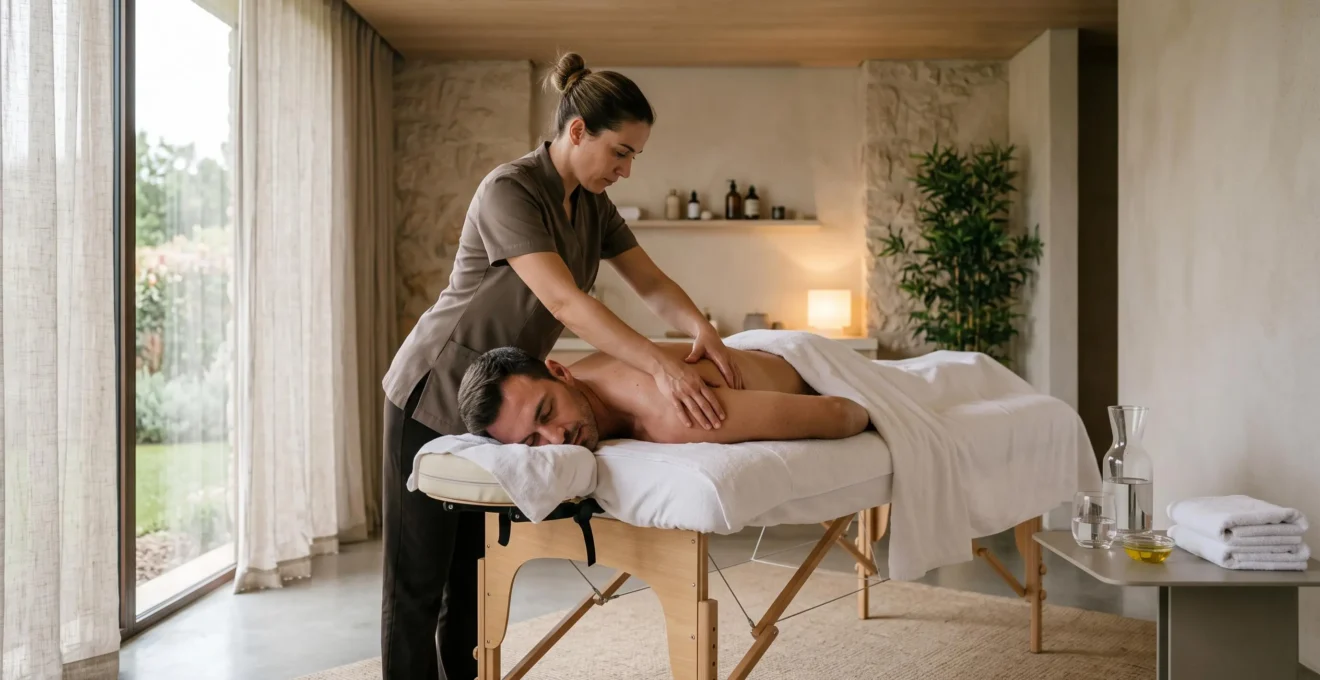
When a spa visit must fit between a flight, sightseeing and dinner, the most expensive treatment is not necessarily the most useful. The right choice depends on what needs to change, how quickly that change can reasonably happen and whether the treatment might leave you sore, flushed or exhausted.
For travellers with tight shoulders or muscular discomfort, targeted massage may be more relevant than an elaborate facial. For general stiffness and a need to unwind, gentle hydrotherapy can offer a comfortable alternative. If looking presentable that evening is the priority, treatments with unpredictable redness or recovery periods deserve particular caution.
Visible results are not guaranteed in 90 minutes. A realistic outcome might be more comfortable movement, a calmer appearance or feeling sufficiently refreshed to enjoy the rest of the day. These are different goals, and they call for different treatments.
The most useful booking strategy is to match one primary concern to one appropriate treatment, check the health precautions and protect enough time afterwards to recover.
Choosing a modern spa treatment in 90 minutes
- Match the treatment to the problem: consider targeted massage for muscular tension, gentle hydrotherapy for generalized stiffness and non-aggressive skincare when appearance matters.
- Protect your evening: avoid first-time chemical peels, aggressive exfoliation and prolonged heat when redness or fatigue would disrupt your plans.
- Plan the complete visit: allow time for consultation, treatment, hydration, dressing and a quiet transition rather than using all 90 minutes for intensive treatment.
- Why Do Modern Spa Treatments Sometimes Feel Pointless the Next Day?
- How to Choose a Spa Treatment in 5 Steps When You Can’t Risk Redness at Dinner?
- Massage or Hydrotherapy: Which Helps More if You’re Stiff After a Long Flight?
- The Heat-Treatment Mistake That Can Leave You Dizzy and Ruin the Rest of Your Day
- In What Order Should You Book Spa Treatments Over 3 Days to Avoid Feeling Overdone?
- How to Read Mineral Pool Descriptions Without Getting Lost in Chemistry Terms?
- How to Vet a Thermal Spring Sanctuary in 15 Minutes Using Water Notes and Facility Clues?
- Which Thermal Spring Sanctuary Is Worth It if You Hate Crowds and Strong Sulphur Smells?
Why Do Modern Spa Treatments Sometimes Feel Pointless the Next Day?
Modern spa treatments can feel pointless the following day because immediate relaxation is not the same as lasting physical improvement. A massage may temporarily reduce discomfort, while a warm bath may make movement feel easier without correcting the underlying cause of stiffness. When travellers expect visible or permanent changes from a single session, disappointment becomes more likely.
A treatment can be pleasant without producing a measurable difference the next morning. Warmth, gentle pressure and a quiet environment may make someone feel more comfortable during the visit. However, feeling relaxed does not establish that circulation, muscle structure or skin health has undergone a lasting therapeutic change.
Massage illustrates this distinction. The NCCIH overview of massage therapy evidence and safety explains that massage involves manipulating soft tissues and that evidence for pain relief varies by condition. It also identifies limitations in the research comparing different techniques.
A temporary benefit is not necessarily a failed treatment. The more useful question is whether the treatment addressed the problem that justified booking it.
Consider a traveller who books a luxury relaxation ritual after sleeping poorly on an overnight flight. The session may feel wonderful, yet the traveller could still feel exhausted the following morning. Massage cannot replace sufficient sleep, and an expensive ritual does not automatically correct travel-related fatigue.
Similarly, someone seeking a visibly different complexion may feel disappointed after a body massage, even if muscular comfort improves. The treatment may have worked for one purpose while failing to meet an unrelated expectation.
Several practical factors can also reduce satisfaction:
- Arriving dehydrated or already exhausted.
- Combining intensive massage with prolonged heat exposure.
- Skipping rest and immediately returning to strenuous activities.
- Choosing excessive pressure that leaves muscles sore.
- Expecting one session to resolve a persistent health problem.
Use a next-morning self-check instead of judging the treatment solely by how relaxing it felt. Compare your ability to turn your neck, raise your shoulders or bend comfortably. Notice whether your energy has improved, whether your skin looks calmer and whether you have developed unexpected soreness.
These observations are personal feedback, not a medical diagnosis or proof that the treatment caused a particular change. Travel activities, hydration and sleep can influence the same outcomes.
If the main problem remains unchanged, the answer may be a different treatment category rather than a longer or more expensive version of the same experience. Choosing that category becomes especially important when the evening schedule leaves no room for recovery.
How to Choose a Spa Treatment in 5 Steps When You Can’t Risk Redness at Dinner?
When redness at dinner is unacceptable, prioritize gentle, familiar treatments with minimal expected skin disruption. Start by identifying your main goal, matching it to an appropriate treatment, checking contraindications, confirming recovery time and speaking with the practitioner. Avoid assuming that a treatment advertised as quick, refreshing or suitable for lunchtime will leave your appearance unchanged.
The most important distinction is between low expected downtime and guaranteed absence of side effects. Even gentle treatments can cause temporary flushing, irritation or discomfort in susceptible people.
For instance, a light relaxation massage may be suitable when physical tension is the concern, provided the practitioner avoids irritating products and overly vigorous techniques. A mild-temperature bath may appeal to someone seeking general comfort without facial treatment.
If facial appearance is the priority, a familiar, non-exfoliating moisturizing treatment may be worth discussing with a qualified skincare practitioner. New products, fragrances and active ingredients can still provoke reactions, particularly in sensitive skin.
Chemical peels demand more caution. According to the American Academy of Dermatology FAQs on chemical peels, even superficial peels have a reported healing period of 1–7 days. Medium peels require approximately 7–14 days, and deep peels approximately 14–21 days.
These ranges do not predict an individual’s exact recovery, but they clearly challenge the assumption that a superficial peel is automatically safe immediately before a social event.
The following comparison helps separate realistic same-day choices from treatments that deserve advance planning.
| Treatment | Potential benefit | Main same-day concern | Booking approach |
|---|---|---|---|
| Gentle targeted massage | Temporary muscular comfort | Possible soreness or skin irritation | Request comfortable pressure and familiar products |
| Mild-temperature hydrotherapy | Relaxation and easier-feeling movement | Heat sensitivity or lightheadedness | Keep exposure moderate |
| Non-exfoliating facial | Skin hydration and a refreshed appearance | Possible reaction to ingredients | Confirm products and individual sensitivity |
| Chemical peel | Potential improvement in selected skin concerns over time | Redness, scaling and healing requirements | Schedule well away from important events |
| Aggressive exfoliation | Removal of surface skin cells | Irritation and uncertain recovery | Avoid immediately before a high-stakes evening |
A 90-minute appointment should account for the complete experience. As an illustrative schedule, a traveller might allocate 10 minutes to consultation, 50 minutes to a targeted treatment, 15 minutes to resting and drinking water, and 15 minutes to changing and leaving comfortably.
This is a planning example, not a clinically validated treatment protocol. Actual timing should follow the practitioner’s assessment and the facility’s arrangements.
Your five-step pre-dinner spa booking checklist
- Write down one primary goal. Produce a one-sentence objective such as “I want less shoulder discomfort without facial redness.”
- Shortlist suitable treatments. Record two options that address that objective without requiring aggressive skin procedures.
- Complete a safety screen. Prepare a brief list of relevant health conditions, allergies, medications and previous treatment reactions to discuss privately with the practitioner.
- Confirm downtime and products. Obtain a clear answer about expected redness, soreness, ingredients, practitioner qualifications and aftercare.
- Approve a realistic schedule. Write down the treatment duration, consultation time, recovery allowance and planned departure time before paying.
Ask who actually performs the treatment rather than relying exclusively on booking descriptions. For skincare, clarify whether acids or other active ingredients are involved and whether the practitioner has relevant experience with your skin type.
The most practical choice is the treatment whose likely benefits, safety precautions and recovery requirements fit your actual schedule. Once that is clear, the next decision is whether massage or water-based treatment better addresses post-flight stiffness.
Massage or Hydrotherapy: Which Helps More if You’re Stiff After a Long Flight?
Massage is usually the more targeted option when post-flight stiffness is concentrated in the neck, shoulders or back. Gentle hydrotherapy may be preferable when discomfort feels widespread or movement is uncomfortable. Neither is proven universally superior for travellers, and symptoms such as unexplained leg swelling, severe pain or circulatory problems require medical assessment rather than routine spa treatment.
Massage acts through direct manipulation of muscles and other soft tissues. A practitioner can focus on areas affected by prolonged sitting, such as the upper back or shoulders, and adjust pressure according to your comfort and health history.
Hydrotherapy uses water as the treatment environment. Buoyancy reduces the effective load on joints while immersed, and comfortably warm water can make gentle movement feel easier. Water temperature and hydrostatic pressure also influence physiological responses, but these effects should not be confused with proven treatment of an underlying circulatory disorder.
The distinction matters because stiffness is a symptom, not a single diagnosis. A tight shoulder after carrying luggage is different from a painful, swollen calf after a long journey.
| Post-flight situation | More relevant option | Important limitation |
|---|---|---|
| Localized neck or shoulder tension | Targeted gentle massage | Avoid excessive pressure or treatment over an injury |
| Generalized stiffness without warning signs | Gentle hydrotherapy | Warmth may improve comfort without resolving the cause |
| Joint discomfort when bearing weight | Supported movement in water | Check whether immersion is medically appropriate |
| Tired, heavy-feeling legs without concerning symptoms | Gentle movement and comfortable water-based relaxation | Do not use spa treatment to assess or treat suspected circulation problems |
| One-sided leg swelling, warmth, redness or unexplained calf pain | Medical evaluation | Avoid massage and heat until a serious cause has been ruled out |
Long periods of immobility during travel can increase the risk of blood clots in susceptible people. A swollen or painful leg, particularly on one side, should not be dismissed as ordinary post-flight stiffness. Sudden breathlessness, chest pain or fainting requires emergency medical attention.
For uncomplicated stiffness, massage and hydrotherapy do not have to be mutually exclusive. A hypothetical 90-minute visit could include a short period of comfortable water immersion, time to dry off and rest, followed by a gentle, focused massage.
That sequence may suit some travellers, but there is no established evidence that combining the two consistently outperforms either treatment alone for post-flight symptoms. It should be treated as a comfort-based itinerary, not a superior clinical protocol.
Deep-tissue work is not automatically more effective. Strong pressure may create soreness, and people who are already uncomfortable after travelling may prefer a lighter approach. The practitioner should adjust intensity rather than follow a fixed full-body routine.
Quality also depends on what the facility actually offers. A hydrotherapy session might involve warm-water movement, jets or immersion in a mineral pool. These are different experiences, and a heated swimming pool should not be represented as a natural mineral spring.
For massage, ask whether the session can be customized around your symptoms. For hydrotherapy, ask about temperature, supervision, accessibility and whether the session involves vigorous jets or substantial heat exposure.
When both options are appropriate, choose the one that addresses the clearest discomfort without adding unnecessary intensity. Heat deserves particular attention because an otherwise relaxing spa visit can become unpleasant when exposure exceeds personal tolerance.
The Heat-Treatment Mistake That Can Leave You Dizzy and Ruin the Rest of Your Day
The most avoidable heat-treatment mistake is repeatedly moving between hot facilities without allowing enough cooling, hydration or recovery time. Spending too long in a sauna, steam room or hot bath can contribute to dehydration, lightheadedness and fatigue. The risk is greater when someone arrives dehydrated, has consumed alcohol or has a health condition affecting cardiovascular responses.
Heat changes how the body regulates temperature. Blood vessels near the skin dilate to support heat loss, while sweating causes fluid loss. Depending on individual physiology and the treatment environment, these responses can contribute to lower blood pressure, a faster heartbeat or dizziness.
Standing abruptly after prolonged heat exposure may make lightheadedness more noticeable. Someone who already feels weak should not attempt to overcome the sensation by remaining inside the hot environment.
The problem is not that every heated treatment is dangerous. It is the assumption that more heat produces more benefit, even when the body’s warning signs suggest otherwise.
The Cleveland Clinic‘s article on sauna benefits and safety identifies dehydration as a significant risk. Its general guidance suggests approximately 15–20 minutes for a sauna session, with beginners potentially starting at around five minutes.
These recommendations concern sauna use and are not universal safety thresholds for every steam room or thermal pool. Temperature, humidity, personal health and facility-specific guidance all matter.
A safer approach involves several basic habits:
- Drink water before and after heat exposure, with additional hydration as appropriate.
- Begin with shorter sessions, especially when unfamiliar with the facility.
- Allow time to cool down and recover between exposures.
- Avoid hot facilities after consuming alcohol.
- Stand up gradually and avoid sudden movements when feeling lightheaded.
- Leave immediately if dizziness, weakness, nausea, headache, unusual heartbeat or visual dimming develops.
Sudden or extreme hot-to-cold transitions may create additional cardiovascular stress, particularly for people with underlying health concerns. They should not be treated as obligatory parts of a successful wellness session.
Medical precautions are especially important for people with cardiovascular disease, high or low blood pressure, relevant medication use or pregnancy. Anyone recovering from a recent heart attack or stroke should avoid sauna use unless appropriately cleared by a healthcare professional.
Severe dizziness, fainting, chest pain, difficulty breathing or confusion warrants urgent medical attention. Repeated symptoms also deserve clinical assessment rather than another attempt with a shorter session.
A successful heat treatment should leave enough energy for the rest of the day, not require hours of recovery. That principle becomes even more important when planning several spa appointments across a short holiday.
In What Order Should You Book Spa Treatments Over 3 Days to Avoid Feeling Overdone?
For a three-day spa break, a practical sequence is to begin with gentle treatments, reserve any more intensive work for the middle day and finish with restorative sessions before travelling home. This allows time to assess individual tolerance and avoid unnecessary soreness. It is a scheduling strategy rather than a clinically proven treatment sequence.
Travellers sometimes book several expensive treatments consecutively because they want to maximize the value of a short stay. Yet filling every available appointment can undermine the experience when treatments cause discomfort, irritation or fatigue.
Increasing treatment intensity does not guarantee increasing benefit. A strong massage may leave temporary tenderness, while repeated heat exposure can contribute to dehydration. Combining both without adequate recovery can make it difficult to identify which activity caused an unwanted reaction.
Consider the following hypothetical three-day itinerary for a generally healthy traveller who has arrived after a long journey.
| Day | Suggested treatment | Reason for the order | What to avoid |
|---|---|---|---|
| Day 1: Arrival | Gentle hydrotherapy or light relaxation massage | Assess comfort, heat tolerance and muscular sensitivity | Immediately scheduling intense treatment while exhausted |
| Day 2: Main session | Targeted massage adjusted to individual tolerance | Address persistent tension after rest and reassessment | Assuming deep pressure is necessary for results |
| Day 3: Departure | Comfortable mineral soak or calming, low-intensity ritual | Prioritize recovery and ease before onward travel | Deep tissue work or prolonged heat immediately before leaving |
This arrangement works best when each day includes enough flexibility to respond to the previous treatment. If the first session causes soreness, the second day’s massage may need to be gentler, postponed or omitted.
Similarly, heat-sensitive travellers may find a non-heated relaxation treatment more appropriate than a mineral soak. Someone with a relevant medical contraindication should not use the proposed schedule as a reason to proceed.
A recovery day does not have to involve another treatment. Walking comfortably, resting and maintaining normal hydration may be more useful than purchasing an additional ritual simply to fill the itinerary.
Travel logistics should influence the final day. A lengthy return journey, limited access to water or an important event shortly after departure may make vigorous massage, intensive exfoliation and heat-heavy treatments inconvenient.
For those seeking visible skincare improvements, the timing becomes particularly important. Treatments with significant healing requirements should be planned independently of an ordinary three-day relaxation itinerary, with advice from an appropriately qualified practitioner.
The objective is to return home feeling comfortable, not to complete the greatest number of sessions. Once the sequence is clear, it becomes easier to evaluate whether a mineral pool adds meaningful value or simply increases the booking cost.
How to Read Mineral Pool Descriptions Without Getting Lost in Chemistry Terms?
Read mineral pool descriptions by focusing first on water temperature, source, mineral composition and the claims the facility makes about benefits. Sulphur, bicarbonate, calcium and magnesium describe chemical characteristics, not guaranteed treatment outcomes. For an ordinary relaxation visit, comfortable temperature, hygiene and individual tolerance may matter more than an impressive list of minerals.
Thermal resorts frequently describe water using geological or chemical terminology that can be difficult to interpret. The simplest approach is to separate three questions: what the water contains, how the facility manages it and what evidence supports the advertised benefit.
Common descriptions include:
- Sulphur-rich water: water containing sulphur-related compounds, sometimes associated with a noticeable hydrogen sulphide smell. Certain sulphur-containing thermal waters have been studied in dermatological contexts, but results depend on the condition and treatment protocol.
- Bicarbonate-rich water: water characterized by bicarbonate ions. The designation describes composition rather than proof of skin-softening or circulatory benefits.
- Calcium- or magnesium-rich water: water containing measurable amounts of these minerals. Their presence does not establish that bathing produces clinically meaningful mineral absorption or muscle recovery.
- Saline or chloride-rich water: water with substantial dissolved salts, which may feel different from ordinary pool water but can be irritating to some skin conditions.
- Naturally thermal water: water heated through geological processes, distinct from ordinary water heated mechanically by a spa.
The distinction between composition and proven effectiveness matters. A mineral can be present in water without producing the medical effect claimed by a resort’s advertising.
8 clinical studies
A 2024 systematic review examined thermal mineral-water bathing for dermatological diseases, mainly psoriasis. Seven of the eight studies had moderate or high risk of bias, limiting the strength of conclusions.
2024 systematic review of thermal mineral-water balneotherapy
Although the reviewed studies reported improvements in some dermatological signs and symptoms, the authors concluded that the evidence was insufficient to establish robust effectiveness. These findings do not demonstrate that a single spa visit visibly transforms healthy skin.
A useful comparison therefore starts with information that can actually be checked.
| Website description | What to check | How to interpret it |
|---|---|---|
| Natural thermal spring | Water source and stated natural temperature | Confirms the origin more effectively than decorative terminology |
| Rich in minerals | Published composition and concentration units | Allows comparison but does not prove health benefits |
| Dermatological benefits | Specific condition, evidence and treatment protocol | Be cautious about transferring clinical findings to occasional wellness visits |
| Certified or recognized water | Named authority and scope of recognition | Check what was recognized rather than assuming medical efficacy |
| Detoxifying or revitalizing | Defined outcome and credible evidence | Treat vague claims as marketing rather than established physiology |
Mineral composition is more relevant when a traveller has a particular dermatological concern and is following professional advice. Even then, bathing is not a substitute for appropriate medical treatment.
For someone primarily seeking relaxation, gently warm water in a well-maintained environment may provide a satisfactory experience without a premium mineral formulation. Paying more makes sense only when the additional features serve a clear personal preference or justified need.
The next step is verifying whether the facility provides reliable information about its water, staff and operating conditions. A short review of those details can reveal more than a long list of wellness promises.
How to Vet a Thermal Spring Sanctuary in 15 Minutes Using Water Notes and Facility Clues?
To assess a thermal spring sanctuary in 15 minutes, verify the water source, temperature and composition, then examine hygiene information, staff qualifications, visitor capacity and recent reviews. A trustworthy facility should explain what visitors are buying and disclose relevant precautions. Missing information does not automatically prove poor quality, but it creates questions worth resolving before payment.
Start with the resort’s official website. Look for a dedicated water-information page rather than relying solely on descriptions such as healing, pure, detoxifying or ancient.
A clear description should ideally identify whether the pool uses naturally sourced thermal water, heated ordinary water or a mixture. Published mineral composition, source details and temperature information help visitors understand the product being sold.
Any official classification or recognition should name the responsible organization. Recognition of water characteristics is not necessarily equivalent to proof that a particular treatment cures a medical condition.
Next, inspect the facility’s practical policies. For public pools, check whether hygiene arrangements, cleaning procedures, water-quality controls and visitor rules are explained. Water renewal or treatment information can be useful, although appropriate systems differ between facilities and jurisdictions.
Qualified staff and appropriate screening are especially important when booking treatments beyond ordinary bathing. A massage therapist should be able to discuss training and relevant experience. A skincare practitioner should understand product reactions and the needs of different skin types.
Look for evidence that the facility asks about health conditions before treatments involving intense pressure, substantial heat or potentially irritating ingredients.
A convenient 15-minute review can be divided into the following checks:
- Minutes 1–4: locate water source, temperature, composition and any named official recognition.
- Minutes 5–7: review hygiene information, health warnings, accessibility and capacity policies.
- Minutes 8–10: identify practitioner qualifications and the actual duration of bookable treatments.
- Minutes 11–13: scan recent independent reviews for crowding, cleanliness, noise, water smell and staff expertise.
- Minutes 14–15: note unanswered questions and contact the facility before booking if an essential point remains unclear.
This is a practical research routine, not a formally validated quality-assessment instrument. Some facilities will require more time to evaluate, especially when accessibility or health-related arrangements are important.
Review patterns are more informative than isolated complaints. A single negative comment about a busy afternoon may not reflect the normal experience. Repeated recent mentions of overcrowding, poor cleanliness or unclear treatment duration deserve closer scrutiny.
Potential warning signs include expensive packages with undefined treatment times, vague water descriptions, no identifiable practitioner qualifications and persistent pressure to purchase add-ons.
When contacting the sanctuary, prioritize two or three questions that affect your decision. For example: Is the pool naturally thermal? Are visitor numbers limited? Can a qualified therapist explain relevant contraindications before the appointment?
A sanctuary that answers these questions clearly may be a better fit than a more famous resort with less transparent operations. For travellers sensitive to crowds or mineral odours, the final comparison should focus on atmosphere as much as the water itself.
Key takeaways before choosing a thermal sanctuary
- Choose water characteristics you can tolerate, not a mineral profile selected solely for its advertised prestige.
- Confirm quiet visiting periods, capacity arrangements and private-access options before purchasing admission.
- Give greater weight to clear operational information and repeated recent guest feedback than to a resort’s reputation alone.
Which Thermal Spring Sanctuary Is Worth It if You Hate Crowds and Strong Sulphur Smells?
If crowds and sulphur odours would spoil your visit, choose a thermal sanctuary with published water-composition information, manageable visitor numbers and quieter bathing areas. A smaller outdoor facility with reservations or capacity controls may suit you better than a famous thermal complex. Confirm the expected smell directly, because mineral descriptions alone cannot guarantee a neutral-smelling pool.
The characteristic rotten-egg smell sometimes associated with thermal springs generally comes from hydrogen sulphide, a sulphur-containing gas. Its presence and perceived intensity depend on water chemistry, gas release, ventilation and individual sensitivity.
Not every sulphur-containing spring smells equally strong, and not every low-sulphur or bicarbonate-rich pool is necessarily odour-free. Water composition can help narrow the choice, but the facility’s description and recent visitor feedback remain important.
A traveller seeking relaxation does not need to tolerate an unpleasant smell because a resort promotes the water as exceptionally therapeutic. Evidence concerning mineral-water treatment of specific skin conditions cannot establish that stronger sulphur odours produce better results for ordinary spa visitors.
Comfort is a legitimate selection criterion, especially when the purpose is to unwind during a short holiday.
For travellers who dislike crowds, the practical question is how many people will share the bathing space during the intended visit. A large resort may offer quiet areas, while a small sanctuary can become crowded when capacity is limited.
Off-peak admission periods are therefore worth investigating. Early morning, weekday or reservation-only sessions may provide a calmer experience, depending on the destination and season. These are useful booking possibilities, not guarantees of low attendance.
Outdoor pools may feel more spacious and allow better dispersion of some odours, but wind, weather and pool layout can affect the experience. Indoor facilities with effective ventilation may also be comfortable.
A strong candidate for a quiet thermal visit should offer:
- Clear descriptions of mineral composition and any noticeable odour.
- Reservation systems or stated capacity-management arrangements.
- Quiet areas, smaller pools or private bathing options.
- Transparent admission and treatment durations.
- Recent reviews describing atmosphere at comparable visiting times.
- Suitable temperature choices and clearly explained health precautions.
Private zones may reduce contact with other visitors, but their usefulness depends on actual separation, booking rules and any additional cost. Ask whether private access includes an exclusive pool or simply a reserved seating area.
It also helps to compare what is included in the advertised price. A prestigious thermal resort might charge for facilities you will not use, while a less prominent sanctuary could provide the precise quiet bathing experience you want.
Imagine two hypothetical options. Sanctuary A is a famous complex with numerous pools, extensive amenities and frequent group visits. Sanctuary B has a smaller bathing area, advance reservations and fewer treatment choices.
If the goal is to spend 90 peaceful minutes in comfortable water, Sanctuary B may offer better personal value. If you need specialist services or extensive facilities, Sanctuary A could still be more appropriate. Neither option is inherently better without confirming current operating conditions.
The right sanctuary is the one that fits your tolerance and purpose, not necessarily the one with the strongest mineral claims or most recognizable name.
For your next booking, shortlist two suitable sanctuaries, compare their water information, quiet-hour arrangements and practitioner guidance, then contact the better-matched facility with any unresolved questions. A short, comfortable session that fits the rest of your trip is a more useful outcome than an elaborate treatment you spend the evening recovering from.
Can a single 90-minute spa treatment provide visible results?
Some treatments may produce temporary changes in appearance or comfort, but results vary considerably. A gentle facial might leave skin looking more hydrated, while massage may improve perceived muscular comfort without creating an obvious cosmetic difference. A single session should not be expected to produce permanent structural changes, resolve chronic pain or guarantee visible skin improvement.
Is it better to book one treatment or combine several shorter treatments?
One focused treatment is often simpler when the main objective is clear. Combining shorter sessions can be reasonable when they are individually appropriate, but there is no general evidence that combinations deliver superior results. Multiple treatments also reduce consultation and recovery time within a limited appointment. Avoid combining intense procedures merely to maximize the number of services purchased.
Should you eat before a massage, sauna or thermal bath?
Arriving comfortably nourished and hydrated is generally more practical than attending when excessively hungry, overly full or affected by alcohol. Individual needs vary, particularly for people with medical conditions or medication-related dietary requirements. Ask the facility about any treatment-specific preparation and follow medical advice where applicable.
Can you request a different treatment after arriving at the spa?
Many facilities may accommodate changes depending on practitioner availability, scheduling and booking terms, but substitutions are not guaranteed. If a health concern or unexpected skin reaction makes the original treatment inappropriate, tell the practitioner before starting. Ask whether a gentler alternative, postponement or cancellation is possible rather than proceeding with a treatment that no longer feels suitable.
What should you do if a spa treatment causes unexpected pain or a skin reaction?
Stop the treatment and inform the practitioner immediately. Persistent pain, significant swelling, worsening irritation or other concerning symptoms should be assessed by an appropriate healthcare professional. Seek emergency assistance for symptoms such as difficulty breathing, chest pain, fainting or signs of a severe allergic reaction. Do not attempt to correct a significant reaction by adding another spa treatment.