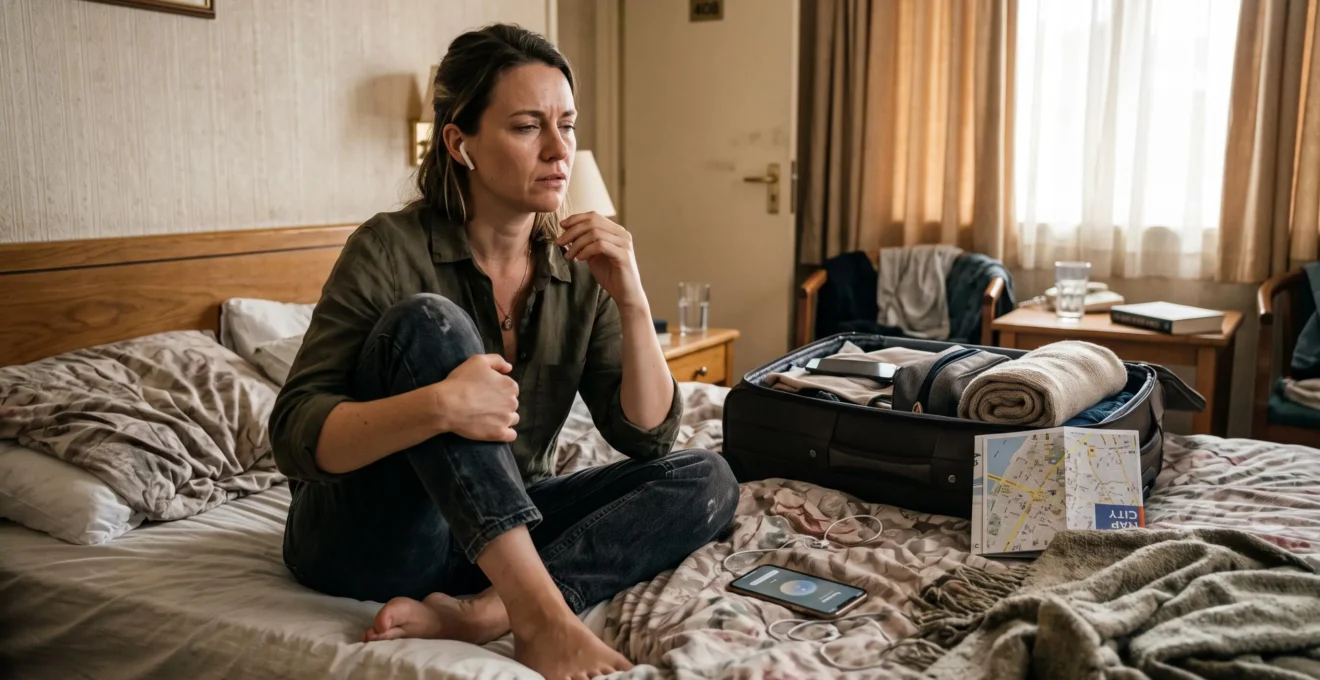
You finally have a moment to yourself. The hotel room is quiet, your phone is playing a meditation recording, and you’re supposed to relax. Instead, you’re thinking about tomorrow’s flight, your uncomfortable legs and whether you’re doing something wrong.
If you can’t sit still for 10 minutes, the problem might not be your attention span. It might be the session you’ve chosen. Meditation can involve walking, listening, repeating a phrase or observing your surroundings. None requires an empty mind or a perfectly still body.
The best beginner meditation session is one that matches your current capacity for attention, stillness and emotional comfort. That may mean three minutes of guided practice rather than an hour of silence, or a relaxed group class instead of an intensive retreat.
Travelling makes these choices particularly important. Unfamiliar places, disrupted sleep and packed itineraries can change how comfortable you feel sitting with your thoughts. A little preparation can help you find a practice that feels manageable, without turning your holiday into another performance test.
Meditation session choices at a glance
- Restless body: Try mindful walking, gentle movement or a short guided practice before committing to prolonged sitting.
- Anxious or overwhelmed mind: Choose a flexible, lightly guided session with permission to open your eyes, move or leave.
- Busy travel schedule: Start with a three-minute routine attached to an activity you’re already doing. Increase the commitment only when it feels worthwhile.
- Why Does Meditation Feel Harder the More Stressed You Are?
- How to Choose Between Guided and Silent Meditation Without Wasting Your First Session?
- Group Session or Private Session: Which Works Better if You’re Anxious in New Settings?
- The ‘Push Through It’ Mistake That Can Make Meditation Backfire for Some Beginners
- When Should You Meditate on Holiday to Keep Calm All Day Without Skipping Plans?
- Silent Retreat or Spa Retreat: Which Works Better if Your Mind Won’t Switch Off at Night?
- How to Start Mindfulness With 3-Minute Routines Without Forgetting After Day 2?
- Which Mindfulness Format Actually Works if You’re Busy and Sceptical?
Why Does Meditation Feel Harder the More Stressed You Are?
Meditation can feel harder when you’re stressed because stopping your usual activities makes existing tension, thoughts and worries more noticeable. Your body may remain alert even when your surroundings are peaceful. This doesn’t mean you’re failing at meditation. It means the practice is revealing what you’re experiencing, and you may need a gentler starting point.
Imagine arriving at a resort after a delayed flight, several hours of noise and an uncomfortable journey. You walk into a silent meditation room expecting immediate relief. Instead, your shoulders feel tight, your legs want to move and your mind starts rehearsing everything that went wrong.
Silence hasn’t necessarily created these sensations. It may simply have removed the distractions that were keeping them in the background.
The NHS information on mindfulness explains that some people find mindfulness difficult because their thoughts and worries become more apparent when they stop their usual activities. It also identifies walking and gentle yoga as potentially easier approaches for particularly busy minds.
For choosing a session, it helps to distinguish two experiences. These are practical descriptions, not clinical diagnoses:
- Physical restlessness: You want to stretch, change position or get up. Movement-based meditation or a session with flexible postures may feel more accessible.
- Mental resistance: Sitting quietly brings up worries, self-criticism or uncomfortable feelings. A teacher’s voice, an external focus or a shorter session may provide more manageable structure.
Both can occur together. You might feel physically restless because you’re worried, or become worried because sitting still feels unfamiliar. The distinction simply helps you choose what to try first.
Another common mistake is booking for your ideal holiday self. You imagine being rested, patient and ready for a long silent meditation. But the actual version of you might be jet-lagged, overstimulated and struggling to concentrate.
Choose for your real baseline, not your aspirational one. A five-minute practice that fits a tiring travel day is a more realistic starting experiment than a demanding session chosen for its impressive description.
It also helps to change how you measure success. Feeling calm afterwards is not a reliable pass-or-fail test. Instead, ask whether you noticed your attention drifting, returned to an anchor when appropriate, or recognised when you needed an adjustment.
Those are meaningful elements of practice, even if you finish feeling much the same as when you started.
Once you understand what makes sitting uncomfortable, the next choice becomes easier: deciding how much guidance you actually want.
How to Choose Between Guided and Silent Meditation Without Wasting Your First Session?
Choose guided meditation if you want instructions, reassurance or a clear focus for your attention. Choose silent meditation if you’re already reasonably comfortable sitting without continuous direction. If you’re uncertain, start with a short, lightly guided session that allows movement and an easy exit. The aim is to test a format, not prove your endurance.
Guided meditation gives your attention something specific to follow: a voice, a sound, a sensation or a sequence of observations. Silent meditation leaves more responsibility with you for choosing and maintaining that focus.
Neither approach is automatically more advanced or more beneficial. Their usefulness depends on your preferences and how you respond during practice.
The following grid offers a practical starting point rather than a scientifically validated matching system.
| What you experience | Suggested first format | What to check |
|---|---|---|
| Constant urge to move | Guided walking meditation or gentle movement | Whether changing posture is permitted |
| Thoughts jump between worries | Short guided attention practice | Whether the teacher gives regular prompts |
| Silence feels emotionally uncomfortable | Lightly guided practice with external grounding | Whether eyes-open participation is welcomed |
| Too much instruction feels distracting | Guided introduction followed by brief quiet | How long the silent portion lasts |
| You enjoy simple repeated sounds | Mantra-based meditation | Whether the practice suits your preferences |
Many first-time travellers assume there are only two choices: an instructor who talks throughout or complete silence. In practice, the options can be more flexible.
A guided-then-quiet session begins with instructions and gradually reduces them. Open-monitoring meditation invites you to notice changing experiences without remaining fixed on a single object. Mantra-based meditation uses a repeated word, phrase or sound as an attentional anchor.
If concentrating on your breathing makes you uncomfortable, a sound-based or visually anchored practice may be preferable. You do not have to use the breath as your focus.
Before reserving a hotel class, retreat drop-in or wellness session, ask three questions:
- How long is the session, and how much of it is silent?
- Is it suitable for someone who has never meditated before?
- Can participants change position or leave quietly if needed?
These details matter more than promotional descriptions such as “deeply transformative” or “total stillness”. A beautiful venue cannot compensate for a format that feels overwhelming.
For a first experiment, consider a short, guided, low-commitment session with permission to stop. This is a conservative practical suggestion, not a universal rule supported by trials comparing first-session formats.
A poorly matched experience can discourage another attempt. But one boring guided recording doesn’t mean every meditation technique is boring, just as one uncomfortable silent sit doesn’t mean silence will always be uncomfortable.
Your five-step checklist before booking a meditation session
- Identify your main obstacle: Write down one phrase, such as “I need to move” or “Silence increases my anxiety”.
- Choose one candidate format: Save a session description that addresses that obstacle.
- Confirm the structure: Obtain the duration and expected amount of silence from the teacher or venue.
- Check your options: Confirm whether you may open your eyes, adjust posture or leave early.
- Set a realistic success measure: Write one observation to record afterwards, such as “Could I return my attention without forcing it?”
Once the format feels manageable, consider the environment: the other participants, the teacher’s attention and the pressure you might feel in a new setting.
Group Session or Private Session: Which Works Better if You’re Anxious in New Settings?
A group session can feel more comfortable if you prefer blending in, while a private session offers more control over instructions, pace and personal adjustments. Neither is universally better for anxious beginners. The deciding question is what makes you uncomfortable: being the centre of attention, being around unfamiliar people, or not knowing what participation involves.
Imagine entering a resort meditation pavilion with several other guests. You might worry that everyone will notice you fidgeting. Yet once the session begins, the group may provide welcome anonymity because the instructor’s attention is shared.
In a private session, you can ask questions without feeling that you’re interrupting anyone. However, having the teacher’s attention entirely on you might feel equally uncomfortable.
The distinction is particularly useful for travellers entering unfamiliar wellness or cultural settings.
| Decision factor | Group session | Private session |
|---|---|---|
| Being observed | Attention is shared, but other participants are present | No group audience, but the teacher focuses on you |
| Personal adjustments | May be limited by group structure | Can usually be discussed individually |
| Leaving early | Depends on venue rules and room arrangement | Can be agreed with the instructor beforehand |
| Social pressure | Shared expectations may feel reassuring or restrictive | Fewer social interactions, but more direct engagement |
| Commitment | Often a scheduled class | Usually an individually arranged appointment |
If your biggest fear is doing meditation incorrectly, a private beginner session may help because you can ask the instructor to explain acceptable variations. You can discuss posture, eye position and what to do when your thoughts wander.
If your concern is being watched closely, a larger group where you can sit near the back may actually feel less exposing. If unfamiliar social environments themselves trigger distress, neither arrangement should be assumed comfortable without further discussion.
Travel settings add another variable. A hotel wellness class might be informal, while a temple visit or established retreat may follow specific participation customs. These expectations cannot be inferred reliably from the venue category alone.
Ask: “Is this an informal beginner session where I can adjust my position and step outside, or is continuous participation expected?”
That single question can reveal important boundaries before you arrive. Also check whether late arrival is permitted rather than assuming a drop-in session has an open-door policy.
For someone with significant social anxiety or a trauma history, contacting the teacher privately beforehand may be more useful than choosing between group and individual sessions without context.
A short message could explain that you are new to meditation, may need to sit near an exit and would appreciate knowing what adjustments are permitted. Some venues may accommodate this; others may have rules or limitations that make a different setting preferable.
There is no obligation to disclose personal medical details to a wellness instructor. You can explain the practical adjustment you need without discussing the reason behind it.
A supportive setting matters, but it is equally important to recognise when discomfort signals that a practice should be modified or stopped rather than endured.
The ‘Push Through It’ Mistake That Can Make Meditation Backfire for Some Beginners
Forcing yourself to remain still during intense distress can make meditation more uncomfortable rather than more helpful. Directing attention inward may increase awareness of panic, troubling thoughts or traumatic memories for some people. Mild boredom and impatience can be workable, but escalating fear, dissociation or emotional overwhelm are reasons to modify or stop the session.
Beginners sometimes hear that resistance is part of meditation and interpret this to mean they should endure whatever happens. That advice leaves out an important distinction: not every uncomfortable experience is useful practice.
Noticing an itch, feeling impatient or becoming distracted can be ordinary experiences during meditation. You may be able to acknowledge them, adjust your posture and continue comfortably.
Rising panic, feeling detached from your surroundings or becoming overwhelmed by distressing memories is different. Remaining in that state is not a requirement for learning mindfulness.
The NCCIH overview of meditation effectiveness and safety, published by the US National Institutes of Health, acknowledges that meditation can produce negative experiences and that safety research remains limited.
Approximately 8%
Estimated proportion of participants experiencing meditation-related adverse effects in a 2020 systematic review of 83 studies involving 6,703 participants, as summarised by the NCCIH. The studies used different practices, populations and methods, so this is not a prediction of an individual beginner’s risk during a holiday class.
National Center for Complementary and Integrative Health (NCCIH), June 2022 evidence overview.
Potential adverse experiences deserve attention, but the evidence does not mean meditation is dangerous for most people. Different studies have produced different safety findings, and individual responses vary.
Trauma-sensitive practice offers one useful approach to making sessions more flexible. The published MET(T)A trauma-sensitive mindfulness protocol describes adaptations such as keeping the eyes open, noticing the surrounding room and avoiding compulsory breathing exercises.
This is a clinical protocol, not a trial proving that these adaptations prevent adverse experiences in tourism settings. Nevertheless, it illustrates an important principle: participants should have meaningful choices about how they engage.
Before booking, consider asking a teacher:
- “Can I keep my eyes open and focus on sounds or objects instead of my breath?”
- “Is movement allowed if sitting still becomes uncomfortable?”
- “Do you have experience adapting sessions for participants who become anxious or overwhelmed?”
- “Can I step outside without needing to explain myself during the session?”
During practice, the permission-to-move principle is a useful personal guideline. You can shift your legs, open your eyes, stand up or change your attention to something external. None of these actions automatically invalidates the practice.
If distress begins to escalate, stop the exercise, orient yourself to your surroundings and seek appropriate support if needed. Do not force breath control if it makes you feel worse.
People with significant trauma-related symptoms, recurrent panic or dissociation may benefit from discussing meditation with a qualified mental health professional familiar with their circumstances. A retreat teacher is not a substitute for clinical care.
Changing a technique or leaving early can be a thoughtful decision. The aim is not to finish every session at any cost, but to find a practice that respects your limits.
When Should You Meditate on Holiday to Keep Calm All Day Without Skipping Plans?
The most practical time to meditate on holiday is usually a predictable gap between activities, not necessarily sunrise or bedtime. Attach a short session to something you already do, such as finishing breakfast, returning to your room or waiting for transport. Regular opportunities can make practice easier to remember, although no particular meditation time guarantees calm throughout the day.
Traditional advice to meditate first thing in the morning can become difficult during travel. Jet lag changes sleeping patterns, early excursions compete for attention, and shared accommodation may offer little privacy.
Rather than designing your entire day around meditation, look for a transition that already exists.
For example, an early riser might prefer a few quiet minutes before breakfast. Someone who enjoys late evenings could try a gentle session after returning to the hotel. Families may find that the time between children’s activities provides a more realistic opportunity than a fixed morning ritual.
These are scheduling options, not claims that particular times work better for specific personality types.
Choose according to the structure of your day:
- Early departures: Try a brief eyes-open practice while waiting for transport.
- Beach or sightseeing holidays: Use the transition between returning to your accommodation and preparing for dinner.
- Family trips: Identify a recurring moment when another adult can supervise children, or use a short individual pause.
- Irregular itineraries: Keep a flexible fallback that can happen wherever you find a suitable, safe place.
A two-to-three-minute reset can serve as a fallback when a longer session is impractical. It might involve noticing your feet against the floor, listening to nearby sounds and gently returning your attention when thoughts wander.
At an airport, you don’t need silence or closed eyes. You can remain aware of announcements, your belongings and boarding instructions while briefly bringing attention to your surroundings.
Choose stationary moments when focused attention is not needed for navigation, driving or another safety-critical task.
The scheduling trap is turning meditation into another tightly timed appointment. If you have only four minutes between activities and spend three worrying about running late, the practice may become an additional demand.
Consider protecting one realistic opportunity per day and treating any other session as optional. On a relaxed day, that opportunity might be a longer class. On a busy day, it might be a brief pause.
The purpose is to make mindfulness compatible with travel, not to measure your holiday against an ideal daily routine.
Once short sessions fit naturally into your day, you can decide whether a more immersive wellness experience makes sense for your needs.
Silent Retreat or Spa Retreat: Which Works Better if Your Mind Won’t Switch Off at Night?
A spa retreat may be a gentler introduction if you feel exhausted, restless or uncomfortable when left alone with your thoughts. A short silent retreat may appeal if you want to reduce conversation, digital distractions and external stimulation. Neither is an established cure for insomnia, and extended silence can feel difficult for people prone to intense rumination.
Although both experiences are marketed as restful, they generally use different approaches.
A spa retreat usually provides comfort through external experiences: treatments, warm water, relaxation areas and opportunities for physical rest. Some also include optional meditation or movement classes.
A silent retreat reduces ordinary conversation and may involve structured meditation, mindful walking, limited device use and periods without outside stimulation.
One emphasises receiving relaxing experiences; the other generally involves practising attention under quieter conditions. Neither description guarantees how you will feel afterwards.
Before choosing, ask what happens when your mind becomes busy at night.
- If quiet moments quickly turn into repetitive worrying, a spa environment with optional guided activities may feel more manageable.
- If constant messages, conversations and sensory stimulation leave you feeling overloaded, a short period with fewer distractions may be appealing.
- If you experience significant sleep difficulties or distressing intrusive thoughts, avoid treating an intensive retreat as a substitute for appropriate assessment or treatment.
These are practical questions for selecting an experience, not validated categories of insomnia or evidence that one retreat type improves sleep faster than another.
Be particularly cautious about assuming that a multi-day silent retreat will automatically solve persistent overthinking or poor sleep. A programme involving prolonged meditation may make difficult thoughts more noticeable, especially when participants lack familiar coping strategies.
Silence can be meaningful for some people, but more intensive practice is not necessarily a better starting point.
Before committing to an extended retreat, investigate a shorter or more flexible experience. A venue offering partial silence, a guided quiet morning or an introductory silent session may allow you to explore the format with fewer demands.
A useful hybrid approach is to choose a spa-based stay with an optional guided meditation block, or combine ordinary relaxation time with a single morning of quiet practice.
Read the programme carefully. Check whether silence applies only to meditation sessions or also to meals, shared spaces and the entire stay. Ask what support is available if you become distressed and whether participation can be modified.
For sleep difficulties that persist, worsen or significantly affect daily functioning, seek guidance from a qualified healthcare professional rather than relying on retreat marketing.
And if even a single retreat day feels like too much, a repeatable three-minute routine offers a simpler way to explore mindfulness without reorganising your trip.
How to Start Mindfulness With 3-Minute Routines Without Forgetting After Day 2?
Start with one three-minute routine attached to an existing daily activity, such as finishing your morning coffee or returning to your hotel room. Use the same simple attentional anchor each time, and prepare a shorter fallback for disrupted travel days. The goal is to make practice repeatable, not to achieve deep relaxation in three minutes.
Short sessions are useful as an accessible introduction to the process of mindfulness. They provide opportunities to practise noticing and redirecting attention without requiring a substantial time commitment.
However, a three-minute exercise should not be presented as equivalent to longer structured mindfulness training, or as a guaranteed treatment for stress and anxiety.
Here’s one practical routine to try:
- First minute — Choose an anchor. Sit or stand comfortably. Keep your eyes open if preferred. Notice your feet on the floor, a nearby sound or another neutral sensation.
- Second minute — Notice and return. When your attention moves away, recognise it and gently return. If counting helps, count a few natural breaths or sounds without controlling your breathing.
- Third minute — Close deliberately. Widen your awareness to the room, notice how you feel without judging it, and finish with one comfortable, natural breath.
If an internal sensation becomes uncomfortable, use something external instead. The routine should remain adjustable to your needs.
The bigger challenge is often remembering to practise after the novelty wears off.
Motivation is unreliable when you’re travelling. Your itinerary changes, you wake up at different times, and your phone competes for attention. A fixed reminder may help, but a clear behavioural cue gives you another way to remember.
For example: “After I put my room key on the table, I’ll take three minutes to practise.” This connects the new activity to something already happening.
A randomised trial on routine-based and time-based habit cues studied 192 adults planning nutrition-related behaviours over 84 days. Both routine-based and time-based cues supported habit formation, with repeated performance playing an important role. The study did not investigate meditation or holiday habits.
The practical lesson is to choose a recognisable cue and repeat the behaviour when possible, rather than assuming that a particular hour is essential.
Make the routine easier to maintain by deciding in advance where you will practise, what will signal the start and what you will do when the normal plan becomes impossible.
For chaotic days, a fallback might be 30 seconds of noticing sounds while standing safely in a quiet corridor. This is a habit-maintenance idea, not a clinically established minimum effective meditation dose.
If you miss a day, simply return at the next available opportunity. There is no need to compensate with an unusually long session.
Instead of relying entirely on consecutive-day streaks, consider reviewing how many days you attempted the practice during a week. This can provide a broader picture of consistency without treating a missed session as a complete reset.
Once the routine feels familiar, the question is whether you want to stay with brief self-directed practice or explore another format that suits your interests and available time.
Key takeaways before choosing your next format
- Decide what kind of experience you want: A short personal reset, individual instruction or a structured learning experience involves different levels of commitment.
- Look beyond attractive descriptions: Instructor experience, flexibility and clear expectations are more useful selection criteria than promises of transformation.
- Increase commitment only when it makes sense: A manageable first experience provides more useful information about your preferences than booking an intensive programme immediately.
Which Mindfulness Format Actually Works if You’re Busy and Sceptical?
If you’re busy and sceptical, start with a low-commitment, secular mindfulness format that explains what you’ll practise without promising dramatic results. A short app-based session, guided walk or introductory workshop lets you assess the experience before investing more time. The most suitable option is the one you can realistically attend, understand and adapt.
Scepticism about meditation is reasonable, especially when descriptions rely on vague promises about energy, transformation or permanently clearing the mind.
Mindfulness does not require adopting a spiritual belief. You can approach it as an exercise in observing attention, thoughts and sensations, while recognising that its benefits vary and research does not support every claim made in wellness marketing.
The key is to distinguish evidence-informed practice from promotional certainty.
For travellers, the available choices range from self-directed recordings to multi-day programmes. Each carries a different amount of commitment.
| Format | Time commitment | Commitment risk | Potential fit for sceptics |
|---|---|---|---|
| App-based guided session | Flexible, potentially just a few minutes | Low for individual sessions | Good if instructions are clear and claims are realistic |
| Mindful walking or gentle movement | Flexible and compatible with sightseeing | Low | Good for people who dislike prolonged sitting |
| Drop-in hotel class | One scheduled session | Low to moderate, depending on participation rules | Good if beginner expectations are explained |
| One-off workshop | Several hours or one scheduled learning block | Moderate | Good if the teacher answers practical questions |
| Multi-day retreat | Several days with a structured programme | High compared with shorter formats | Better considered after testing the approach |
These ratings are qualitative planning assessments, not comparative results from clinical trials. Actual schedules, prices, teaching methods and cancellation conditions vary by provider.
If you prefer a scientific explanation, look for instructors who clearly distinguish established findings from personal experience. Ask about their training, the technique being taught and what participants should expect.
Formal mindfulness programmes may include education, discussion and repeated practice, while individual meditation sessions can be much simpler. A structured course should not be assumed equivalent to a drop-in hotel activity.
Movement-based mindfulness may be a useful starting option if conventional seated meditation immediately feels unnatural. A guided walk can offer familiar physical activity alongside attention practice, without requiring silence or a special posture.
A practical progression is to begin with one short session, try a different technique if the first doesn’t suit you, and consider a workshop or longer retreat only if you want deeper instruction.
This progression does not guarantee better results. It simply reduces the initial commitment while giving you opportunities to identify what feels manageable and meaningful.
Consider whether the instructor welcomes questions and modifications. If a programme insists that discomfort must always be endured, or guarantees relief from medical or psychological symptoms, treat those claims with caution.
The final decision comes back to four personal factors: your type of restlessness, your comfort with the setting, your available time and your tolerance for the teaching style.
A positive review from someone who loves prolonged silence cannot tell you whether you’ll enjoy that experience after a stressful travel day. Your own preferences and the programme’s actual requirements matter more.
For your next trip, choose one manageable session, check its duration and participation rules, and decide what you’ll pay attention to. You don’t need to become someone who sits perfectly still for 10 minutes. You need a starting point that gives you room to practise, adjust and learn what works for you.
Can I meditate without closing my eyes?
Yes. You can practise with your eyes open, using a soft gaze or noticing objects and sounds around you. Eyes-open options are also described in trauma-sensitive mindfulness approaches. Check whether a particular instructor permits this adjustment, especially in sessions with formal participation rules.
Do I need a meditation cushion or special clothing?
No special equipment is necessary for basic mindfulness practice. You can sit on an ordinary chair, stand comfortably or practise while walking. Wear clothing that allows comfortable movement, and check whether a particular venue has dress requirements or provides mats and cushions.
Is it normal to feel more emotional after meditating?
Some people notice emotions more clearly when distractions are reduced. However, increased distress should not automatically be interpreted as beneficial progress. If a practice causes escalating anxiety, panic, detachment or overwhelming memories, stop or modify it. Seek professional guidance when symptoms are significant or persistent.
Can meditation help with jet lag?
A brief meditation session may provide a quiet pause during a disrupted travel day, but the evidence presented here does not establish meditation as a treatment for jet lag or circadian rhythm disruption. Do not rely on it to correct your sleep schedule. Treat it as an optional attention practice rather than a replacement for appropriate sleep and travel-health advice.
What if I try meditation several times and still don’t enjoy it?
You can try a different approach, such as mindful walking, or decide that formal meditation isn’t useful for you. There is no requirement to continue a practice that consistently feels unhelpful or distressing. Other enjoyable activities, including ordinary walking and relaxing leisure time, can be part of looking after yourself while travelling.