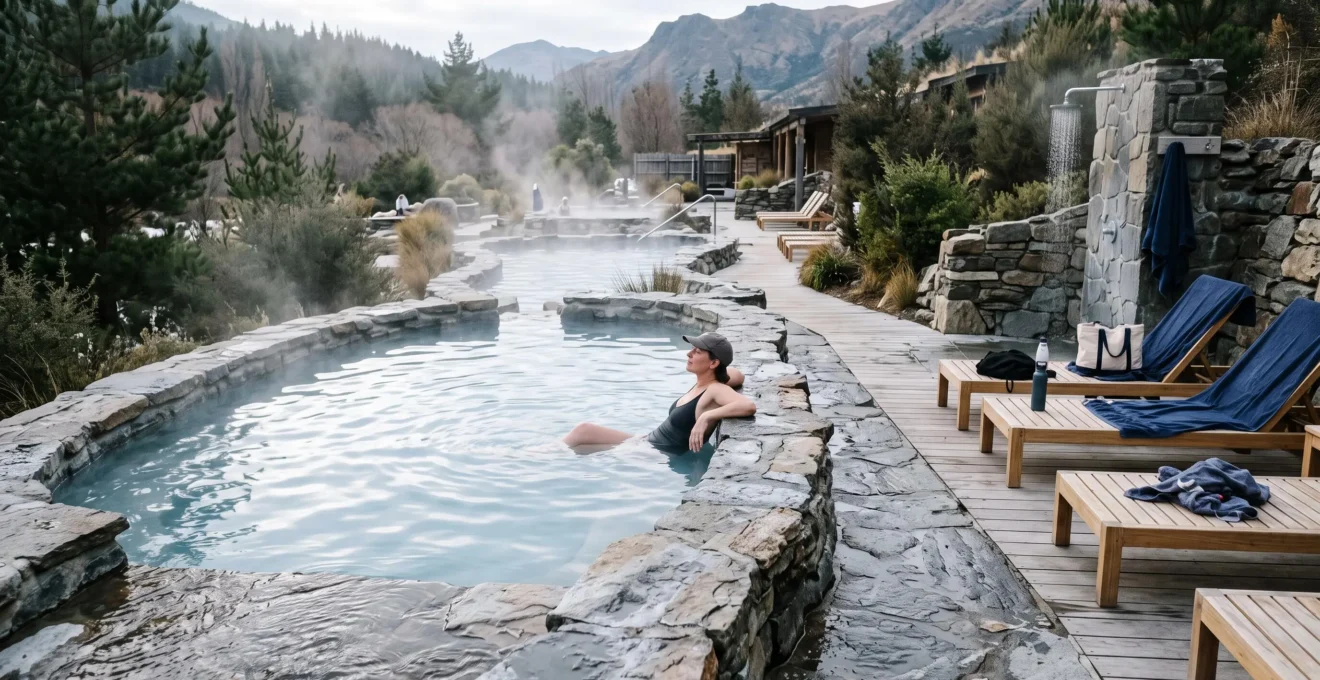
The thermal spring sanctuary worth visiting is not necessarily the hottest, most mineral-rich or most photographed. If crowds, strong sulphur smells and questionable changing rooms make relaxation difficult, a smaller, capacity-managed sanctuary with several pool temperatures, well-maintained facilities and genuine quiet areas is usually the more suitable choice.
A beautiful geothermal setting can still disappoint. Changing-room queues, echoing conversations, slippery floors and pools packed with visitors can turn a restorative afternoon into an uncomfortable experience. Natural mineral odours may add another sensory challenge, especially in enclosed bathing areas.
Comfort also depends on how the facility operates. Clear water information, sensible occupancy policies, accessible showers and places to cool down matter more than luxury language or elaborate spa packages. A thoughtfully managed thermal sanctuary should make it easy to enjoy the water without feeling obliged to tolerate unnecessary discomfort.
The most useful approach is to evaluate the water, facilities, visitor patterns and bathing options before booking, then adjust the experience to your own heat tolerance.
The essentials for choosing a quiet thermal sanctuary
- Prioritise management over appearance: controlled visitor numbers, clean facilities, quiet spaces and transparent hygiene practices are stronger selection criteria than promotional photographs.
- Investigate mineral odours: sulphur-related gases can produce a distinctive rotten-egg smell, but mineral-rich waters do not all smell alike.
- Choose adjustable bathing: moderately warm pools, short immersions, hydration and comfortable rest areas make the experience easier to manage than prolonged exposure to intense heat.
- Why Do Thermal Springs Sometimes Feel More Stressful Than Relaxing After Just 20 Minutes?
- How to Vet a Thermal Spring Sanctuary in 15 Minutes Using Water Notes and Facility Clues?
- Rustic Hot Spring or Full Thermal Sanctuary: Which Works Better if You Need Quiet and Clean Changing Areas?
- The Time-in-Water Mistake That Can Leave You Light-Headed Before Dinner
- When Should You Visit Thermal Springs to Get Quieter Pools Without Waking Up at 6 a.m.?
- High-Heat Pool or Contrast Circuit: Which Works Better if You Feel Dizzy in Saunas?
- Massage or Hydrotherapy: Which Helps More if You’re Stiff After a Long Flight?
- Which Mineral Pool Experience Makes Sense if You Want Sore-Muscle Relief Without Feeling Overheated?
Why Do Thermal Springs Sometimes Feel More Stressful Than Relaxing After Just 20 Minutes?
Thermal springs can become stressful surprisingly quickly when crowded changing rooms, reverberating noise, intense humidity and strong mineral odours overwhelm the relaxing effects of warm water. Discomfort after 20 minutes does not necessarily mean thermal bathing is unsuitable. Often, the combination of environmental conditions and excessive heat exposure is the problem.
Stress frequently begins before entering the pool. A queue for lockers, limited changing space or uncertainty about where to leave belongings can create tension. Once inside, organised groups, conversations bouncing off tiled walls and insufficient personal space may prevent visitors from settling into the experience.
There is also an important distinction between pleasant warmth and excessive thermal load. Hot water increases cardiovascular demands, while humid surroundings can make cooling down less comfortable. Add a crowded pool with limited room to move, and an initially pleasant soak may become tiring.
Notice early physical signals rather than trying to complete an imagined ideal bathing session. Unusual thirst, rising agitation, marked flushing, weakness or light-headedness are reasons to leave the water, cool down and rest. Persistent or severe symptoms deserve medical attention.
Smell introduces a separate consideration. The National Park Service identifies hydrogen sulphide as the source of the characteristic rotten-egg odour in its description of Sulphur Springs in New Mexico. That geological example explains one source of geothermal odour, not the smell intensity of every bathing facility.
Some mineral waters have a mild, tolerable scent; others produce noticeably sulphurous conditions. Enclosed, poorly ventilated spaces can make an existing odour harder to escape, although ventilation alone cannot establish the water’s chemistry or safety.
The practical distinction is between a sanctuary designed around low-stimulation bathing and a high-throughput attraction designed to accommodate many visitors. Look for separate silent areas, adequate space around pools and a layout that does not funnel everyone into the same changing or bathing zone.
A sanctuary should allow visitors to step away from heat, noise or odour without sacrificing the whole visit. The next challenge is identifying facilities that genuinely provide those options before paying for admission.
How to Vet a Thermal Spring Sanctuary in 15 Minutes Using Water Notes and Facility Clues?
To vet a thermal spring sanctuary efficiently, check recent visitor reviews, published mineral-water information, pool temperatures and occupancy arrangements before booking. Once on site, use 15 minutes to assess changing rooms, showers, pool surroundings and crowd density. Ask management directly about water testing and quieter sessions rather than relying on appearance alone.
Start by searching independent reviews for specific terms: “crowded”, “smell”, “changing room”, “clean”, “quiet” and “ventilation”. Prioritise accounts describing the visitor’s day and time, because a crowded Saturday afternoon may not represent a weekday visit.
Compare recent traveller photographs with official images. Look beyond the pools: are there enough loungers, dry places to store belongings, separate changing spaces and accessible showers? Images reveal layout and visible conditions, but cannot confirm water disinfection.
Next, investigate the water composition. Published references to sulphur compounds warrant further questions about odour. Bicarbonate-rich or saline descriptions may suggest a less sulphurous experience, but neither guarantees neutral-smelling water. Ask whether geothermal gases are noticeable in the bathing areas, particularly indoors.
On arrival, examine changing-room floors, shower access, pool edges, visible cleaning routines and whether bathers respect posted rules. Check for excessive occupancy or noticeably slippery and sticky surfaces. These observations help identify poor maintenance, although professionally maintained water may still contain hazards that visitors cannot see.
The CDC guidance on healthy and safe hot tub use recommends checking temperature, occupancy and water-treatment practices. For treated hot tubs, it specifies a maximum temperature of 104°F (40°C), recommends showering before entry and encourages visitors to ask operators about disinfectant monitoring and recent inspection results. These treatment recommendations should not automatically be applied to untreated natural geothermal pools.
Your five-step thermal sanctuary vetting checklist
- Review recent visitor feedback: record two or three recurring comments about crowding, smells or changing-room conditions, noting visit times where available.
- Check the water description: save the facility’s mineral information and pool-temperature details, or note which information is missing.
- Contact the operator: obtain a response about simultaneous bathing capacity and the typically quietest available booking periods.
- Inspect the facilities on arrival: make a five-point observation of changing rooms, showers, pool edges, cleaning activity and actual bather density.
- Verify hygiene arrangements: record the operator’s explanation of the applicable water-monitoring system and whether recent inspection information is available.
For a managed, disinfected hot tub, the CDC also recommends free chlorine of at least 3 ppm, bromine of 4–8 ppm and pH between 7.0 and 7.8. These are specific treated-hot-tub recommendations, not universal chemical targets for every thermal spring.
Before booking, two particularly revealing questions are: “What is the maximum simultaneous bathing capacity?” and “Which sessions usually have the fewest guests?” Specific answers give a stronger basis for planning than vague assurances that the site is always peaceful.
If the facility cannot clarify its pool conditions, cleaning arrangements or crowd-management practices, consider an alternative. A transparent, modestly equipped sanctuary may be a better choice than a luxurious venue that offers little practical information.
Rustic Hot Spring or Full Thermal Sanctuary: Which Works Better if You Need Quiet and Clean Changing Areas?
A managed thermal sanctuary is generally the more practical choice when clean changing areas, reliable showers, lockers and comfortable resting spaces are essential. Rustic hot springs can offer greater solitude and closer contact with nature, but facilities vary considerably and may be absent. Neither format guarantees quiet conditions or safe water without checking the individual site.
Rustic springs appeal to travellers who value scenery, simplicity and an unstructured experience. Some are freely accessible, although access charges, permits or restrictions may apply elsewhere. Their atmosphere can feel more intimate when visitor numbers are low, but crowding may increase abruptly at popular locations.
The main trade-off is predictability. Changing outdoors, walking over uneven ground or finding no shower facilities can be manageable on a pleasant day and unpleasant in cold, wet or busy conditions. Unmanaged geothermal water also presents hazards that a maintained recreational pool may address differently, including uncertain temperatures, water quality and restricted bathing access.
By contrast, full-service thermal sanctuaries commonly offer designated changing rooms, showers, storage and relaxation areas. However, entry charges and attractive facilities do not automatically mean well-controlled visitor numbers or rigorous hygiene.
The following comparison focuses on what a visitor can realistically expect, subject to checking each location.
| Decision factor | Rustic hot spring | Managed thermal sanctuary |
|---|---|---|
| Changing and shower facilities | May be basic or unavailable | Usually provided; condition varies |
| Visitor numbers | Can be low but unpredictable | May be controlled through admission systems |
| Water monitoring | May have limited or no active monitoring | Often subject to an established operating regime |
| Temperature choices | Often limited by natural conditions | May include several separately managed pools |
| Resting and accessibility facilities | Dependent on terrain and local provision | More likely to offer designated facilities |
| Cost | Sometimes free or low-cost | Typically admission-based |
There is also a useful intermediate option: a small, locally managed thermal pool or community bathing facility. Some offer straightforward changing rooms, basic maintenance and a quieter atmosphere without the elaborate facilities of a destination resort. Lower attendance is possible, but should be confirmed rather than assumed.
Three questions clarify the choice. Do you require a private, comfortable place to change? Are you willing to pay for managed facilities and potentially timed entry? Would natural surroundings still compensate for limited amenities if the weather or visitor conditions were unfavourable?
Travellers who answer yes to the first two questions should generally shortlist managed sites. Those comfortable with basic infrastructure may prefer rustic options, provided bathing is explicitly permitted and local safety information is satisfactory.
Whichever format you select, plan for a comfortable exit from the water and enough time to recover between sessions. Even impeccable facilities cannot eliminate the physical effects of prolonged heat exposure.
The Time-in-Water Mistake That Can Leave You Light-Headed Before Dinner
The common mistake is remaining in hot water because it still feels pleasant, then standing up too quickly or returning for another soak without cooling down. Heat widens blood vessels and can lower blood pressure, contributing to weakness, dizziness or nausea. Shorter bathing periods, gradual exits and adequate rest provide a safer approach than trying to reach a fixed duration.
Warm-water immersion changes circulation. Blood vessels near the skin expand to release heat, while immersion itself influences how blood is distributed throughout the body. On standing, changes in circulation can contribute to light-headedness, especially after prolonged exposure to hotter water.
Risk varies considerably between individuals. Jet lag, tiredness, dehydration, alcohol and certain medicines, including blood-pressure-lowering treatments, can reduce tolerance. A long journey or heavy meal may also leave a traveller feeling less comfortable, although individual responses differ.
Rather than treating a particular number of minutes as universally safe, begin with a brief session in moderately warm water. Leave while you still feel comfortable and take a genuine recovery break. If your heartbeat feels unusually forceful, your vision becomes unclear or you experience weakness, exit carefully and sit somewhere cool.
Resting should be an intentional part of the bathing session, not merely the walk between pools. Sit in a cooler, shaded area, drink water and allow your breathing and sense of balance to return to normal before deciding whether another immersion is appropriate.
For managed hot tubs, CDC recommendations establish 40°C (104°F) as the upper water-temperature limit and advise avoiding alcohol before and during use. This is a maximum guideline, not a target for relaxation or proof that prolonged immersion below it is safe for everybody.
A common environmental problem is the absence of a visible clock. Warm water can distort the sense of elapsed time, and the cooler air encountered on exiting may tempt visitors to return immediately. Carrying a simple time reference, if permitted, can make pacing more deliberate.
Anyone who faints, develops chest pain or experiences significant breathing difficulty should receive urgent medical assessment. People with cardiovascular conditions, recurrent fainting or medications that affect blood pressure should obtain individual medical advice before using hot pools.
A comfortable session should leave you able to move normally, eat dinner and enjoy the rest of the day. Choosing a quieter visiting period can make that sensible pacing easier because you will feel less pressure to claim pool space while it is available.
When Should You Visit Thermal Springs to Get Quieter Pools Without Waking Up at 6 a.m.?
Weekday late mornings, mid-afternoons and selected evening sessions are useful starting points for finding quieter thermal pools without arriving at dawn. The best period depends on local visitors, organised excursions, school holidays and the facility’s reservation system. Confirm actual attendance patterns with the operator rather than assuming one universally quiet hour.
In destinations with significant weekend tourism, Saturday and Sunday sessions can attract day visitors, families and organised groups. Public holidays and local school breaks may similarly increase demand, particularly at well-known facilities within easy reach of major cities.
A late-morning weekday visit outside holiday periods may work well when residents are occupied elsewhere and tour groups have not yet arrived. Mid-afternoon can be another option if the facility’s visitors typically concentrate around opening time or evening departures.
Evenings deserve consideration when a sanctuary offers extended hours. However, a spa popular with after-work guests may become busier rather than quieter after sunset. Always investigate the actual clientele before booking.
English-speaking destinations do not share one holiday calendar. School breaks and public holidays vary between England, Scotland, Wales, Northern Ireland, Ireland, the United States, Canada, Australia and New Zealand, and often between regions within the same country. Check the calendar for the specific destination rather than relying on your home country’s schedule.
A simple verification method combines three pieces of information: recent visitor comments mentioning arrival times, the site’s own explanation of its quieter sessions and the availability of timed tickets. If a facility offers limited-capacity reservations, ask whether the stated limit applies to the whole site or to individual pools.
Be wary of generic advice such as “always visit first thing in the morning”. Some spas receive organised excursions later in the day; others host morning wellness groups or become busiest shortly after opening. A facility-specific pattern is more useful than a universal rule.
For a hypothetical midweek visit, a traveller might compare late morning with early evening using the operator’s guidance, then reserve the session with fewer expected bathers. That comparison is a planning technique, not an attendance forecast for a particular sanctuary.
Once the booking period is settled, the next decision concerns how to use the available bathing facilities without exposing yourself to more heat or rapid temperature changes than you tolerate comfortably.
High-Heat Pool or Contrast Circuit: Which Works Better if You Feel Dizzy in Saunas?
If saunas regularly make you dizzy, a moderately warm mineral pool with comfortable resting intervals is generally a more cautious starting point than either a high-heat pool or an intense hot-and-cold circuit. Contrast bathing is not automatically gentler: sudden temperature transitions can themselves produce uncomfortable cardiovascular responses, particularly in sensitive visitors.
A high-heat pool exposes much of the body to warm water continuously. Unlike a sauna, water transfers heat efficiently and immersion also affects circulation. Someone who dislikes very hot air may tolerate a moderate pool better, but that does not mean heated water is free from dizziness risk.
A contrast circuit alternates between warmer and cooler environments or pools. Although the temperature changes may feel stimulating, abrupt transitions can provoke rapid physiological adjustments. A plunge into very cold water immediately after intense heat is therefore a poor default choice for someone prone to faintness.
A gentler alternative is to move between moderately warm and comfortably tepid water, with seated recovery periods separating each stage. There is no obligation to complete every station or use the coldest pool simply because it appears in the facility’s recommended circuit.
The following distinctions can help with planning:
- Dizziness mainly in very hot saunas: consider a moderate-temperature pool, with brief initial immersion and careful monitoring of symptoms.
- Dizziness during sudden hot-to-cold transitions: avoid abrupt contrast changes and prioritise stable temperatures and longer recovery periods.
- Unpredictable or recurrent dizziness: obtain medical advice before using high-heat pools, saunas or contrast circuits, rather than experimenting to identify a tolerable intensity.
Blurred vision, ringing in the ears, weak legs or a sensation of impending fainting are signals to stop immediately. Move to a safe seated position, request assistance if necessary and do not continue the circuit simply to finish the sequence.
Facilities that clearly display each pool’s temperature and provide nearby seating are easier to navigate than those that encourage rapid movement through a prescribed sequence. Staff should also be able to explain which features are optional.
When comfort and recovery are priorities, a predictable, low-pressure bathing experience is often preferable to thermal extremes. That distinction becomes especially relevant after a long flight, when travellers may be looking for relief from stiffness as well as relaxation.
Massage or Hydrotherapy: Which Helps More if You’re Stiff After a Long Flight?
Hydrotherapy is often a reasonable first option for general stiffness and whole-body fatigue after a flight, while a targeted massage may better suit discomfort concentrated in the neck, shoulders or back. Neither is universally superior. The choice depends on the location of symptoms, tolerance for heat and whether there are medical reasons to avoid treatment.
Long journeys involve sustained sitting, limited movement and sometimes uncomfortable sleeping positions. This can leave muscles feeling tight and movement less comfortable, particularly around the neck, back, hips and legs.
Warm-water hydrotherapy combines heat with buoyancy. Immersion reduces the load felt on some joints, while comfortable warmth may help muscles relax and make gentle movement easier. Hydrotherapy can include simple soaking, guided exercises or water jets, depending on the facility.
Massage instead applies manual pressure to particular tissues and can be tailored to a focused area of tension. A qualified practitioner should assess relevant health concerns and adjust pressure to the client’s comfort. Deep pressure is not inherently more beneficial than a gentler treatment.
These practical differences make the selection easier:
| Consideration | Hydrotherapy | Massage |
|---|---|---|
| Diffuse stiffness | Offers whole-body immersion and buoyancy | Can address multiple areas if session time allows |
| Localised muscle tension | May provide general comfort | Allows more focused manual treatment |
| Heat sensitivity | Requires careful pool-temperature selection | May be possible without thermal exposure |
| Personalisation | Depends on pool options and available supervision | Depends on practitioner assessment and technique |
Some sanctuaries combine warm-water immersion with a subsequent massage. This may be enjoyable, but there is insufficient basis to promise that immersion beforehand always makes massage more effective.
Before booking, check the practitioner’s qualifications, the actual hands-on treatment duration, whether pressure can be adjusted and which hydrotherapy features are included. A general admission ticket does not necessarily provide access to specialised jets or treatments.
Travel-related symptoms also require care. The CDC information on blood-clot risks during long-distance travel explains that journeys lasting more than four hours can increase the risk of venous blood clots, although the overall risk is generally small.
New swelling in one leg, unexplained leg pain, warmth or discoloration should prompt medical assessment rather than routine spa treatment. Sudden breathlessness, chest pain or fainting requires immediate medical assistance. Postponing elective massage or hot-water treatment until concerning symptoms have been evaluated is a sensible precaution, not a claim that those treatments cause blood clots.
For ordinary travel fatigue without warning signs, comfortable water temperatures, gentle movement and appropriate rest may be sufficient. The remaining question is which mineral-pool arrangement offers that experience without excessive heat.
Key takeaways before choosing your mineral pool
- Consider how comfortably you can remain in the water rather than treating the hottest pool as the most therapeutic.
- Look for multiple temperature options, accessible resting areas and the freedom to shorten or skip individual bathing stages.
- Evaluate claims about muscle relief cautiously: an appealing mineral composition does not establish superior results from a single recreational visit.
Which Mineral Pool Experience Makes Sense if You Want Sore-Muscle Relief Without Feeling Overheated?
A moderately warm mineral pool with optional shorter hot-water sessions and accessible cool resting areas is the most practical starting point for sore-muscle comfort without overheating. The best experience allows visitors to control temperature, immersion duration and recovery periods. Greater heat or a higher mineral concentration does not automatically mean stronger pain relief.
For many travellers, the purpose of thermal bathing is straightforward: reduce the sensation of muscle tightness, move more comfortably and enjoy a period of relaxation. Achieving that experience does not require choosing the most extreme temperature available.
Moderate warmth can make bathing easier to tolerate, while buoyancy allows gentle movement without supporting the full weight of the body. Very hot pools may feel initially soothing, but discomfort or dizziness can interrupt the session before meaningful relaxation develops.
It helps to distinguish three facility features:
- Moderately warm pools: suitable for starting gently and exploring comfortable movement, with immersion length adjusted to individual tolerance.
- Hotter pools: optional facilities for visitors who tolerate heat well, preferably used briefly rather than as the centre of the experience.
- Cooler resting areas: essential places to sit, hydrate and recover without immediately entering another pool.
The mineral composition deserves an equally measured assessment. A randomised clinical trial involving 145 participants with musculoskeletal pain examined structured mineral-water bathing over two weeks, with follow-up extending to three months. The researchers reported improvements in some pain-related outcomes, but found no significant influence of total mineral concentration on musculoskeletal pain reduction.
Clinical evidence: mineral concentration and musculoskeletal pain
Rapolienė and colleagues investigated mineral-water bathing in a randomised, single-blinded, parallel-group trial involving 145 participants with musculoskeletal pain. The study included different mineral concentrations and comparison conditions.
The findings suggest that mineral-water procedures can improve some symptoms under structured treatment conditions, but higher total mineral content did not demonstrate a significant advantage for reducing pain. Tap-water procedures also improved certain short-term outcomes. This evidence does not establish equivalent benefits from one recreational spa visit, nor does it identify an optimal pool temperature.
The distinction matters when choosing a sanctuary. An advertisement emphasising exceptionally concentrated minerals is not enough to demonstrate superior recovery. Pool temperatures, freedom of movement, hygiene and resting comfort remain practical considerations that visitors can evaluate directly.
A flexible bathing sequence could begin with a short, moderately warm immersion, followed by a seated break. If comfortable and medically appropriate, a visitor might try a slightly warmer pool briefly, return to a gentler temperature and finish with a longer rest. This is an illustrative comfort-based approach, not a clinically validated treatment protocol.
Before paying for admission, confirm that the advertised pools are actually available during your visit, that temperatures are clearly identified and that visitors can sit comfortably away from heated water. Also investigate whether the quieter areas require additional booking or payment.
Shortlist two or three sanctuaries, compare their published temperatures, water descriptions, changing facilities and likely quiet sessions, then contact the operator about any unanswered questions. Choose the location where you can comfortably control your experience rather than the one promising the most intense treatment.
Can a thermal spring contain beneficial minerals without smelling strongly of sulphur?
Yes. Mineral-rich water does not necessarily have a strong sulphurous smell. The characteristic rotten-egg odour is associated with hydrogen sulphide, and its presence and intensity depend on the water and geothermal conditions. Ask for water-composition information and recent visitor feedback about odour rather than assuming that all mineral pools smell alike.
Does clear thermal-pool water mean it is hygienically safe?
No. Clear water and clean-looking tiles cannot establish microbiological safety. Managed pools should follow the water-testing, maintenance and inspection requirements appropriate to their facility and location. For treated hot tubs, the CDC recommends routine disinfectant and pH monitoring. Ask the operator about the relevant testing system and recent inspection information.
Should someone with a sensitive sense of smell avoid indoor thermal pools?
Not necessarily. Indoor thermal pools vary in mineral composition, air circulation and odour intensity. However, an enclosed environment may be uncomfortable when noticeable sulphurous odours are present. Travellers with strong odour sensitivity may prefer facilities offering outdoor pools, reliable ventilation and the option to leave the bathing area easily. A strong or unusual gas smell should never be assumed safe merely because it occurs naturally.
Are thermal spring treatments suitable for everyone over 60?
Age alone does not determine whether thermal bathing is suitable. Cardiovascular health, blood-pressure regulation, medication, mobility and individual heat tolerance are more relevant. Older visitors with chronic conditions, recurrent dizziness or uncertainty about medication effects should seek personalised medical advice. Accessible steps, handrails, moderately warm water and comfortable resting areas can also make a substantial practical difference.
Is a thermal sanctuary with no sulphur odour automatically a better wellness choice?
No. Low odour may improve comfort for sensitive visitors, but it does not establish greater therapeutic value or better water hygiene. Evaluate the site’s water-management practices, visitor capacity, pool temperatures, changing facilities and resting areas separately. The most appropriate sanctuary is one whose conditions match your preferences and health needs, not simply the one with the least noticeable mineral smell.