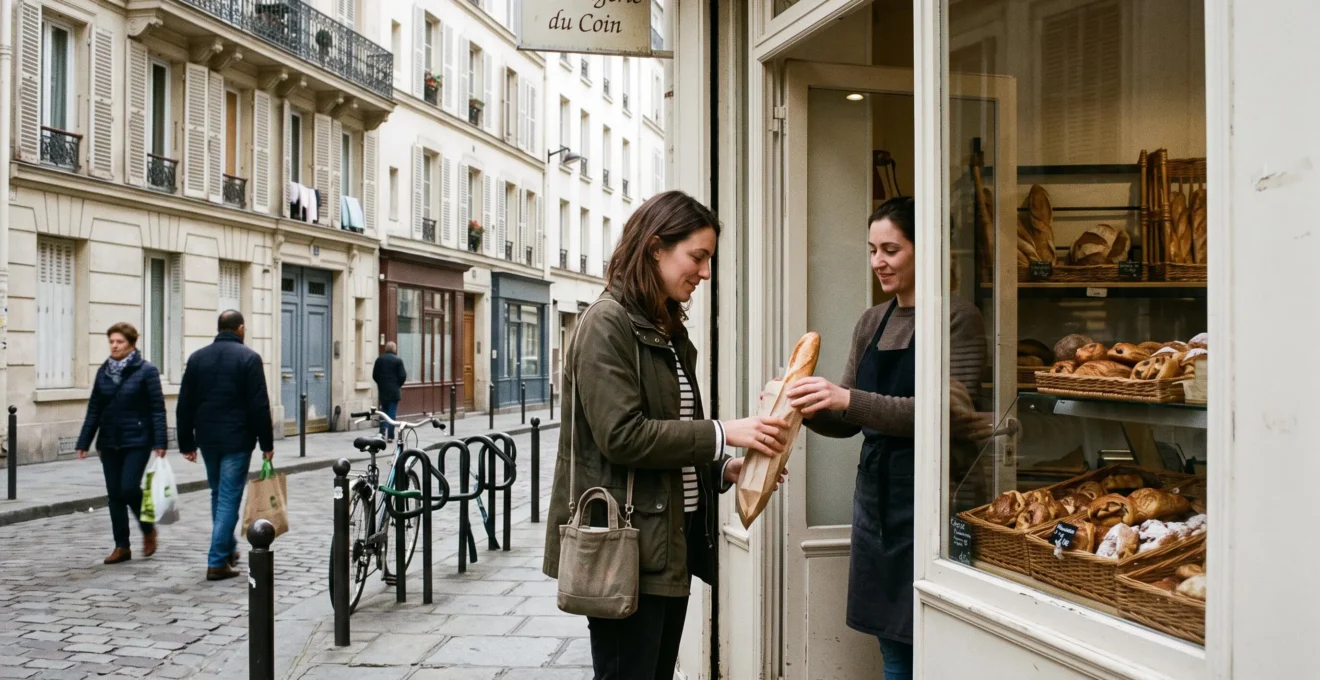
Paris starts feeling different when you stop treating every street as a route to an attraction. The bakery around the corner becomes your breakfast stop. You recognise the quickest way to the Metro. You know which café lets you linger over a coffee, and you remember to say bonjour before asking for anything.
In 72 hours, you cannot become a Parisian. But you can become comfortable enough with the city’s everyday rhythms to enjoy it without constantly feeling like an outsider. That starts with choosing somewhere practical to stay, understanding a few social conventions, and giving yourself permission to spend an afternoon in one neighbourhood.
This approach works whether it is your first visit or your fifth. You can still enjoy the architecture, food and occasional famous sight. The difference is that your days revolve around manageable routines rather than an exhausting sightseeing checklist. And importantly, experiencing Paris respectfully means remembering that the picturesque streets you explore are also where other people live and work.
Paris in 72 hours: The essentials
- Choose accommodation for practical access, comfortable daily journeys and nearby essentials, not just a prestigious central address.
- Start interactions with bonjour, respect the pace of service and avoid blocking passenger movement on public transport.
- Build your visit around one walkable neighbourhood, shop at businesses you genuinely need and leave time for spontaneous discoveries.
- 13: How to Stay in Paris’s Historic Centre Without Dragging Luggage Up 4 Floors or Getting Fined
- 13.3: Inside Paris’s Historic Centre or 2 Metro Stops Away: Which Works Better for a 3-Day Break With Kids?
- Le Marais or Canal Saint-Martin: Which Feels More Local for a 5-Night Stay?
- 8.1: Why Does Paris Feel Unfriendly Until You Change 2 Small Habits at Cafés and Shops?
- 8.4: The Metro Etiquette Mistake That Makes You Stand Out in Under 30 Seconds
- 8.5: When Should You Go to Markets and Bakeries to Avoid Crowds and Empty Shelves?
- When Should You Visit Markets and Small Businesses to Support Locals Without Adding to Crowds?
- 8.2: How to Plan a Paris Day Like a Local Using One Neighbourhood and Zero Big Museums?
13: How to Stay in Paris’s Historic Centre Without Dragging Luggage Up 4 Floors or Getting Fined
Stay in central Paris if the location makes your daily movements easier, but never assume a beautiful historic address offers convenient access. Before booking, check the floor, lift, luggage arrangements and station connections. Paris also regulates furnished tourist rentals, although regulatory penalties generally concern accommodation operators rather than visitors simply booking a stay.
A charming apartment in the Marais might look like the perfect Parisian base: exposed beams, old wooden floors and a view over a narrow street. What the photographs may not show is a steep staircase, a tiny lift or a complicated journey from the nearest station.
For a 72-hour visit, usable time matters more than the romance of the address. A difficult arrival can consume energy you would rather spend discovering your neighbourhood.
Compare historic apartments, small hotels and serviced accommodation using practical criteria instead of assuming one category is automatically more comfortable. Some historic buildings have excellent lifts; others have none. A hotel may offer luggage storage, while an apartment may require you to wait until check-in before leaving your bags.
Before paying, request written answers to four questions: Which floor is the accommodation on? Is the lift operating and large enough for your luggage? Can bags be stored before check-in and after checkout? How exactly do guests enter the building?
Next, consider the legal dimension. Paris requires applicable furnished tourist rental listings to display a registration number, and certain properties also need additional authorisations. According to the City of Paris rules for furnished tourist rentals, failure to register can result in a fine of up to €5,000 for the responsible operator. Other infringements can carry higher penalties.
These are not fines automatically imposed on tourists who book accommodation. A displayed registration number is a useful credibility check, but it does not by itself prove that every legal requirement has been met.
Pay attention to check-in arrangements, too. Paris restricts key boxes attached to public street furniture, including bollards and bicycle stands. This is not a blanket ban on self-check-in or all private-property lockboxes. Confirm the precise collection method and whether it requires access to a shared residential building.
Finally, apply an arrival-and-departure test: trace your journey from the airport or railway station to the accommodation, including transfers, stairs and the final walk. Check whether you can leave your luggage and find somewhere comfortable to eat before check-in.
A slightly less central room with straightforward transport connections may deliver more enjoyable neighbourhood time than an atmospheric apartment with difficult access. Respect building entry rules, keep noise down in shared spaces and remember that your temporary home is someone else’s permanent residential environment.
Your five-point accommodation check before booking
- Request the exact floor, lift availability and lift dimensions; save the written reply with your booking details.
- Trace the station-to-door route and identify any stairs or difficult transfers; save one workable arrival route.
- Confirm early and late luggage-storage options; record where your bags can be left and during which hours.
- For an applicable tourist rental, locate the advertised registration number and review the provider’s credibility; keep a copy of the listing details.
- Confirm key handover, shared-building access and quiet expectations; save the check-in instructions before travelling.
Once your accommodation passes these tests, location becomes a more interesting question: not simply how close it is to major attractions, but how comfortably everyone travelling with you can use it.
13.3: Inside Paris’s Historic Centre or 2 Metro Stops Away: Which Works Better for a 3-Day Break With Kids?
For a three-day Paris break with children, a central address works best when it makes midday returns, meals and sightseeing genuinely easier. Staying two Metro stops away can be more comfortable if the route is accessible and the neighbourhood has useful family facilities. Count the complete door-to-door journey, not just the stops.
On a transit map, two Metro stations can look insignificant. With a stroller, tired child and changing weather, the experience may be quite different. An interchange, long station corridors or stairs can make a short train ride surprisingly demanding.
The opposite is also possible. A central apartment may put major attractions within walking distance but still require a difficult final approach over busy pavements or through a building without a lift.
Compare two plausible options using the family’s actual routine:
| Decision factor | Historic centre | Two Metro stops away |
|---|---|---|
| Major attractions | Potentially easier to reach on foot | May require a short ride or longer walk |
| Daily essentials | Availability depends on the exact street | May offer convenient residential shopping |
| Stroller access | Check pavements, crossings and building access | Check station entrances, transfers and exits |
| Midday breaks | Convenient if the day’s activities are nearby | Convenient if return journeys are straightforward |
| Evening atmosphere | Can involve busy streets and visitor activity | May be calmer, depending on the street |
Do not presume that every Metro station provides step-free access. Check the planned stations and any disruptions before travelling. Families with pushchairs can use appropriate wider gates where available, but normal ticket-validation requirements still apply.
A practical family base should offer more than beds. Look for a supermarket, pharmacy, straightforward restaurant and somewhere children can spend time outdoors without requiring another cross-city expedition.
The midday-reset test is particularly useful. Imagine returning unexpectedly because a child needs a nap, clean clothes or a quiet break. Would everyone need to negotiate an awkward station interchange, or could you get back by a manageable walk?
There is no universal maximum journey time. A comfortable route for an older child may be unsuitable for a toddler, while the best choice for a family using a stroller may depend heavily on lift availability.
Before booking, identify three fallback options near your proposed accommodation: an indoor activity for rain, an accessible green space for fresh air and an uncomplicated meal option for a difficult evening. Verify their suitability and opening arrangements for your travel dates.
A central location can justify extra expense when it genuinely reduces repeated journeys. A quieter neighbourhood can offer greater flexibility when it makes everyday family life easier.
The right base is the one that keeps your family comfortable enough to enjoy ordinary Parisian moments. That makes the character of the surrounding neighbourhood just as important as its position on the map.
Le Marais or Canal Saint-Martin: Which Feels More Local for a 5-Night Stay?
Le Marais usually suits visitors who want central walks, historic architecture, cultural stops and a lively selection of shops. Canal Saint-Martin often appeals to travellers seeking waterside walks and a more informal neighbourhood atmosphere. Neither is automatically more authentic: the precise street, surrounding businesses and time of day matter more than the district’s reputation.
Le Marais, across parts of the 3rd and 4th arrondissements, combines older buildings, galleries, restaurants, retail streets and residential pockets. Some streets attract substantial visitor traffic, particularly around well-known shopping and sightseeing areas.
Canal Saint-Martin, principally associated with the 10th arrondissement, offers a different rhythm. Alongside the canal’s popular gathering spots are ordinary residential streets, food shops, cafés and everyday services. Its waterside spaces can also become busy, especially when people gather outdoors in pleasant weather.
Instead of asking which neighbourhood is more Parisian, ask which one supports the way you want to spend your mornings and evenings.
| Your priority | Le Marais | Canal Saint-Martin |
|---|---|---|
| Historic streets and architecture | Strong choice for frequent architectural walks | More focused on canal scenery and surrounding streets |
| Central walking access | Convenient for many central destinations | Some destinations require longer walks or transport |
| Neighbourhood social life | Varies between busy commercial and quieter residential streets | Informal café and canal-side activity, sometimes crowded |
| Shopping | Mix of boutiques, visitor-oriented retail and daily services | Mix of neighbourhood services, food shops and fashionable venues |
| Quiet accommodation | Depends on the building and exact street | Depends on proximity to busy gathering places |
For a five-night stay, repetition becomes an advantage. Visiting the same bakery several times, recognising nearby shopfronts and learning your usual walk home can build familiarity without pretending you live there permanently.
A three-day visitor should prioritise immediate convenience. There is less time to compensate for a poorly chosen location or learn an unnecessarily complicated route.
Before selecting accommodation, inspect its immediate surroundings. Is there an ordinary food shop nearby? A pharmacy? A bakery serving residents as well as visitors? Are the streets dominated by destination restaurants and boutiques, or do they also support everyday errands?
These are indicators of practical neighbourhood life, not a definitive test of authenticity. Residents and tourists share both districts, and a busy commercial street is not inherently less Parisian than a quiet residential one.
Choose one neighbourhood as your main base and visit the other during a relaxed outing. Changing accommodation to experience both usually adds logistical complexity without creating much additional local familiarity.
Whichever area you choose, your interactions with the people working there will shape your experience more than the neighbourhood label on your reservation.
8.1: Why Does Paris Feel Unfriendly Until You Change 2 Small Habits at Cafés and Shops?
Paris can feel unfriendly when visitors skip the greeting that normally opens a French shop interaction or expect a style of service that does not match the setting. Two adjustments help: acknowledge staff before making a request, and adapt to the establishment’s pace. Neither requires fluent French or accepting genuinely discourteous treatment.
In many anglophone settings, immediately saying “Can I get a coffee?” feels perfectly ordinary. In a small Parisian business, beginning with the request rather than acknowledging the person serving you can feel abrupt.
Start with a simple sequence:
- Enter and say Bonjour (hello).
- If needed, ask Vous parlez anglais ? (Do you speak English?).
- Make a short, clear request and add s’il vous plaît (please).
- Finish with Merci, au revoir (thank you, goodbye).
The second habit is to read the service situation rather than expecting identical behaviour everywhere. Parisian service is not a single universal style. Some establishments are chatty and informal; others are brisk, reserved or busy.
At a bakery, customers generally make their selection at the counter. A short greeting followed by a clear order keeps things moving, particularly when other people are waiting.
In an independent boutique, greet the person working there before browsing. If you need assistance, ask directly rather than assuming staff will immediately approach you.
At a seated café, check whether customers are ordering at the counter or being served at their tables. When table service applies, wait for staff rather than entering the working area. At the end of a meal, you may need to request the bill with L’addition, s’il vous plaît.
A restrained interaction is not necessarily a hostile one. Limited small talk, efficient service or staff waiting for you to ask for something can simply reflect the setting. Equally, poor service does happen, and visitors do not need to excuse genuinely rude conduct as a cultural tradition.
If an exchange becomes awkward, try a brief Pardon (sorry or excuse me), simplify your request and carry on. One unpleasant encounter is not evidence that an entire city dislikes visitors.
Respectful behaviour is more valuable than performing an imagined Parisian personality. The same principle applies underground, where consideration is expressed less through conversation and more through how you move.
8.4: The Metro Etiquette Mistake That Makes You Stand Out in Under 30 Seconds
The most noticeable Metro etiquette mistake is interrupting the flow of passengers. Stopping directly after a ticket gate, blocking an escalator or standing in front of opening train doors creates unnecessary friction. You do not need to imitate the speed of a commuter; simply anticipate where other people need to move.
The “30 seconds” idea is a memorable warning, not a measured rule about how quickly Parisians identify tourists. What matters is the practical impact of your position.
Metro stations concentrate movement into narrow passages. A visitor consulting a phone immediately after a gate may block passengers behind them. Someone waiting in the centre of a train doorway may force everyone getting off to navigate around them.
A smoother station-to-train routine has five stages:
- Prepare the appropriate ticket or travel medium before reaching the gates.
- Validate correctly, then move clear of the entrance before checking your route.
- Keep to the right on escalators where appropriate, leaving room for others when possible.
- Wait beside opening train doors and let passengers exit first.
- Once aboard, move further inside when space allows and keep bags from obstructing the aisle.
Courtesy and ticket rules are separate matters. Making space for other passengers is good etiquette. Validating the correct fare and retaining proof of travel are transport requirements.
The RATP passenger instructions for the Metro and RER explain that passengers must validate their travel medium as required and keep their tickets until they leave the network, since inspections may occur. Travellers together must each have appropriate validated travel rights.
Families with pushchairs, travellers carrying large bags and passengers with reduced mobility may need wider gates or more time. RATP identifies appropriate wider access gates, but these do not remove ticket-validation obligations.
Check station accessibility and current service disruptions before leaving your accommodation. Not every journey offers step-free access, and a route that looks simple on a map may involve stairs or difficult transfers.
Above all, safe movement matters more than commuter speed. Step aside when you need to read directions, let people pass and take the time required to travel comfortably.
Once getting around feels straightforward, you can use public transport less reactively and spend more time enjoying the small neighbourhood routines that make a short stay memorable.
8.5: When Should You Go to Markets and Bakeries to Avoid Crowds and Empty Shelves?
Visit Paris markets according to the specific market’s opening schedule, and choose bakery times according to what you want to buy. Early arrivals can offer more choice but do not guarantee shorter queues. Late visits may be quieter, although popular products or stalls could already be unavailable. Check individual businesses rather than following one universal morning rule.
Paris food shopping becomes easier when you distinguish three types of destination: outdoor markets, permanent covered markets and neighbourhood bakeries. Their operating patterns are different.
Outdoor markets may trade only on selected days. Covered markets can have longer or different schedules. Bakeries follow individual opening days, baking routines and restocking patterns.
The City of Paris market schedules and locations provide published information for individual covered and outdoor food markets. The directory distinguishes, for example, Marché des Enfants Rouges in the 3rd arrondissement from the outdoor Marché Maubert.
Published schedules are useful for planning, but they do not guarantee that every stall will be open, that products will be freshly restocked or that queues will be short.
| When you visit | Potential advantage | What to watch for |
|---|---|---|
| Near opening | Opportunity to browse before the day’s trading develops | Stalls may still be setting up; popular customers may already be waiting |
| Around lunchtime | Convenient for purchasing a ready-to-eat meal | Some food counters may experience increased demand |
| Late in the trading period | Useful for flexible last-minute purchases | Reduced selection or traders packing away |
For a bakery breakfast, buying something you intend to eat immediately is different from shopping for bread to have later. If your preferred item has sold out, ask politely whether another batch is expected. Some bakeries replenish particular products during the day, while others do not.
There is also no need to assume that a long queue guarantees the best bread. A modest bakery close to your accommodation may fit your daily routine better than a famous shop requiring an additional journey.
Build a simple fallback into your plans: identify a second bakery or ordinary food shop within walking distance. Check weekly closing days, particularly if your short visit includes a Sunday or Monday, and verify public-holiday arrangements separately.
The best time is therefore the time that matches the specific business, your purchase and your tolerance for queues, not an invented citywide off-peak hour.
Knowing when to shop solves the practical problem. Choosing how and where to spend your money adds another dimension: making your neighbourhood visits considerate for the people who rely on these businesses every day.
When Should You Visit Markets and Small Businesses to Support Locals Without Adding to Crowds?
Support neighbourhood businesses by purchasing things you genuinely need, choosing establishments with meaningful local activity and respecting their normal customer flow. Avoiding crowds does not always mean visiting at the quietest possible moment: the considerate choice depends on the shop’s available space, staff capacity and existing customers.
Paris has no shortage of businesses described as hidden gems or authentic local favourites. Yet attractive branding, traditional interiors and independent ownership do not automatically reveal how a business contributes to its surrounding neighbourhood.
Look at what the establishment actually does. Does it sell useful everyday products? Is it a specialist food shop, repair service, bookseller or neighbourhood bakery? Does it serve regular customers as well as visitors?
These questions help you recognise businesses involved in daily life without making unsupported claims about who owns them or where every euro ultimately goes.
Observe before entering a small shop or crowded stall. If customers are queuing into a narrow passage, you may prefer to return when movement is easier. If a shop is quiet and open for business, there is no inherent reason to avoid it merely because you are visiting from abroad.
Good intentions can still create inconvenience. A group entering a tiny grocery store only to photograph the interior may obstruct residents buying food. Several visitors occupying limited café seats without ordering can affect the business and other customers.
A considerate neighbourhood shopping routine follows a few principles:
- Buy something because it is useful or genuinely appealing, not merely as proof of having discovered an authentic place.
- Allow regular customers access to counters, shelves, entrances and narrow pavements.
- Ask before photographing staff or identifiable customers, and accept a refusal.
- Respect seating and ordering arrangements, particularly in small cafés.
- Spread purchases across businesses that serve your practical needs instead of turning one tiny establishment into an obligatory attraction.
There is a wider tension here. Encouraging visits to residential areas can bring customers to businesses, but excessive attention can also change how those streets function. A neighbourhood is not an open-air cultural performance designed for visitors.
Rather than looking for a shopkeeper to provide a memorable Parisian encounter, make an ordinary purchase, exchange polite greetings and allow the interaction to remain ordinary.
The most respectful form of local-style travel is often surprisingly simple: participate in everyday commerce without demanding special treatment. With that mindset, building an entire Paris day around one neighbourhood becomes both easier and more rewarding.
Key takeaways before planning your 72 hours
- Prioritise a walkable neighbourhood with practical daily amenities over a schedule that constantly sends you across the city.
- Build familiarity through repeat visits, relaxed interactions and flexible errands rather than chasing places labelled as authentic.
- Leave enough unscheduled time to respond to weather, energy levels and the ordinary rhythm of the streets around you.
8.2: How to Plan a Paris Day Like a Local Using One Neighbourhood and Zero Big Museums?
Plan a Paris day like a temporary local by choosing one walkable neighbourhood and organising the day around ordinary activities: buying breakfast, running a small errand, walking familiar streets, eating lunch and spending time outdoors. Skip the pressure to visit major museums. The goal is to become comfortable with a place, not to maximise the number of attractions.
Canal Saint-Martin offers a practical example because you can combine local food shopping, residential streets, waterside walking and casual meals without making each stop a separate cross-city expedition.
Start by defining a comfortable walking radius around your accommodation. The right distance depends on your mobility, the weather and anyone travelling with you. Select a few possibilities rather than building a rigid itinerary.
For an illustrative day near Canal Saint-Martin, the following sequence allows flexibility:
- Morning: Visit a nearby bakery, greet the person serving you and enjoy breakfast without rushing to your first attraction.
- Late morning: Walk through surrounding streets, complete a practical errand and browse a food shop or market if one is trading that day.
- Lunch: Choose a casual neighbourhood café or buy a simple takeaway meal and find an appropriate place to eat.
- Afternoon: Walk alongside the canal, pause on a public bench or spend time in a nearby green space.
- Evening: Return to a restaurant or café within your neighbourhood, then take an unhurried walk back to your accommodation.
One possible shopping stop is Marché Saint-Martin, at 31–33 rue du Château d’Eau, if its trading hours suit your visit. It is an option rather than a compulsory destination. Alternatively, if you are staying toward the northern Marais, the streets around rue de Bretagne offer a different starting point for everyday food shopping and walking.
Markets do not necessarily operate every day, and a weekend canal walk may feel busier than a weekday visit. On a rainy afternoon, substitute a nearby indoor stop. If the weather improves, return to the waterside rather than forcing the original schedule.
This example is deliberately adaptable, not a claim that every nearby business will be open or that every street will be quiet. Check the places you actually intend to use, and keep alternatives close enough that changing plans does not become another logistical challenge.
For a complete 72-hour stay, develop this approach gradually rather than trying to experience every part of Paris at once.
| Day | Main objective | Practical approach |
|---|---|---|
| Day 1 | Establish familiar routines | Find your bakery, food shop, nearest useful transport stop and a comfortable place to eat |
| Day 2 | Explore confidently | Spend extended time walking your neighbourhood and making spontaneous stops |
| Day 3 | Build on familiarity | Return to favourite places or explore one nearby area without abandoning your established base |
On the first day, remove practical uncertainties. Learn the route from your accommodation to the nearest useful station, find somewhere to buy basic supplies and identify a pleasant place for coffee or lunch.
On the second day, resist the temptation to cross the city repeatedly. Visit a different section of your chosen neighbourhood, follow an interesting side street and stop when something genuinely appeals to you.
On the third day, revisit places you enjoyed or explore an adjacent district. Familiarity changes the experience: you spend less time checking directions and more time observing the life around you.
There is no requirement to eliminate tourist attractions completely. You can visit a major landmark if it interests you. The difference is that sightseeing becomes one part of the experience, not the organising principle of every hour.
Most importantly, feeling like a local is not about passing as one. You remain a visitor, but one who understands basic routines, behaves considerately and can enjoy the city without needing constant entertainment.
For your next step, choose one neighbourhood, mark a bakery, a useful food shop and a comfortable place to take a break, then leave the rest of your first morning flexible. By the time you depart, knowing where to go for coffee without checking your phone may feel more satisfying than another completed sightseeing list.
Do you need to speak French to feel comfortable in Paris?
No. Fluent French is not essential for a short visit. Learning a few expressions, especially bonjour, s’il vous plaît, merci and au revoir, makes everyday interactions more considerate. Ask politely whether someone speaks English when you need help, and keep requests simple.
Is it better to walk or use the Metro during a short Paris stay?
Use walking for manageable neighbourhood journeys and the Metro when it makes a longer trip easier. Walking helps you notice shops, streets and public spaces that might otherwise be missed. However, fatigue, weather, mobility needs and station accessibility should determine the practical choice rather than a rule that locals always walk.
Can you safely book a Paris holiday apartment if it has a registration number?
A registration number is a relevant check for furnished tourist rentals subject to the requirement, but it does not guarantee complete legal compliance, property quality or booking security. Review the accommodation provider’s credibility, confirm access and check-in details, and consult the City of Paris’s official tourist-rental guidance when necessary.
Should you avoid famous cafés and bakeries to have an authentic experience?
Not necessarily. A well-known business can still provide an enjoyable experience, and popularity does not automatically make a place inauthentic. The useful distinction is whether the visit fits your day. If reaching a particular bakery requires a long detour and a queue you do not enjoy, a convenient neighbourhood alternative may be a better choice.
What should you do if you only have one free day in Paris?
Choose one area that is easy to reach, have breakfast there, walk its residential and shopping streets, enjoy an unhurried lunch and spend time in a park or public space. Keep one optional attraction rather than several compulsory stops. The result is a day with enough flexibility to enjoy Paris rather than continuously navigate it.