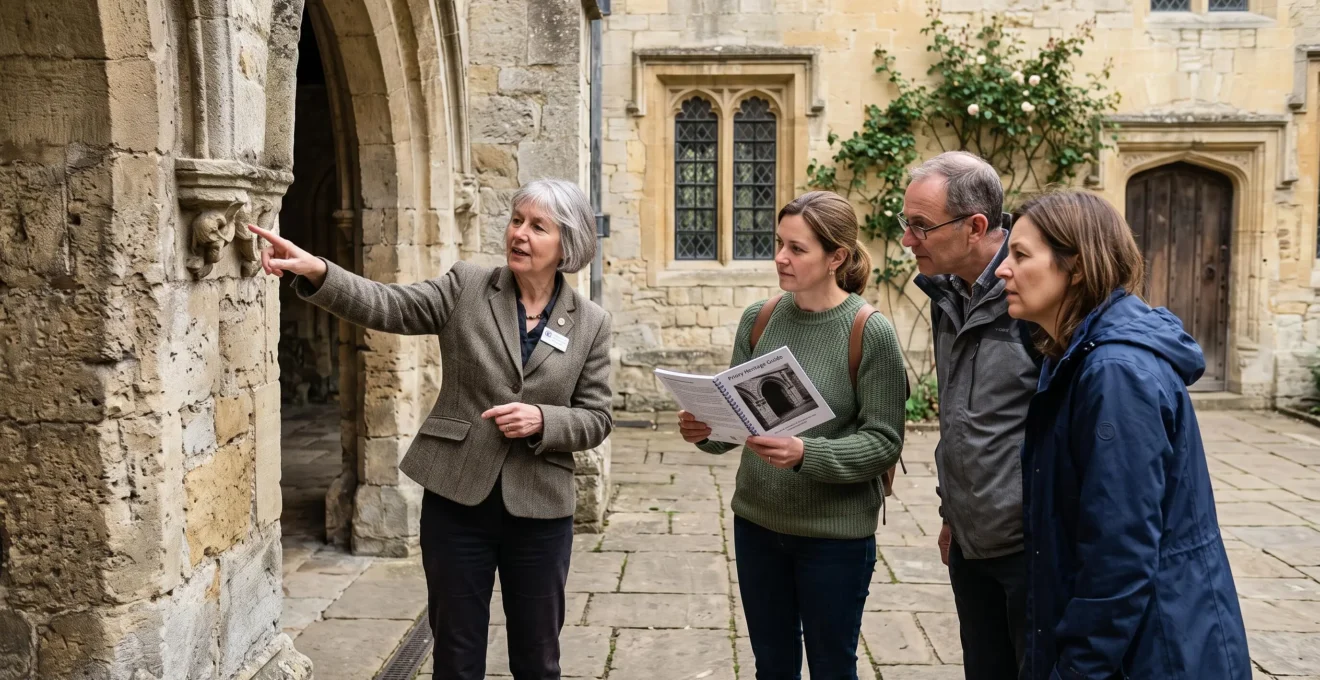
A heritage tour can make an unfamiliar historic place understandable. It can also leave visitors with memorable stories that are difficult to distinguish from documented history. The difference is not necessarily how entertaining or confident the guide sounds. It is whether the explanations can be connected to identifiable evidence.
Choosing a worthwhile heritage tour involves more than checking ratings and admission prices. Historical credibility matters, but so do physical accessibility, legitimate site permissions, realistic scheduling and the operator’s treatment of fragile places and living communities.
A reliable guide should be able to explain what historians know, where interpretations differ and which stories remain uncertain. Equally, the route should accommodate the visitor’s walking and resting needs without turning a cultural experience into an endurance test.
The most useful booking decision therefore balances four considerations: evidence, accessibility, authorised access and conservation responsibility. None should be sacrificed simply because a tour promises exceptional stories or exclusive experiences.
How to recognise a worthwhile heritage tour
- Check the evidence: Look for identifiable historical sources, clear distinctions between fact and interpretation, and a guide willing to acknowledge uncertainty.
- Verify the practical details: Confirm actual walking conditions, resting opportunities, admission arrangements and whether the itinerary can accommodate your pace.
- Respect the site: Choose operators who follow conservation rules, use authorised routes and manage their impact on heritage places and local communities.
- Why Do Heritage Tours So Often Contradict What You Read Later at the Museum?
- How to Vet a Heritage Tour Guide’s Credibility in 10 Minutes From the Listing and Reviews?
- Group Walking Tour or Private Guide: Which Works Better if You Walk Slowly?
- The Rule-Breaking Mistake That Can Get You Removed From a Heritage Site Mid-Visit
- When Should You Take a Heritage Tour to Get Better Access and Fewer Crowds?
- Famous Heritage Landmark or Lesser-Known Alternative: Which Feels More Rewarding on a 2-Day Trip?
- How to Build a 2-Day Attractions Plan Around Timed Tickets Without Sprinting Across Town?
- How to Visit Heritage Sites Without Contributing to Damage or Overtourism Pressure
Why Do Heritage Tours So Often Contradict What You Read Later at the Museum?
Heritage tours and museum exhibitions can present different accounts because they draw on different evidence, emphasise different communities or interpret disputed events differently. Contradictions also arise when guides present legends as established facts or simplify complex histories into entertaining narratives. The important distinction is between legitimate historical disagreement and claims that cannot be substantiated.
Historical interpretation involves several kinds of information that should not be treated as interchangeable:
- Documented facts: Claims supported by identifiable records, physical evidence or securely established findings.
- Scholarly interpretations: Explanations developed from evidence that may support more than one conclusion.
- Oral traditions: Knowledge, memories and accounts transmitted within communities, whose significance and reliability require appropriate cultural and historical context.
- Local legends: Stories associated with a place that may be culturally meaningful without being verified descriptions of historical events.
A compelling guide may combine these forms into a continuous narrative. The problem begins when visitors cannot tell where the documented history ends and speculation begins.
Consider a hypothetical historic townhouse. Its construction date is supported by surviving building records, while a popular account claims that a particular royal visitor secretly lived there. The verified date does not establish the truth of the royal story. Each claim requires its own supporting evidence.
Similarly, a museum might concentrate on architectural development while a community guide discusses labour, displacement or everyday life. These perspectives can complement one another rather than conflict.
The International Council of Museums‘ official museum definition identifies research, conservation, interpretation, ethical practice and community participation as central museum responsibilities. This provides a useful professional reference, but it does not make every museum interpretation definitive.
For particularly memorable claims, a practical evidence hierarchy starts with contemporary records and physical findings, proceeds through contextualised scholarship and documented oral testimony, and treats unattributed anecdotes with greater caution. This is a guide to scrutiny, not a universal ranking: written archives can be incomplete, biased or silent about historically marginalised communities.
When accounts disagree, compare the specific claim with dated exhibition materials, archaeological reports or published research. Ask which evidence supports each interpretation and whether the available material actually resolves the dispute.
A trustworthy tour does not need to eliminate uncertainty. It should make uncertainty intelligible, enabling visitors to leave with a clearer understanding of both the past and the evidence used to reconstruct it.
How to Vet a Heritage Tour Guide’s Credibility in 10 Minutes From the Listing and Reviews?
A preliminary credibility check can be attempted in about 10 minutes by examining the guide’s identity, relevant experience, historical approach, itinerary details and customer reviews. Look for specific evidence of research-based explanations and openness to questions. This is a screening method, not a guarantee of accuracy; some claims will still need independent verification.
Begin with the listing. Does it identify the person or organisation delivering the tour? Does the guide describe relevant historical training, research, community knowledge or sustained experience interpreting the particular place?
Formal academic qualifications can be valuable, but they are not the only credible basis for expertise. Knowledgeable local historians, archaeological interpreters and community custodians may possess relevant expertise acquired through different paths.
Promotional descriptions such as “expert historian”, “authentic local experience” or “award-winning storyteller” are not independently verifiable credentials without supporting information.
Next, examine the proposed itinerary. A listing that names the periods, sites and historical questions explored is more informative than one promising hidden secrets without identifying its subject matter.
Reviews can reveal something about interpretation quality, provided they describe observable behaviour. Search for comments explaining whether the guide answered difficult questions, identified sources, corrected misconceptions or acknowledged disputed interpretations.
Generic praise for an entertaining personality, pleasant atmosphere or dramatic storytelling may indicate an enjoyable experience. It does not independently establish historical reliability.
One diagnostic question can be particularly revealing:
“Can you give an example of a historical claim on this tour and explain which sources support it?”
A constructive response might identify archival material, archaeological evidence, museum research or a documented oral tradition. It might also acknowledge that researchers disagree. A response relying entirely on the guide’s authority or unsupported certainty offers less reassurance.
A five-step heritage guide screening checklist
- Identify the operator: Record the named guide or responsible organisation and one relevant, checkable experience or qualification.
- Inspect the historical focus: Write down two specific sites, periods or research questions covered by the itinerary.
- Read substantive reviews: Save one review describing how the guide explained evidence or handled a challenging question, if available.
- Test source transparency: Send the diagnostic question and retain the response or note that no answer was provided.
- Confirm practical conditions: Record the route details, responsible operator, booking terms and any unanswered access questions.
Keep historical credibility separate from logistical suitability. A well-informed guide may offer an unsuitable route, while a detailed booking page does not necessarily demonstrate reliable historical interpretation.
Missing information is a reason to request clarification, not automatic evidence of incompetence. Persistent evasiveness about basic historical or operational details, however, makes comparison with another provider sensible.
Once a guide appears credible, the next question is whether the experience can be enjoyed at a comfortable pace. Historical expertise alone cannot compensate for an inaccessible or exhausting route.
Group Walking Tour or Private Guide: Which Works Better if You Walk Slowly?
A private heritage tour may work better for someone who walks slowly when the guide can genuinely adjust the route, duration and frequency of breaks. However, a small-group tour with a predictable, accessible route may be equally suitable. The deciding factor is confirmed accommodation of individual mobility needs, not whether the booking is private.
Group tours commonly follow fixed departure times and established routes. This can be reassuring when the path is well documented and the operator confirms that slower walking is accommodated.
Private tours may allow more time at certain stops, fewer stairs or changes in sequence. But private does not automatically mean step-free, accessible or flexible. Historic buildings may retain physical constraints that a guide cannot alter.
Instead of relying on an accessibility badge, request details about the route actually used.
| Consideration | Group walking tour | Private guide |
|---|---|---|
| Walking pace | Usually follows a shared schedule; accommodations require confirmation. | May be adjustable if the operator explicitly agrees. |
| Route changes | Often limited by the group itinerary. | Potentially more flexible, subject to site access and guide arrangements. |
| Rest breaks | May occur at designated stops. | Can potentially be planned around personal needs. |
| Historical content | May be reduced if a fixed schedule runs late. | Can sometimes be reorganised to preserve priority explanations. |
| Suitability | Best when the verified route already fits. | Best when meaningful customisation is confirmed. |
The total walking distance tells only part of the story. Long standing periods, uneven paving, steep gradients, narrow passages and difficult transitions may make a short tour more demanding than a longer one on level ground.
According to Historic England‘s venue accessibility checklist, accessibility assessments should consider the actual visitor route, including surfaces, entrances, steps, facilities and transport connections. Its guidance is intended primarily for venue and event planning, but these considerations are useful when questioning tour operators.
Ask about the longest uninterrupted walking section, time spent standing, available seating, accessible toilets and any alternative entrances. If mobility equipment is involved, confirm whether the actual route accommodates it.
There is also a content trade-off. On a fixed-duration tour, additional breaks may mean fewer site visits or shorter explanations. Ask which stops are essential, which can be omitted and whether the most informative historical material can still be covered without rushing.
When neither walking format is suitable, consider shorter interpretive visits, seated presentations or vehicle-assisted experiences where genuinely available. Confirm arrangements directly rather than assuming that an advertised accessible option meets every visitor’s needs.
A comfortable pace supports better observation and discussion. That advantage matters only when the experience also respects the physical boundaries and conservation requirements of the sites being visited.
The Rule-Breaking Mistake That Can Get You Removed From a Heritage Site Mid-Visit
The serious mistake is assuming that a commercial guide’s permission overrides a heritage site’s rules. Crossing barriers, touching protected surfaces, entering restricted areas or ignoring photography restrictions may breach site conditions even when a guide encourages the action. Depending on local rules and enforcement practices, visitors may be warned, asked to stop or required to leave.
A guide may know the site well, but familiarity is not the same as authority to grant access. Posted restrictions and instructions from authorised site personnel remain the appropriate reference.
This matters because apparently harmless behaviour can have lasting conservation consequences.
The National Park Service guidelines for visiting archaeological places explain that skin oils can damage pictographs and petroglyphs. They also caution against disturbing ground, moving rocks or removing archaeological material. Specific legal provisions described by the agency apply to relevant US national park settings rather than automatically to every heritage destination worldwide.
A photograph taken beyond a protective barrier may appear harmless, yet reaching that viewpoint could involve stepping onto sensitive archaeological ground. Similarly, touching historic surfaces for a closer connection to the past can contribute to physical deterioration.
Special access requires verifiable authorisation. Before booking an operator advertising secret entrances, restricted viewpoints or exclusive rooms, ask how that access is permitted.
Legitimate arrangements might involve an official guided programme, an authorised operator agreement or a specific site-issued ticket. A premium price alone does not establish additional rights.
If a guide encourages prohibited behaviour during the visit, the practical response is to:
- Follow posted restrictions and instructions from authorised staff.
- Politely decline to participate in the questionable activity.
- Ask site personnel to clarify the applicable access conditions when necessary.
- Report a significant concern to the operator or booking platform afterward, describing what occurred accurately.
Not every breach is deliberate. Confusing signage, changing restrictions or misunderstandings may lead to accidental non-compliance. Nor does every violation result in removal. The consequences depend on the site, the conduct and the applicable rules.
Responsible operators should respond to clarification rather than encouraging visitors to disregard restrictions.
Authorised access can be valuable, but only when it is genuine. This becomes especially important when comparing premium departures, restricted-area visits and promises of a quieter experience.
When Should You Take a Heritage Tour to Get Better Access and Fewer Crowds?
The best time for a heritage tour depends on the individual site’s opening schedule, visitor patterns and availability of the experience you want. Early departures, later sessions and less popular dates may improve viewing conditions, but none guarantees smaller crowds. Confirm separately whether a tour provides quieter surroundings, authorised restricted-area access or additional time for interpretation.
These three benefits are often confused.
- Quieter viewing: Fewer people competing for space around exhibits, monuments or viewpoints.
- Special access: Permission to enter areas not normally available through standard admission.
- Deeper interpretation: Sufficient time and suitable conditions to examine historical evidence and ask questions.
A tour may deliver one without the others. An early-morning visit might offer a calmer courtyard but omit a specialist gallery that opens later. A priority-admission ticket might reduce time at one queue while leaving mandatory security screening unchanged.
Build your departure choice around site-specific information rather than general claims about quiet hours.
Check the official admission calendar, available guided departures, seasonal operating arrangements, public holidays, special events and transport connections. Where available, use the site’s own visitor guidance and published booking availability to understand potential demand.
UNESCO’s guidance on managing visitor behaviour recognises that visitor pressure can vary across seasons, dates and times of day. It also emphasises the importance of site-specific information rather than assumptions about how visitors are distributed.
A less crowded session can make architectural details easier to examine and conversations with a guide more comfortable. However, specialist interpretation may be available only at particular times.
The better choice is often the session that includes the historical content you value, with crowd avoidance treated as a secondary preference.
Before paying for a premium departure, establish precisely what the additional charge covers. Does it include admission, a specialist interpreter, a smaller group, access to a particular area or merely a preferred meeting time?
Compare the offer with arrangements available directly from the heritage site. Confirm any distinction between priority entry, timed admission, security procedures and guaranteed access rather than relying on broad marketing language.
A well-chosen session can make a visit more rewarding, but scheduling is only part of the decision. On a short trip, the historical value of the destination itself deserves equal scrutiny.
Famous Heritage Landmark or Lesser-Known Alternative: Which Feels More Rewarding on a 2-Day Trip?
A famous heritage landmark is often worthwhile when it provides essential historical context, significant surviving evidence or distinctive interpretation. A lesser-known site may be more rewarding when its exhibits, guides and historical questions offer deeper engagement with your interests. On a two-day trip, compare learning opportunities against travel demands instead of treating popularity or obscurity as proof of quality.
A landmark’s iconic appearance does not automatically make its interpretation comprehensive. Conversely, a small local museum or historic property may preserve evidence that illuminates overlooked communities, occupations or periods.
Start by asking what you can actually learn at each location.
Does the site preserve original objects or architectural features? Are their origins and historical significance explained? Is interpretation based on identifiable research? Does the available programme address subjects that matter to you?
These questions help distinguish historical learning from simple landmark recognition.
A useful personal comparison is evidence per effort: the depth and relevance of interpretation available relative to the time, physical effort and booking complexity required to experience it.
| Decision factor | Famous landmark | Lesser-known site |
|---|---|---|
| Historical evidence | May contain prominent original structures and extensively studied material. | May preserve focused evidence of local or underrepresented histories. |
| Interpretation | May offer extensive exhibitions and established programmes. | May provide specialist insight, though resources can be limited. |
| Visitor pressure | May require advance booking or managed entry. | May have fewer visitors, but limited capacity. |
| Physical demands | Potentially extensive grounds, queues or multiple galleries. | Possibly shorter visits, but access facilities may be more limited. |
| Best reason to choose | Establishes broad historical context or offers unique surviving evidence. | Adds a distinctive perspective relevant to your interests. |
This is a personal decision tool rather than a standardised measure of educational quality. A shorter visit is not necessarily more rewarding, and a longer visit is not inherently more informative.
Nor should lesser-known automatically be equated with authentic, sustainable or uncrowded. Smaller sites can have fragile collections, limited staffing and infrastructure poorly suited to sudden increases in visitor numbers.
For two days, a complementary pairing may offer stronger historical understanding than visiting two similarly interpreted monuments.
For example, a hypothetical itinerary could combine a prominent fortress that explains a region’s political history with a smaller community museum examining the lives of people who worked around it. The second experience might challenge or enrich the first without requiring either account to be dismissed.
Before selecting the smaller attraction, check whether it actively welcomes visitors, supports guided access and has appropriate facilities.
The strongest itinerary is not necessarily the one containing the most celebrated places. It is the one that leaves enough time and energy to understand why the chosen sites matter.
How to Build a 2-Day Attractions Plan Around Timed Tickets Without Sprinting Across Town?
Build a two-day attractions plan by placing fixed timed-entry commitments first, then grouping nearby flexible visits around them. Account for the full duration of each experience, actual door-to-door journeys, accessibility needs and rest opportunities. Protect the most valuable guided visit by making lower-priority stops optional rather than compressing every activity into a rigid schedule.
Begin with the reservations that cannot easily be changed. These might include a specialist heritage tour, a restricted-access session or a museum visit requiring a particular admission slot.
Then identify nearby attractions that can fit around those commitments without complicated transfers.
Booking several famous sites independently before examining their geographical relationship can create unnecessary travel pressure. Two attractions may look close on a map while requiring a lengthy journey between their usable entrances.
Timed entry is not visit duration. The ticket specifies an admission arrangement, but the overall commitment may also involve arrival requirements, security procedures, locating the guide, interpretation time and movement through the site.
Use the individual operator’s published instructions instead of assuming that a universal arrival buffer will work everywhere.
A practical two-day structure could look like this:
| Period | Day 1 | Day 2 |
|---|---|---|
| First priority | Pre-booked major heritage visit at its confirmed entry time. | Pre-booked smaller-site tour or specialist interpretation session. |
| After the fixed visit | Rest, refreshments and an unhurried nearby attraction. | Break followed by a nearby museum or exhibition. |
| Flexible period | Optional secondary stop if energy and opening hours permit. | Alternative cultural activity or time for returning to an important exhibit. |
| If plans change | Drop the optional stop rather than shorten the main guided experience. | Keep the specialist session and rearrange flexible activities. |
This structure is illustrative, not a schedule for a specific destination. Actual timings must come from the chosen sites, travel routes and visitor’s pace.
Check journeys door to door. Consider public transport connections, gradients, uneven footpaths, step-free entrances, seating and the possibility that the exit from a large attraction is far from its entrance.
These practical details matter particularly when standing or walking continuously is difficult.
Before departure, establish a clear priority order: essential historical experiences, worthwhile secondary visits and genuinely optional activities.
If transport is delayed or fatigue develops, protect the highest-value interpretation first. Do not shorten an important guided visit simply to preserve an unrelated reservation that offers less educational value.
Where timed admissions cannot be changed, follow the operator’s conditions and investigate official rebooking options rather than assuming that a late arrival will be accepted.
Thoughtful scheduling improves personal comfort and can also support more responsible visitor behaviour. The final consideration is whether the tour operator manages its wider impact on the heritage place and the community around it.
Key considerations before making a booking
- Look beyond the guide’s personality: Seek historical explanations that identify evidence and allow uncertainty or competing interpretations.
- Match the experience to real conditions: Verify the physical route, pace, admissions and available support before committing to an itinerary.
- Consider the wider impact: Prefer experiences that respect conservation restrictions, site management and the interests of host communities.
How to Visit Heritage Sites Without Contributing to Damage or Overtourism Pressure
Responsible heritage tourism depends on choosing operators that protect historic evidence, follow visitor-management arrangements and respect the communities connected to a place. Individual visitors should remain on authorised routes and comply with conservation rules, while operators should manage group movement and avoid transferring visitor pressure to fragile or unprepared sites.
Visitor etiquette is important, but group behaviour can create additional pressures. A tour operator determines where participants gather, how long they remain, whether they obstruct access and how closely they approach sensitive features.
A manageable group at a spacious urban heritage site may be inappropriate at a narrow archaeological excavation or inside a fragile historic interior. There is no universal group-size threshold suitable for every setting.
UNESCO‘s World Heritage guidance on managing visitor behaviour emphasises visitor flows, conservation concerns and the interests of host communities. Its principles support evaluating the conditions of individual sites rather than assuming one model of tourism management works everywhere.
Before booking, consider whether the operator follows designated routes, respects conservation-related closures, coordinates with site booking arrangements and provides clear instructions about visitor behaviour.
Responsible visitor dispersal also requires care. Encouraging travellers to visit lesser-known places can sometimes reduce pressure at popular destinations, but an alternative site may lack the infrastructure, staffing or community support needed for additional groups.
Choose alternatives that actively welcome visitors and offer managed access. A quiet location is not automatically an appropriate destination for commercial tours.
The benefits of heritage tourism also matter. Look for meaningful participation by knowledgeable local guides, respectful treatment of living traditions and evidence that relevant communities have a voice in how their histories are presented.
Local ownership can be positive, but it does not independently prove ethical conduct. Similarly, partnerships with heritage organisations should be identifiable rather than implied through vague promotional language.
Descriptions that portray a living community as an exotic attraction, obscure contested histories or treat sacred traditions as entertainment deserve careful scrutiny.
An integrated booking decision can be made through four tests:
- Evidence transparency: Can the guide distinguish documented history from interpretation and unverified stories?
- Mobility suitability: Is the actual route compatible with the visitor’s walking pace, standing tolerance and access requirements?
- Legitimate access: Are all advertised activities consistent with site rules and any necessary permissions?
- Responsible management: Does the operator respect fragile heritage, visitor-management arrangements and relevant community perspectives?
A tour does not need to be perfect in every dimension, but a serious failure in historical integrity, essential accessibility or conservation compliance should not be excused by entertainment value.
The preferable experience is one that meets the traveller’s practical needs while demonstrating a credible and respectful relationship with the place being interpreted.
Shortlist tours that meet these four conditions, request clarification where information is missing and book only once the essential details are confirmed. The goal is not simply to hear a memorable account of the past, but to understand its evidence while leaving the heritage place respected and protected.
Does a heritage guide need a history degree to be trustworthy?
Not necessarily. Relevant expertise may come from academic research, professional heritage interpretation, archaeological work or sustained community knowledge. A degree can help establish a guide’s background, but the more important test is whether the guide accurately represents evidence, explains uncertainty and avoids presenting unsupported claims as settled history.
Are oral histories reliable sources for heritage tours?
Oral histories can provide important evidence about community experiences, memories and traditions, particularly where written archives are incomplete or exclusionary. Their interpretation requires attention to context, transmission, attribution and the questions being investigated. A responsible guide explains what the testimony establishes and avoids dismissing it merely because it is not written down.
Should you contact a heritage site directly before booking a third-party tour?
Contacting the site can be useful when a third-party listing makes unclear claims about restricted access, admission requirements, accessibility or conservation rules. Site personnel may be able to clarify official arrangements, although they may not evaluate an independent guide’s historical expertise or commercial quality.
Can a tour be historically accurate but still be an unsuitable booking?
Yes. A knowledgeable guide may offer an itinerary with excessive standing, inaccessible surfaces, inadequate breaks or arrangements that do not suit the traveller’s needs. Accurate information is essential, but it does not replace practical suitability, clear booking conditions or compliance with conservation requirements.
What should you do if you discover a questionable historical claim after your tour?
Record the precise claim and compare it with identifiable historical research, relevant museum documentation or other contextualised evidence. Consider whether the difference reflects a disputed interpretation, an oversimplification or an unsupported assertion. If the discrepancy matters, ask the operator for the source and provide specific, evidence-based feedback rather than assuming that every disagreement constitutes misinformation.